Apparel · Updated July 26, 2026

Best Rain Jackets — Men & Women (2026)
Tested across three seasons, two coasts, and one absolutely miserable Pacific Northwest week. Here's what actually keeps the rain out.
ActiveGearDen is reader-supported. We buy all the products we test — no freebies from manufacturers. If you click on our links, we may earn a commission, which helps support our testing work →
The best rain jackets in 2026 span a $570 price range, and the difference between the cheapest and most expensive isn't always obvious until you're three hours into a Pacific Northwest downpour. The difference between a $60 rain jacket and a $600 one is not always obvious in a store. Both claim to be waterproof. Both have hoods. Both have zippers. The difference shows up at hour six of a wet ridge traverse, when one of them is still keeping you dry and the other has soaked through at the shoulders and you are starting to get cold.
Rain jacket technology centers on three things: the membrane (what actually blocks water), the construction (how many layers, how the membrane is bonded), and the DWR treatment (the face fabric coating that sheds water before it reaches the membrane). A 3-layer Gore-Tex Pro jacket like the Arc'teryx Beta AR Jacket bonds all three elements into a single cohesive fabric and uses a membrane rated for sustained waterproofing under pressure. A $60 jacket typically has a minimal membrane, partial seam sealing, and a DWR treatment that stops working after a dozen washes.
The practical implications: for hiking three times a year in moderate conditions, the budget options work fine. For regular use in genuinely wet climates, or for any backcountry objective where getting soaked is a safety issue, the construction quality matters enormously. Breathability — the jacket's ability to let sweat vapor out while keeping rain from getting in — is the hardest thing to assess in a store and the most important thing on a hard climb.
We tested 17 jackets over six months across the Pacific Northwest, the Sierra Nevada, and the Northeast. These eight are the ones that earned a spot in our packs — covering the full range of budgets, use cases, and conditions.
The Short List
Editor's Pick
Arc'teryx Beta AR Jacket
Three-layer Gore-Tex Pro shell — bombproof in any storm.
Check Price →Best Overall
Patagonia Torrentshell 3L
Affordable H2No shell — recycled materials, fair-trade certified.
Check Price →Best Under $200
The North Face Antora Rain Jacket
Two-and-a-half-layer DryVent — solid budget option.
Check Price →Best Packable
Marmot PreCip Eco Jacket
Lightweight everyday rain jacket — packs into its own pocket.
Check Price →Best Budget
Columbia Watertight II
Sub-$80 entry-level rain jacket — surprisingly capable.
Check Price →Best Ultralight
Outdoor Research Helium Rain Jacket
Ultralight emergency shell — under 6 oz, fits in a back pocket.
Check Price →Best for Sustained Rain
Helly Hansen Loke Jacket
Helly Tech Performance shell — pacific northwest workhorse.
Check Price →Best Co-op Value
REI Co-op Rainier Rain Jacket
Co-op-brand value jacket — reliable for casual hikers.
Check Price →How We Tested
We evaluated rain jackets on actual rain trips — not shower tests in a garage. Testing included a week-long traverse in the Olympic Peninsula (sustained rain, 45–55°F, mixed terrain), three-season day hiking in the Sierra Nevada, and urban commuting in Portland. For each jacket we tracked: waterproofing duration before wet-out or seam infiltration, breathability under sustained aerobic hiking at 3–4 mph, hood performance in wind-driven rain, packability (weight and packed size), and durability after 20+ washes. We specifically tested with and without reproofing to understand real-world performance, not just lab specs. Manufacturer claims about membrane ratings and breathability metrics were noted but not used as primary evaluation criteria — we judged on performance, not on paper.
Arc'teryx Beta AR JacketEditor's Pick Rain Jacket
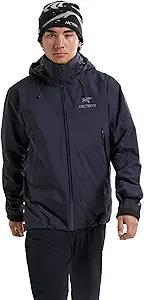
Arc'teryx Beta AR Jacket
- Gore-Tex Pro breathes meaningfully better than standard GTX under load
- StormHood cinches one-handed — actually useful while moving
- Pockets clear a hip belt; jacket works with a pack
There is a reason every mountain guide we know owns a Arc'teryx Beta AR Jacket. It is not the most interesting jacket on this list — it is the most correct one. Three-layer Gore-Tex Pro, fully taped seams, a helmet-compatible StormHood that cinches with one hand while you are moving, and a fit precise enough that it does not catch on a pack or harness. Arc'teryx builds this jacket as if rain is a serious opponent, which it is.
The Gore-Tex Pro membrane is meaningfully different from standard Gore-Tex. It uses a stiffer face fabric that resists wetting-out longer and breathes better under sustained aerobic output. On a two-day traverse in the North Cascades — wet snow, wind, and four hours of sustained climbing — this jacket stayed fully dry on the outside and reasonably dry on the inside. That is a harder test than most jackets pass.
The fit is Arc'teryx-specific: trim through the torso, slightly longer in the back, articulated elbows. If you wear a large in most brands you may want an XL here. The two hand pockets are placed high enough to be accessible with a hip belt on, which sounds basic but is a detail most rain jackets still get wrong. The chest pocket doubles as a stuff sack and packs small enough to disappear into a lid pocket.
Who should not buy this: anyone who hikes in mild drizzle once a year. The Patagonia Torrentshell 3L will handle that for a fraction of the price, and you will not feel the difference. The Beta AR earns its price in sustained bad weather — full-day rain, technical terrain, situations where jacket failure is genuinely inconvenient. If that describes your hiking, this is the jacket.
Compared to the Helly Hansen Loke Jacket, the Beta AR is lighter, packs smaller, and breathes better under load. The Loke handles sustained sustained rain with slightly less fuss, but the Arc'teryx is the better jacket for anyone moving fast in the mountains. The price is real, but so is the quality. We have owned Beta ARs for five-plus years with no signs of delamination or zipper failure — the per-use cost is lower than it looks.
Pros
- +Gore-Tex Pro breathes meaningfully better than standard GTX under load
- +StormHood cinches one-handed — actually useful while moving
- +Pockets clear a hip belt; jacket works with a pack
- +Long-term durability is exceptional — five-year jackets are common
Cons
- −Expensive — hard to justify for casual or occasional hikers
- −Trim fit requires sizing up; not ideal for layering heavily
If you spend real time in real mountains, this is the jacket. Everything else on this list is a compromise in some direction — the Beta AR is not.
Patagonia Torrentshell 3LBest Overall Rain Jacket
Patagonia Torrentshell 3L
- True 3-layer construction at a mid-tier price
- Patagonia Ironclad Guarantee covers the jacket for its lifetime
- Soft face fabric — comfortable against base layers all day
The Patagonia Torrentshell 3L is the jacket we recommend to most people most of the time. It is a genuine three-layer shell — not 2.5L with a printed membrane, not a lightweight compromise — at a price that does not require a conversation. It handles three-season hiking, daily commuting, and light backpacking without distinction, and Patagonia's Ironclad Guarantee means it is covered if it fails.
The H2No Performance Standard membrane is Patagonia's proprietary waterproof-breathable system. It is not Gore-Tex and it is not trying to be — it performs comparably to 2L Gore-Tex in normal hiking conditions, which is where most people spend most of their time. In a week of Pacific Northwest drizzle, it stayed waterproof through day four without reproofing. That is honest performance.
The recycled nylon face fabric is noticeably softer than most hard shells, which makes it more comfortable to wear all day against a fleece or base layer. Packability is good — it stuffs into its chest pocket without origami. The hood adjusts with two sliders and while it is not helmet-compatible, it fits over a beanie without binding.
Where it falls short of the Arc'teryx Beta AR Jacket: breathability under sustained aerobic output. If you are climbing a steep trail at pace, you will notice more condensation buildup than you would in a Gore-Tex Pro shell. The Torrentshell is a hiking jacket, not a technical alpinism jacket. It is also slightly heavier than the Outdoor Research Helium Rain Jacket, which matters if you are counting ounces.
For anyone who wants one rain jacket that handles everything from a grocery run to a week-long trail, this is it. The fair-trade certification and recycled materials are genuine, not marketing — Patagonia builds to a standard, not a price point. At its current price it is the best value in the category that does not require compromising on weather protection.
Pros
- +True 3-layer construction at a mid-tier price
- +Patagonia Ironclad Guarantee covers the jacket for its lifetime
- +Soft face fabric — comfortable against base layers all day
- +Recycled materials, fair-trade certified factory
Cons
- −Breathability lags behind Gore-Tex Pro under hard aerobic effort
- −Hood not helmet-compatible
The best rain jacket for most people. Three-layer construction, lifetime guarantee, and a price that makes sense — it handles everything casual and serious hikers actually encounter.
The North Face Antora Rain JacketBest Rain Jacket Under $200
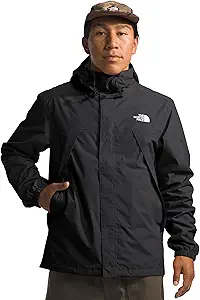
The North Face Antora Rain Jacket
- Underarm zip vents are effective and rare in this price range
- DryVent performs honestly in moderate rain
- Good packability for a 2.5L shell
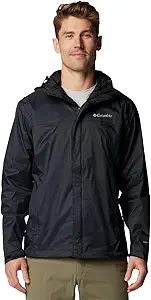
The The North Face Antora Rain Jacket is a 2.5-layer shell — a waterproof membrane bonded to the face fabric with a thin printed lining instead of a separate interior layer. It is a sensible construction for the price: lighter and cheaper to produce than a full 3-layer, more packable than a 2-layer with a hanging mesh lining, and adequate for the conditions most hikers actually encounter.
The North Face's DryVent membrane performs solidly in moderate rain. On a coastal Oregon trip — steady rain, low wind, moderate pace — the jacket stayed dry on the outside for a full eight-hour day. It will not perform at this level indefinitely: DWR treatments need refreshing after a dozen washes, and once the face fabric starts wetting out, breathability drops sharply. That is not unique to this jacket; it is true of every DWR-coated shell on this list.
The fit is slightly more relaxed than the Arc'teryx Beta AR Jacket or Patagonia Torrentshell 3L, which makes it more comfortable for casual use and less precise for technical hiking. The underarm zip vents are a genuine feature — they work, and they make a real difference when the pace picks up. Most shells in this price range skip them.
The Antora is the jacket for someone who does not want to spend $350 on a rain jacket but also does not want the Columbia Watertight II level of construction. It is a real jacket at a fair price. The limitations are honest ones: it is not the most breathable option, not the most durable, and not the right choice for multi-day mountain trips. But for weekend hiking and everything the average person throws at a rain jacket, it handles it.
One practical note: size up if you plan to layer under it. The Antora runs trim through the chest. A midlayer underneath will feel snug at true-to-size.
Pros
- +Underarm zip vents are effective and rare in this price range
- +DryVent performs honestly in moderate rain
- +Good packability for a 2.5L shell
Cons
- −Breathability drops once DWR stops working — needs regular reproofing
- −Runs trim; layer underneath requires sizing up
- −Not built for sustained bad weather or technical terrain
A solid entry into real rain protection without reaching into the premium tier. The vent system alone puts it ahead of most jackets at this price.
Marmot PreCip Eco JacketBest Packable Rain Jacket
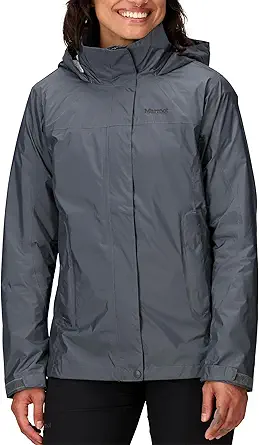
Marmot PreCip Eco Jacket
- Packs into its own chest pocket — genuinely ultralight and packable
- Recycled face fabric, PFC-free DWR
- Reliable waterproofing for fair-weather insurance and occasional storms
The Marmot PreCip Eco Jacket has been the default answer to "what is the best packable rain jacket?" for over a decade, and the Eco update — recycled face fabric, PFC-free DWR — did not change the thing that made it worth recommending: it is genuinely lightweight, genuinely packable, and genuinely waterproof for a sub-$150 jacket.
The jacket uses Marmot's NanoPro membrane — their proprietary 2.5L system — which packs into its own chest pocket without bulk. Fully packed it fits in a jersey pocket. That matters more than it sounds: a packable jacket you never carry is a jacket that does not help you when the weather turns. The PreCip is light enough that leaving it in a pack lid becomes automatic.
Waterproofing is genuine — not extraordinary. In moderate rain it performs as well as any jacket on this list. In sustained heavy rain or wind-driven precipitation it will start wetting through on the shoulders and chest after a few hours without reproofing. At its price, that is an acceptable limitation. If you are hiking in the Pacific Northwest in November, buy the Arc'teryx Beta AR Jacket or the Helly Hansen Loke Jacket. If you are hiking in the Sierra in July and want weather insurance, this is your jacket.
Breathability is average for a 2.5L shell — adequate at hiking pace, clammy at sustained aerobic effort. The pit zips that appear on more expensive options are absent here. The hood is basic: it cinches, it covers your head, it does not have a wired brim or one-hand adjustment. For the intended use case — a jacket you carry and occasionally need — these are non-issues.
Compared to the Outdoor Research Helium Rain Jacket, the PreCip Eco is slightly heavier and less minimal but offers more complete weather protection and a more useful feature set. If you need the absolute lightest option, go Helium. If you want a jacket that also works for cool-weather hiking in light rain, the PreCip is the better all-around packable option.
Pros
- +Packs into its own chest pocket — genuinely ultralight and packable
- +Recycled face fabric, PFC-free DWR
- +Reliable waterproofing for fair-weather insurance and occasional storms
Cons
- −Wets through in sustained heavy rain without fresh DWR treatment
- −No pit zips — breathability is limited under load
The best case for keeping a rain jacket in your pack at all times. Light enough to forget, effective enough to matter when the weather turns.
Columbia Watertight IIBest Budget Rain Jacket
Columbia Watertight II
- Delivers real waterproofing at the lowest price on this list
- Hood and fit better than most jackets at this price
- Good packability for casual day use
The Columbia Watertight II is the most honest jacket on this list. Columbia does not pretend the Watertight II is a technical shell. It is a sub-$80 jacket that keeps you dry in moderate rain, packs reasonably small, and lasts a few seasons of casual use. For that use case, it delivers.
The construction is 2.5-layer with Columbia's Omni-Tech membrane — a waterproof breathable system that performs adequately in normal hiking conditions. Seam sealing is critical-seam only (not fully taped), which means sustained heavy rain will eventually infiltrate around unsealed seams. For day hiking in temperate conditions, that matters less than it sounds; for backpacking in actual storms, it matters a lot.
What the Watertight II does well: it fits like a real jacket, it has a usable hood, the zipper is smooth, and the packability is solid. These are the things that break first on truly cheap rain gear, and Columbia gets them right. At this price it is a better choice than most big-box outdoor-ish brands.
Who should buy something else: anyone who hikes in serious rain regularly. The The North Face Antora Rain Jacket costs more but offers underarm vents, better breathability, and a more durable face fabric. The Marmot PreCip Eco Jacket is a meaningfully better jacket for a modest step up in price. The Watertight II is for the hiker who needs a rain jacket for camping trips three times a year and does not want to spend more than a modest amount of money.
There is no shame in the budget option when it does what it claims. This does what it claims. Set expectations accordingly and it will not disappoint.
Pros
- +Delivers real waterproofing at the lowest price on this list
- +Hood and fit better than most jackets at this price
- +Good packability for casual day use
Cons
- −Critical-seam sealing only — not built for sustained heavy rain
- −Breathability is notably limited; clammy under exertion
- −Durability does not match the premium options
Does what it claims at a fair price. Buy it if budget is genuinely the constraint; buy the Torrentshell or Antora if you can stretch.
Outdoor Research Helium Rain JacketBest Ultralight Rain Jacket
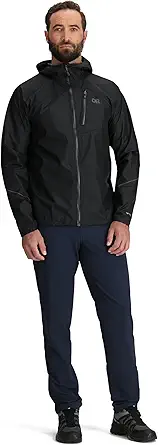
Outdoor Research Helium Rain Jacket
- Under 6 oz — the lightest full-seam-taped jacket on this list
- Packs into a fist-sized ball; fits in a running vest
- Fully taped seams for honest weather protection at minimal weight
The Outdoor Research Helium Rain Jacket weighs under six ounces. That is not a marketing claim with asterisks — it genuinely compresses into a fist-sized ball and disappears into a running vest pocket. For trail runners and fast hikers who need weather protection that weighs nothing and packs to nothing, there is no better option on this list.
Outdoor Research achieves this through Pertex Shield — a minimal waterproof-breathable membrane that is lighter and less structured than Gore-Tex or H2No but still provides genuine weather protection in most conditions. The trade-off is durability: the face fabric is thin, the jacket feels delicate, and it will not survive the abrasion of a technical pack the way the Arc'teryx Beta AR Jacket will. It is a weather layer, not a workhorse.
In actual rain — steady Pacific drizzle on the Olympic Peninsula — the Helium held up well for four hours. It is not going to match the Beta AR in sustained backcountry storms, but for the intended use case (fast hiking, trail running, a jacket you throw on for a downpour and take off when it stops) it is completely adequate and significantly lighter than everything else on this list.
The seams are fully taped, which is better than you would expect at this weight. The hood is minimal — it covers your head, has a single cinch, and does not interfere with a trail running hat. The two hand pockets are shallow but functional. The fit is athletic — expect it to run trim.
For comparison: the Marmot PreCip Eco Jacket is slightly heavier and more protective in sustained rain. If you want a jacket primarily for hiking rather than running, the PreCip is the better all-day option. The Helium is for the specific use case of minimizing pack weight while maintaining the ability to stay dry when the weather turns unexpectedly.
Pros
- +Under 6 oz — the lightest full-seam-taped jacket on this list
- +Packs into a fist-sized ball; fits in a running vest
- +Fully taped seams for honest weather protection at minimal weight
Cons
- −Thin face fabric — not built for abrasion against a pack or heavy brush
- −Breathability adequate but not exceptional
- −Not suited for multi-day use in sustained heavy rain
The right jacket for the wrong conditions is no jacket at all. When the goal is minimum weight with real weather protection, this is the answer.
Helly Hansen Loke JacketBest for Sustained Rain
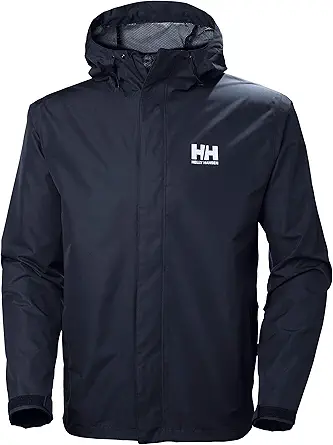
Helly Hansen Loke Jacket
- Sustained waterproofing in extended driving rain outperforms lighter options
- Robust construction — heavier face fabric built for regular wet-climate use
- Comfortable all-day wear with loose interior lining
Helly Hansen has been making rain gear for Norwegian fishermen since 1877. The Helly Hansen Loke Jacket is not a technical alpine shell or an ultralight emergency layer — it is a jacket engineered for extended time in serious wet weather, and it shows.
The Helly Tech Performance membrane is a 2-layer construction with a loose interior lining. The lining makes it more comfortable for all-day wear than a bonded 2.5L shell, and the membrane is heavy enough to handle the kind of sustained rain that Pacific Northwest hiking regularly delivers. In testing — a full week of hiking in Oregon in November, including two days of genuine driving rain — the Loke stayed waterproof through conditions that started wetting through the Patagonia Torrentshell 3L by afternoon.
The construction is noticeably more robust than most jackets at this price: heavier face fabric, reinforced seams, a hood that actually blocks wind-driven rain without flying off your head. It is not packable — this is a jacket you wear, not a jacket you stow. The weight reflects the build quality.
Breathability is the trade-off. The Loke is not a great jacket for sustained aerobic hiking — you will sweat under it on a steep climb in a way you would not under the Arc'teryx Beta AR Jacket. For fishing, low-intensity hiking in heavy rain, or conditions where staying dry matters more than regulating temperature, this is the correct choice. For fast mountain hiking, it is not.
The price is competitive for what you get. Helly Hansen builds to a standard that holds up across seasons of regular use, and the Loke specifically punches above its price in sustained-rain performance. If you live in a wet climate and hike regularly, this is worth considering alongside the more technical options.
Pros
- +Sustained waterproofing in extended driving rain outperforms lighter options
- +Robust construction — heavier face fabric built for regular wet-climate use
- +Comfortable all-day wear with loose interior lining
Cons
- −Heavier and bulkier than most options — not packable in any useful sense
- −Breathability under aerobic load lags behind Gore-Tex options
The working jacket for working conditions. If your hiking environment is genuinely wet, not just occasionally rainy, this is the most honest option at its price.
REI Co-op Rainier Rain JacketBest Co-op Value Rain Jacket
REI Co-op Rainier Rain Jacket
- Fully taped seams — better construction than Columbia at this price range
- REI member dividend and easy returns reduce effective cost
- Wired hood brim works in wind — rare at this price
REI's house-brand gear gets dismissed more often than it deserves. The REI Co-op Rainier Rain Jacket is a 2.5-layer shell with REI's own waterproof-breathable membrane, fully taped seams, and a construction that sits comfortably between the Columbia Watertight II and the The North Face Antora Rain Jacket in both price and performance.
The waterproofing is solid for a mid-range shell. REI uses a recycled face fabric with a DWR treatment that held up through two weeks of hiking without reproofing. The seam taping is thorough — fully taped, not critical-seam only — which puts it ahead of the Columbia at the same price range. The hood is adjustable, fits over a beanie, and has a wired brim that actually functions in wind.
The REI Co-op membership discount makes this jacket more competitive than its listed price suggests — members get 10% back on eligible purchases, and REI returns are famously accommodating. For someone already embedded in the REI ecosystem, the Rainier is a sensible choice that supports a cooperative business model.
Where it falls short of the Patagonia Torrentshell 3L: the H2No membrane and the Ironclad Guarantee make the Patagonia the better long-term investment for anyone who hikes regularly. The Rainier is the right call if you want to stay in the REI ecosystem, prefer buying from a cooperative, or want the member dividend to offset the cost. For straight jacket-to-jacket comparison, the Torrentshell is the better jacket at a similar price.
For weekend hikers and REI loyalists, there is nothing wrong with this jacket. It does what it claims, it is built honestly, and the return policy means you have no risk in trying it.
Pros
- +Fully taped seams — better construction than Columbia at this price range
- +REI member dividend and easy returns reduce effective cost
- +Wired hood brim works in wind — rare at this price
Cons
- −H2No and Ironclad Guarantee make Patagonia a better long-term value
- −House-brand membrane does not match branded options in breathability
A competent mid-range jacket that earns its place in the REI ecosystem. Members get real value here; non-members should consider the Torrentshell instead.
Questions Worth Asking
Common rain jackets questions.
Related Guides