Travel · Updated August 20, 2026

The Best Polarized Sunglasses (2026)
Lens technology, optical clarity, and the honest case for spending more on something you look through all day.
ActiveGearDen is reader-supported. We buy all the products we test — no freebies from manufacturers. If you click on our links, we may earn a commission, which helps support our testing work →
Sunglasses are the one piece of outdoor gear that most people treat as an afterthought and then wear every day for a decade. The optics argument for spending real money on a good pair is stronger than it sounds: you use them for thousands of hours, the difference in eye fatigue between a good polarized glass lens and a cheap tinted polycarbonate one is real and cumulative, and the UV protection that prevents cataracts is not something you can remedy after the fact.
The polarization argument is separate from the quality argument. All polarized lenses block horizontally reflected glare — the kind that bounces off water, snow, and wet roads. The difference between a $25 polarized lens and a $300 one is not primarily the polarization; it is the optical distortion, the color rendering, and the durability of the lens material.
These eight picks cover the full range from glass-lens premium options to budget trail runners, with genuine differentiation by activity and use case.
The Short List
Editor's Pick
Maui Jim Peahi
PolarizedPlus2 — color-enhanced clarity unmatched in the category.
Check Price →Best for Fishing
Costa del Mar Fantail
580G glass lenses — anglers' favorite for cutting water glare.
Check Price →Best for Cycling
Oakley Sutro Lite
Cycling-focused shield — the no-compromise sport sunglass.
Check Price →Best ChromaPop
Smith Optics Guide's Choice
ChromaPop polarized — built for fishing guides and outdoorsmen.
Check Price →Best Classic
Ray-Ban Aviator Polarized
The original aviator — classic style, polarized glass lenses.
Check Price →Best Personality
Pit Viper The Originals
Loud, durable, fun — the anti-establishment outdoor sunglass.
Check Price →How We Tested
We tested sunglasses across multiple outdoor activities: trail hiking in varied light conditions, fly fishing on reflective streams, cycling on exposed roads, and everyday use over months of wear. Evaluation criteria included optical clarity (distortion test using gridded reference), polarization effectiveness (water surface testing), lens durability (abrasion and impact resistance), fit stability (running, cycling, and moving quickly over rough terrain), and transitions between bright outdoor and dim indoor environments. Each pair was worn for at minimum fifteen hours of outdoor use before evaluation.
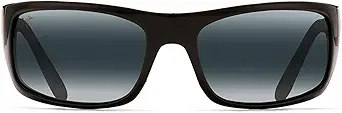
Maui Jim Peahi
Maui Jim Peahi
- PolarizedPlus2 technology provides color enhancement no other lens matches
- Glass lens — superior optical clarity and scratch resistance
- Wide coverage blocks side-entry light effectively
The Maui Jim Peahi exists at the intersection of optical engineering and outdoor performance. Maui Jim's PolarizedPlus2 lens technology uses a five-layer process that eliminates glare, enhances color saturation, and blocks 100% of UV. The result is a lens that makes the world look better, not just clearer — greens are deeper, blues are richer, contrast is sharper without feeling artificial.
The lens quality is meaningfully different from polycarbonate polarized options. Maui Jim uses glass or their proprietary MauiBrilliant material depending on the model — the Peahi uses glass, which has greater optical clarity and scratch resistance than plastic at the cost of slightly more weight. For anyone who has only ever used plastic-lens polarized sunglasses, the difference when looking through MJ glass is immediately apparent.
The Peahi frame is a large-coverage wrap style built for water and high-UV conditions. The fit is athletic but not aggressive — wider coverage without the extreme wraparound angle of the Oakley Sutro Lite. For hiking in bright alpine conditions, the wide lens coverage blocks light that enters from the sides in a way that standard frames do not.
The case and cleaning cloth are notably high quality — small things, but they reflect the overall standard. Warranty service from Maui Jim is genuinely excellent; the brand repairs scratched lenses and broken frames with less friction than most competitors.
For anglers specifically, the lens technology cuts water surface glare better than any other option on this list. The Costa del Mar Fantail is the other serious option for water use — Costa's 580G glass lenses are competitive — but the Peahi's color enhancement makes it more versatile across activities.
Pros
- +PolarizedPlus2 technology provides color enhancement no other lens matches
- +Glass lens — superior optical clarity and scratch resistance
- +Wide coverage blocks side-entry light effectively
- +Excellent warranty service
Cons
- −Glass lens adds weight compared to polycarbonate options
- −Premium price — the most expensive option on this list
The lens quality is categorically better than the alternatives. If you spend real time in high-UV outdoor conditions, the Maui Jim justifies its price.
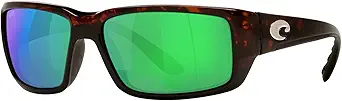
Costa del Mar Fantail
Costa del Mar Fantail
- 580G glass lens cuts water glare better than any other option on this list
- All-day comfortable fit — relaxed wrap, secure on water
- Hydrolite pads grip effectively in sweat and rain
Costa del Mar builds sunglasses for anglers. That is not a marketing positioning — it is a functional specialization. The Costa del Mar Fantail uses Costa's 580G glass lens technology, which is specifically optimized to filter the wavelengths of light that cause the most visual fatigue on water. The result is a lens that cuts surface glare more effectively than general-purpose polarized options and makes spotting fish in shallow water genuinely easier.
The 580G designation means the lens filters high-energy visible light (green, yellow, and red wavelengths) in addition to standard UV and polarization. Colors appear differently through a 580G lens — more contrast, more depth — in a way that is immediately noticeable when switching from standard polarized sunglasses. For fishing, the difference is functional. For hiking or everyday use, it is a preference.
The Fantail frame is a classic Costa design — medium coverage, comfortable for all-day wear, light enough to forget about. The fit is relaxed compared to aggressive sport frames and transitions well between on-water and casual use. Hydrolite nose and temple pads grip in sweat and wet conditions.
Compared to the Maui Jim Peahi, the Fantail is slightly less versatile in very high UV conditions (less side coverage) but the 580G lens technology is superior for water-specific glare. For hikers who also fish regularly, this is the more purposeful choice. For pure hiking, the Maui Jim provides better all-conditions optical performance.
Pros
- +580G glass lens cuts water glare better than any other option on this list
- +All-day comfortable fit — relaxed wrap, secure on water
- +Hydrolite pads grip effectively in sweat and rain
Cons
- −Less side coverage than Maui Jim or Oakley for high-UV alpine hiking
- −Color rendering optimized for water — preference-dependent for other uses
The fishing sunglass, full stop. The 580G lens technology is purpose-built for water and it shows. For hikers who also spend time on the water, nothing else competes.
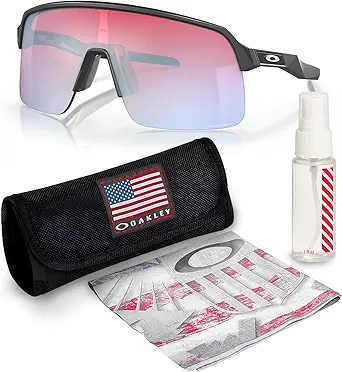
Oakley Sutro Lite
Oakley Sutro Lite
- Shield coverage eliminates peripheral light intrusion
- Prizm lens technology measurably improves contrast for trail activities
- Lightweight O Matter frame stays secure at speed
The Oakley Sutro Lite is a shield-style sunglass built for sport. A single large lens covers the entire visual field without frame obstruction — an advantage for fast-moving activities where peripheral awareness matters. The fit is aggressive and secure, built to stay in place at cycling pace without bouncing or shifting.
Oakley's Prizm lens technology enhances specific color wavelengths based on activity — the Sutro Lite is available in Prizm Trail, Prizm Road, and other variants that optimize contrast for different environments. The trail variant makes brown dirt and tree roots pop against green backgrounds in a way that improves reaction time on technical terrain. This is not universal: some people find Prizm lenses too saturated for everyday use.
The O Matter frame is lightweight and flexible. The temple arms have enough retention grip to stay on during hard efforts, and the nose pads are replaceable — a useful longevity feature. The lens is polycarbonate, not glass, which means slightly lower optical precision than the Maui Jim Peahi but meaningfully lighter and more impact-resistant.
For hikers who also bike or trail run, the Sutro Lite covers multiple activities well. For pure hiking at a moderate pace, the shield style is overkill — the Smith Optics Guide's Choice provides better all-day comfort in a more versatile frame. For anyone moving fast in bright conditions, the Sutro Lite is the correct choice.
Pros
- +Shield coverage eliminates peripheral light intrusion
- +Prizm lens technology measurably improves contrast for trail activities
- +Lightweight O Matter frame stays secure at speed
Cons
- −Aggressive sport style not ideal for casual or town use
- −Prizm color enhancement is preference-dependent
The choice for anyone moving fast in bright conditions. The shield coverage and Prizm technology are built for sport performance, not casual wear.
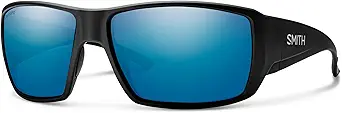
Smith Optics Guide's Choice
Smith Optics Guide's Choice
- ChromaPop performs well in variable light — not just bright sun
- Semi-rimless frame comfortable for all-day wear
- Available in glass for premium optical quality
The Smith Optics Guide's Choice is named for the people who wear sunglasses professionally — fishing guides, ski patrollers, and outdoor instructors who need a sunglass that works correctly across an entire day of variable outdoor conditions. Smith's ChromaPop polarized lens technology filters two wavelengths of light that cause color confusion in the eye, resulting in clearer, more defined color contrast without the oversaturation of some competing technologies.
The frame is a classic semi-rimless design that sits comfortably for all-day wear — lighter than the Maui Jim Peahi, less aggressive than the Oakley Sutro Lite. The Evolve bio-based frame material is a practical sustainability credential. The coverage is solid without being a full shield, which makes it more versatile for mixed hiking and town use.
ChromaPop performs exceptionally well in partially cloudy conditions where contrast varies quickly — the lens adjusts to maintain consistent color definition rather than optimizing for a single light condition. For hiking in variable mountain weather, this is a meaningful advantage over lenses tuned for consistent bright sun.
The Guide's Choice is available in glass or polycarbonate. The glass version approaches the optical quality of the Maui Jim Peahi at a lower price, though Maui Jim's color enhancement is still superior for water use. For mixed hiking-fishing-daily use, this is the most balanced option on the list.
Pros
- +ChromaPop performs well in variable light — not just bright sun
- +Semi-rimless frame comfortable for all-day wear
- +Available in glass for premium optical quality
Cons
- −Maui Jim edges it for pure water or high-contrast performance
- −Less coverage than shield options for fast-moving activities
The balanced choice. ChromaPop performs across conditions, the frame wears all day comfortably, and the guide namesake is earned.
Ray-Ban Aviator Polarized
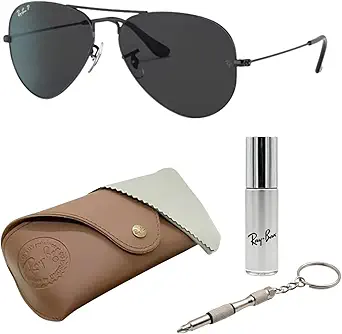
Ray-Ban Aviator Polarized
- Polarized glass lens performs better than polycarbonate alternatives
- Adjustable metal bridge fits a range of face shapes precisely
- Classic design works on trail and everywhere else
There is something to be said for a sunglass that has been worn by fighter pilots, heads of state, and hikers for over eighty years. The Ray-Ban Aviator Polarized is not optimized for any particular outdoor activity — it is optimized for being a sunglass, which it does better than almost anything else at its price.
The polarized glass lens is genuinely good — not Maui Jim level, but better than most polycarbonate options and significantly better than the cheaper polarized options on this list. The metal frame is lightweight and adjustable at the nose bridge, which means it can be tuned to fit correctly rather than accepted as-is. The drop-lens teardrop profile provides more coverage than it appears to in photos.
For hiking specifically: the aviator frame is not the most secure design for trail running or fast movement — the spring hinges flex but the frame is not built for athletic retention. For moderate-pace hiking, trail walks, and anything that does not require an athletic grip, the aviator sits comfortably and stays put. The polarized glass cuts trail glare effectively.
The crossover value is real. The same pair that works on a hiking day hike looks correct at dinner, at a meeting, and at the beach. For hikers who do not want a different pair for every activity, the polarized aviator is the single-pair answer. The Goodr OGs solve the same multi-use problem at a fraction of the price with a different aesthetic.
Pros
- +Polarized glass lens performs better than polycarbonate alternatives
- +Adjustable metal bridge fits a range of face shapes precisely
- +Classic design works on trail and everywhere else
Cons
- −Not designed for athletic retention — unsuitable for running or fast cycling
- −Drop-lens coverage less protective than wrap or shield styles in bright sun
The one-pair answer. Not the best sunglass for any single activity, but the best sunglass for all of them combined.
100% Speedcraft
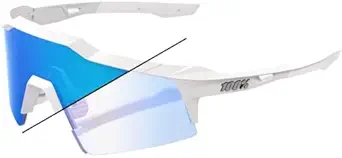
100% Speedcraft
- Large shield lens provides complete coverage in cycling position
- Ventilated lens — no fogging at sustained aerobic effort
- Lightweight TR90 frame designed for sport retention
100% is a cycling-specific brand, and the 100% Speedcraft is a cycling-specific sunglass. The large single-lens shield provides complete peripheral coverage in the aerodynamic tuck position, the ventilation channels in the lens prevent fogging at effort, and the lightweight TR90 frame stays in place through the vibration and movement of hard riding.
The HiPER lens technology provides UV protection and color enhancement specifically optimized for road cycling conditions — bright tarmac, variable overhead light, and the contrast demands of seeing road debris and obstacles at speed. For mountain biking and trail running, the same technology works well on dusty singletrack.
The lens is polycarbonate, not glass. For cycling, this is the correct trade: glass adds weight, is slightly more fragile in crash scenarios, and the optical difference matters less on a bike where you are processing information quickly rather than appreciating fine color detail. Compared to the Oakley Sutro Lite, the 100% Speedcraft is similarly performing at a slightly lower price point — both are excellent cycling shields.
For hiking, this is overkill. The shield style restricts the natural ventilation that matters more at hiking pace, and the athletic styling does not transition off-trail. This is a sports performance sunglass used by professional cyclists; wear it accordingly.
Pros
- +Large shield lens provides complete coverage in cycling position
- +Ventilated lens — no fogging at sustained aerobic effort
- +Lightweight TR90 frame designed for sport retention
Cons
- −Cycling-specific — poor ventilation at hiking pace
- −Shield styling does not transition off-trail
Purpose-built for sport performance. For cyclists and trail runners who want pro-spec coverage, nothing on this list beats it. For hiking, choose something else.
Pit Viper The Originals
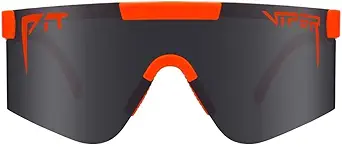
Pit Viper The Originals
- Adjustable temple arms — genuinely rare and useful for fit precision
- Durable frame handles trail drops better than most
- UV400 polarized lens provides real protection at a fair price
Pit Viper makes sunglasses the way a 1993 ski instructor would — maximalist, loud, and completely unbothered by conventional taste. The Pit Viper The Originals is the original model: a large wraparound shield with adjustable features that are genuinely useful (the temple arms adjust for wrap depth and angle, which is rare at any price), available in patterns that make Oakley look restrained.
Underneath the aesthetic, the lens quality is respectable — ANSI-rated polarized polycarbonate with UV400 protection. The adjustable arms mean the fit can be dialed in for different face shapes and activity positions in a way most fixed-frame sunglasses cannot. The frame is durable: a few drops on trail will not destroy them.
What Pit Viper is not: optically refined. The lens quality does not approach the Maui Jim Peahi or even the Smith Optics Guide's Choice. For activities where you are looking through the lens for hours — fishing, alpine traverses — the optical limitations show. For hiking, trail running, and skiing where you primarily need glare reduction and UV protection, the performance is completely adequate.
The honest recommendation: these are excellent sunglasses for people who want something that works, costs relatively little, and makes them happy to look at. They are not excellent sunglasses for people who need the best optical performance. The Goodr OGs offer a similar value proposition with a lower profile aesthetic.
Pros
- +Adjustable temple arms — genuinely rare and useful for fit precision
- +Durable frame handles trail drops better than most
- +UV400 polarized lens provides real protection at a fair price
Cons
- −Lens optical quality does not approach premium glass options
- −Aesthetic is loud — not for everyone
Functional sunglasses that happen to be fun. If the aesthetic speaks to you, the performance will not disappoint. If it does not, the Ray-Ban Aviator covers the same all-purpose ground with better optics.
Goodr OGs
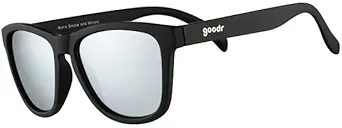
Goodr OGs
- UV400 polarized lens at the lowest price on this list
- No-slip grip in sweat — stays in place during running
- Replaceable if lost or broken without financial consequence
The Goodr OGs solve a specific problem: polarized sunglasses are expensive, and running in them risks dropping them on rocks or leaving them at a trailhead. At their price, losing a pair of Goodr OGs is an inconvenience rather than a small tragedy.
The construction is honest for the price. The polarized polycarbonate lens provides genuine UV400 protection and adequate glare reduction. The fit is designed for movement — no-slip, no-bounce is Goodr's promise, and it holds up. The rubberized nose pads and temple tips grip in sweat without the greasy feel of some sport coatings. For trail running and moderate hiking, they stay put.
The optical quality is the expected trade at this price. The lens is polarized and protective, not optically refined — you will notice the difference when comparing side-by-side with Maui Jim Peahi glass, but you will not notice it hiking or running in isolation. For glare reduction and UV protection — the actual functional requirements — the Goodr OGs deliver.
The style range is wide, and the colors are clean. They do not look like budget sunglasses, which extends their use off-trail. For the specific use case of a runner who needs polarized protection and does not want to risk expensive eyewear on technical terrain, these are the correct answer. For anyone who will spend most of their time looking through their sunglasses rather than at them, invest more.
Pros
- +UV400 polarized lens at the lowest price on this list
- +No-slip grip in sweat — stays in place during running
- +Replaceable if lost or broken without financial consequence
Cons
- −Optical quality does not approach glass or premium polycarbonate options
- −Small frame coverage — less protection in very bright alpine conditions
The correct choice when budget or loss-risk is the primary constraint. Delivers real polarization and UV protection; asks nothing in return except reasonable expectations.
Questions Worth Asking
Common polarized sunglasses questions.
Related Guides