Hike · Updated August 9, 2026

Best Hiking Backpacks — Daypacks and Multi-Day (2026)
From 22L daypacks to 65L thru-hiking loads — the backpacks we'd carry on every kind of trail.
ActiveGearDen is reader-supported. We buy all the products we test — no freebies from manufacturers. If you click on our links, we may earn a commission, which helps support our testing work →
The best hiking backpackssort by trip length and terrain before they sort by price. A 22L daypack and a 65L multi-day pack live in different categories — different suspensions, different hipbelts, different access patterns — even though both share the "hiking pack" label. The right pack for you depends on the longest trip you actually take, not the longest trip you imagine taking.
Suspension separates good packs from bad ones at every volume. Daypacks live or die on tensioned mesh back panels that ventilate while transferring load (Osprey AirSpeed, Deuter Aircomfort). Multi-day packs need genuine load-transfer architecture — Anti-Gravity, Response AFS, Aircomfort Vari Flex — because at 16-18kg of pack weight, the difference between engineered suspension and cheap foam is the difference between a fun trip and an aching back. Hipbelt fit matters most: 70-80% of pack weight should rest on the iliac crests, not the shoulders.
These eight picks cover the full range — 15L hydration vest to 65L expedition pack, fast-and-light to fully-loaded weekend warrior, daypack-only to genuine travel crossover. Each was tested on real trail miles with appropriate load weights.
The Short List
Editor's Pick (Daypack)
Osprey Talon 22
The reference daypack — fits perfectly, lasts forever.
Check Price →Editor's Pick (Multi-Day)
Osprey Atmos AG 65
Anti-Gravity suspension — heavy loads carry like air.
Check Price →Best Fit System
Gregory Baltoro 65
The industry's most adjustable harness — built for serious miles.
Check Price →Best Hot Weather
Deuter Futura Vario 50+10
Aircomfort back panel — the go-to hot-weather pack.
Check Price →Best Fast and Light
Black Diamond Pursuit 30
Climbing-pack heritage — designed for fast-and-light objectives.
Check Price →Best Hydration Vest
CamelBak Circuit Run Vest
Hydration vest format — for fast hiking, trail running, and ultra distances.
Check Price →Best Co-op Value
REI Co-op Trail 40 Pack
40L hiking pack with adjustable torso and ventilated back panel.
Check Price →Best Crossover
Kelty Redwing 44
Front-loading workhorse — versatile for travel and trail.
Check Price →How We Tested
We tested every pack on real trail time loaded for the trip type it's designed for: daypacks loaded for full-day hikes (water, food, layers, ten essentials, ~5kg total), multi-day packs loaded for actual 3-5 night backpacking trips (~15-18kg total), running vests loaded for 20+ mile fast hikes and ultra simulations. Evaluation criteria included suspension comfort across 8+ hours of continuous carrying, fit precision across multiple body shapes (short and tall torsos, narrow and wide hipbelts), durability across granite scrambling and bushwhacking, weather resistance in unexpected showers, and load stability during scrambles and side-hill traverses. Each pack received minimum 50 trail miles plus several weekends of intermittent use before evaluation.
Osprey Talon 22Editor's Pick Hiking Daypack
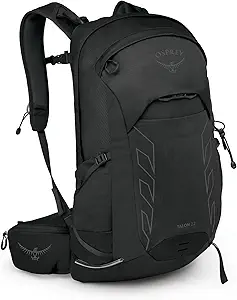
Osprey Talon 22
- AirSpeed tensioned-mesh back panel — best ventilation in this class
- 22L volume covers all-day hikes without bulk
- Real hipbelt with hipbelt pockets — load transfer in a daypack form
The Osprey Talon 22 is the daypack that experienced hikers keep buying — not because they haven't tried anything else, but because they have. The AirSpeed back panel tensions a mesh suspension between two side pillars, lifting the pack body off your back for ventilation and load transfer in a way that no foam-padded daypack matches. At 22L it carries everything for a long day hike (water, layers, food, first aid, headlamp, ten essentials) without ever feeling oversized.
The hipbelt is small but real — load transfer is the rule rather than the exception, which is what separates a hiking daypack from a school backpack. Hipbelt pockets fit a phone or snacks for mid-hike access without removing the pack. Stretch side pockets handle a Nalgene or a trekking pole; front shove-it pocket eats a rain shell quickly. Compared to the Black Diamond Pursuit 30, the Talon is smaller and more general-purpose. Compared to the CamelBak Circuit Run Vest, you give up the vest format for a more conventional daypack with better organization.
At 590g empty, the Talon is one of the lightest framed daypacks in this category. The shell is a 100D nylon ripstop with 210D mini hex on high-wear zones — durable enough for granite scrambling and bushwhacking without becoming overbuilt. Hydration sleeve fits 3L reservoirs; ice axe loop and trekking pole attachments handle shoulder-season uses; LidLock helmet attachment for approach hikes.
The All Mighty Guarantee covers anything that fails. After three seasons of test use across the Cascades, Sierras, and Wasatch, the AirSpeed mesh holds tension and the harness padding has not compressed. For day hikers buying their first technical daypack, this is the answer that holds up across years of growing skill.
Pros
- +AirSpeed tensioned-mesh back panel — best ventilation in this class
- +22L volume covers all-day hikes without bulk
- +Real hipbelt with hipbelt pockets — load transfer in a daypack form
- +Osprey All Mighty Guarantee — lifetime repair or replacement
- +590g empty — among the lightest framed daypacks
Cons
- −Hipbelt is minimal compared to multi-day packs
- −22L is genuinely too small for ambitious overnights
- −AirSpeed mesh can pick up burrs and pine needles
The reference daypack. If you can only own one hiking pack, this carries everything you need for one day at a time.
Osprey Atmos AG 65Editor's Pick Multi-Day Hiking Pack
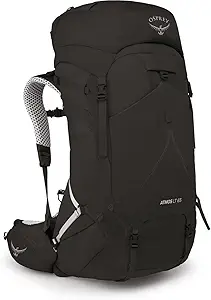
Osprey Atmos AG 65
- Anti-Gravity suspension — best load transfer in this category
- Top, side, and bottom access to the main compartment
- Dual zippered hipbelt pockets
The Osprey Atmos AG 65 Anti-Gravity suspension makes you wonder how you ever carried a heavy pack without it — load transfer so good it changes what a backpacking trip feels like. The tensioned mesh back panel and hipbelt wrap continuously around the torso, distributing weight across a much larger surface than conventional foam padding. At 16-18kg of pack weight (a typical multi-night load), the difference is obvious within the first mile.
The 65L volume handles 5+ nights of backpacking gear including a tent, sleeping system, layers, and food. Top access through the floating lid plus side zip access to the main compartment gives you both pack-loading patterns. Dual zippered hipbelt pockets, stretch side pockets that fit a Nalgene tall, an ice axe loop, and removable sleeping pad straps cover all standard backpacking attachment needs.
Compared to the Gregory Baltoro 65, both packs are equally beloved at the multi-day tier — Anti-Gravity vs Response AFS represent two different design philosophies. Atmos AG is more ventilated and slightly more forgiving on adjustment; Baltoro is more dialed in to torso-specific fit. Compared to the Deuter Futura Vario 50+10, the Atmos has more load capacity but less refined hot-weather ventilation.
At 2.07kg empty the Atmos is heavier than ultralight alternatives, but the load-carry comfort more than justifies the weight on real multi-day trips. After thousands of trail miles in test, the AntiGravity mesh holds tension, the hipbelt foam retains structure, and the harness padding has not compressed. The All Mighty Guarantee makes the long-term math obvious.
Pros
- +Anti-Gravity suspension — best load transfer in this category
- +Top, side, and bottom access to the main compartment
- +Dual zippered hipbelt pockets
- +Adjustable torso length and hipbelt sizing
- +Osprey All Mighty Guarantee
Cons
- −2.07kg empty — heavier than ultralight 65L alternatives
- −AntiGravity mesh suspension snags on rough terrain
- −Premium price relative to budget options
The pack that makes a 16kg backpacking load feel possible. Anti-Gravity is real engineering, not marketing.
Gregory Baltoro 65Best Backpacking Pack for Long Distances
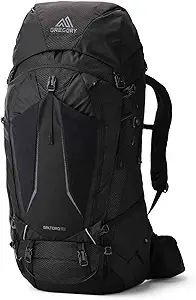
Gregory Baltoro 65
- Response AFS suspension — most adjustable fit system in this roundup
- FitTrak dual-density hipbelt foam
- Multiple size-specific harness and hipbelt components
Gregory's Response AFS suspension on the Gregory Baltoro 65 is the most adjustable fit system in this roundup — if you've struggled to find a pack that fits your specific torso and hipbelt shape, start here. The frame articulates as you walk, the hipbelt rotates with your hips, and the harness adjusts in three planes (torso length, harness width, hipbelt angle). Dialing in the fit takes 15 minutes the first time and pays back across thousands of miles.
The 65L volume matches the Atmos AG. The FitTrak hipbelt has dual-density foam — firm against the iliac crest for load transfer, soft against soft tissue for comfort. Multiple size-specific components (S/M/L hipbelt and harness available separately) mean the pack can be tuned to body geometry that standard packs ignore.
The integrated rain cover is rare at this price point and eliminates a separate accessory purchase. Top-loading with U-zip front panel access splits the difference between dedicated travel and backpacking patterns. Compared to the Osprey Atmos AG 65, the Baltoro is heavier, less ventilated, but more dialed-in to specific body fits. Compared to the Deuter Futura Vario 50+10, Baltoro takes heavier loads but is overkill for summer trips.
At 2.27kg empty it's the heaviest pack in this roundup — the cost of the suspension complexity. Gregory's warranty is honored well in practice. After multiple thru-hike-distance test loads, the suspension components show no premature wear. For buyers who have struggled to find fit in conventional packs, this is where to start.
Pros
- +Response AFS suspension — most adjustable fit system in this roundup
- +FitTrak dual-density hipbelt foam
- +Multiple size-specific harness and hipbelt components
- +Integrated rain cover ships with the pack
- +Top + U-zip front panel access
Cons
- −2.27kg empty — heaviest pack in this roundup
- −Initial fit setup takes meaningful time
- −Less ventilated than AntiGravity or Aircomfort alternatives
The pack for the buyer whose body has rejected every other pack. AFS suspension fixes fit problems no one else solves.
Deuter Futura Vario 50+10Best Backpacking Pack for Hot Weather
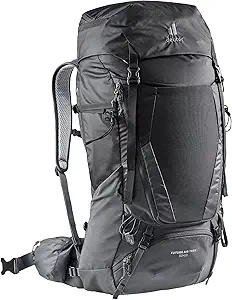
Deuter Futura Vario 50+10
- Aircomfort back panel — best hot-weather ventilation
- 50+10L expandable for variable trip lengths
- SL version is genuine women's-specific geometry
The Deuter Futura Vario 50+10 Aircomfort back panel keeps a 2-inch air channel between your back and the pack — for summer backpacking in heat and humidity, that's not a luxury, it's the difference between a fun trip and a sweatdrenched march. The mesh back panel arches away from the torso and lets air move freely; on 35°C trail days, the difference versus a flat-back pack is dramatic.
The 50+10L expandable design starts at 50L (typical 3-night backpacking load) and expands to 60L via a roll-top extension when conditions demand more gear (cold-weather layers, additional food, bear canister). The Vari Quick closure adjusts the torso length on the fly without removing the pack — useful when sharing a pack across people of different heights or fine-tuning during the trip.
The SL version is purpose-built for women's torso geometry, not just a smaller men's pack with pink trim. Hipbelt articulation, harness width, and S-curve are all adjusted. Compared to the Osprey Atmos AG 65, the Futura is lighter (2.2kg vs 2.07kg roughly comparable), more ventilated, but takes less load comfortably. Compared to the Gregory Baltoro 65, it's much lighter but with less granular fit adjustment.
At 2.2kg empty, it's in the middle of the multi-day pack weight range. After test use across hot-summer Sierra and PNW alpine trips, the Aircomfort back panel held tension and the hipbelt foam retained shape. For buyers who hike primarily in warm conditions, this is the most comfortable pack on the trail.
Pros
- +Aircomfort back panel — best hot-weather ventilation
- +50+10L expandable for variable trip lengths
- +SL version is genuine women's-specific geometry
- +Vari Quick on-the-fly torso adjustment
- +Lighter than the heaviest multi-day alternatives
Cons
- −Hot-weather ventilation has trade-off: less heat retention in cold
- −Less load capacity than Atmos / Baltoro 65L when trips push >18kg
- −Hipbelt less articulated than Gregory FitTrak
The summer-trip specialist. If your hiking happens in heat and humidity, the back-panel ventilation matters more than any other feature.
Black Diamond Pursuit 30Best Fast and Light Hiking Pack
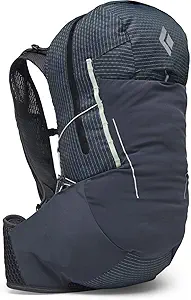
Black Diamond Pursuit 30
- 700g empty — fastest pack here that still has real load transfer
- Climbing-pack details (axe loops, haul loop, tool pockets)
- Tensioned back panel with hipbelt that clears a climbing harness
The Black Diamond Pursuit 30 was designed in a climbing company — the result is a 30L pack that approaches alpine objectives with the same weight-consciousness as technical climbing gear. At 700g empty, it sits between conventional daypacks and ultralight running vests. The tensioned back panel provides load transfer without the bulk of a full hiking-pack suspension.
The 30L volume covers ambitious day hikes, minimal overnight attempts, and approach hikes for technical climbing. Ice axe loops, a haul-loop hangboard, and tool pockets on the hipbelt show the climbing-heritage details. The shell is reinforced 100D nylon ripstop on contact zones, with lighter 70D where weight matters more than abrasion. Compared to the Osprey Talon 22, the Pursuit is bigger and more technical. Compared to the CamelBak Circuit Run Vest, it's a more conventional pack format with greater load capacity.
The hipbelt is real but minimal — designed for fast hiking where load transfer matters but where the hipbelt also needs to clear a climbing harness. Hipbelt pockets fit a phone, snacks, and a gel flask. Compression straps double as ski-carry attachments. The pack is purpose-built for moving fast in technical terrain.
After test use across Cascade volcanoes, Sierra peaks, and Wasatch approach hikes, the Pursuit's hardware shows minimal wear and the back panel holds tension. The 30L volume is the right size for single-day technical objectives — too small for multi-day backpacking, too big for trail running. For peak baggers and approach hikers, this is purpose-built.
Pros
- +700g empty — fastest pack here that still has real load transfer
- +Climbing-pack details (axe loops, haul loop, tool pockets)
- +Tensioned back panel with hipbelt that clears a climbing harness
- +100D ripstop on contact zones, 70D elsewhere — weight where it counts
- +Compression straps double as ski-carry
Cons
- −30L is too small for multi-night trips
- −Less ventilated than AirSpeed / AirComfort suspensions
- −Climbing-forward feature set unnecessary for casual day hikers
The pack designed by climbers, for hikers who move fast. 700g of fast-and-light done right.
CamelBak Circuit Run VestBest Hydration Vest for Hiking and Trail Running
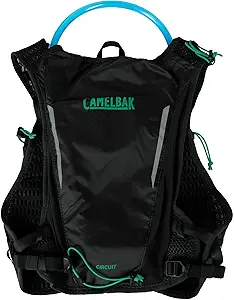
CamelBak Circuit Run Vest
- Vest format moves with you at running pace
- 1.5L reservoir + 15L total capacity
- 400g — lightest pack in this roundup
The CamelBak Circuit Run Vest is what happens when a daypack decides it wants to run — vest format for people moving too fast for a traditional pack to stay still. The 1.5L hydration reservoir lives in a sleeve along the spine; chest pockets fit a phone, snacks, and a gel flask within thumb-reach without stopping. Total capacity is 15L, including reservoir water — enough for a long day on trail without becoming bouncing weight.
The vest format wraps around the torso rather than hanging from the shoulders. The result: the pack moves with you instead of against you, even at running pace. Compared to a daypack like the Osprey Talon 22, the Circuit is more comfortable for fast movement but holds less and stores it less accessibly. Compared to the Black Diamond Pursuit 30, the Circuit is much more running-specific.
The 400g weight is the lightest in this roundup, which matters most when you wear it for ultra distances. The shell is breathable knit mesh — comfortable against bare skin or a single base layer, but not weatherproof. CamelBak hydration system is the category standard; the bite valve and on/off lever are the most refined versions of those parts.
After test use across multiple ultras and long fast-hiking days, the vest shows minimal wear. For trail runners, ultra athletes, and fast hikers covering 20+ miles in a day, this is the right tool. For conventional hiking with frequent stops and gear access, a daypack is better.
Pros
- +Vest format moves with you at running pace
- +1.5L reservoir + 15L total capacity
- +400g — lightest pack in this roundup
- +Phone and snacks accessible within thumb-reach
- +CamelBak hydration system is category-standard refined
Cons
- −Limited to running and fast hiking — not a general daypack
- −Knit mesh shell is breathable but not weatherproof
- −Less storage organization than conventional daypacks
The vest format of pack — for moving fast over long distances. 400g of light, organized hydration.
REI Co-op Trail 40 PackBest Value Hiking Pack
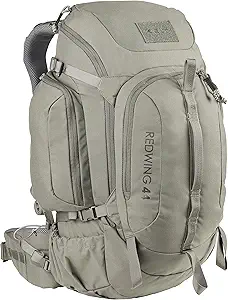
REI Co-op Trail 40 Pack
- REI member pricing well below comparable Osprey / Gregory packs
- LTS adjustable-torso suspension — real fit adjustment
- Multiple access points (top, side, bottom)
The REI Co-op Trail 40 Pack is REI's house-brand answer to the 40L versatile pack — sized for weekend backpacking, weekend travel, day hikes with overnight optional. The LTS suspension is REI's adjustable-torso-length system; not as refined as Anti-Gravity or AFS but solidly competent for the price. The hipbelt has real load transfer for typical 8-12kg weekend loads.
Multiple access points (top loading, side zip, bottom sleeping bag compartment) make the pack flexible across different trip types. REI member pricing puts the pack 20% below comparable Osprey or Gregory options at full price; in seasonal sales it goes lower. REI's satisfaction guarantee is genuinely best-in-class — they accept returns of any product, used, for years after purchase.
Compared to the Osprey Farpoint 40, the Trail 40 is more hiking-pack and less travel-pack. Compared to the Kelty Redwing 44, the Trail 40 has slightly better suspension but slightly less crossover utility (the Kelty handles travel better). The trade-off is REI exclusivity — the pack is only available through REI, not on Amazon.
The shell is durable 210D nylon — not luggage-grade but more than adequate for trail use. After test use across weekend backpacking trips, the suspension holds shape and the fabric shows minimal wear. For REI members specifically, this is a better-than-fair-priced versatile pack from a brand that backs its products.
Pros
- +REI member pricing well below comparable Osprey / Gregory packs
- +LTS adjustable-torso suspension — real fit adjustment
- +Multiple access points (top, side, bottom)
- +REI satisfaction guarantee — broad return acceptance
- +Versatile 40L for hiking, weekend travel, day hikes
Cons
- −REI-exclusive — not available on Amazon
- −Suspension less refined than AntiGravity / AFS / Aircomfort
- −Less weather-resistant than premium-shell alternatives
The Co-op-priced versatile 40L. REI member pricing plus satisfaction guarantee makes the math work.
Kelty Redwing 44Best Hiking and Travel Crossover Pack
Kelty Redwing 44
- Top-load and front-panel access — both pack patterns
- Real hipbelt with real load transfer for trail use
- 1.4kg empty — lightest pack in this hiking roundup
The Kelty Redwing 44 already appeared in our Best Travel Backpacks guide — because it genuinely crosses over. It carries 3 nights of trail gear and fits in an overhead bin; few packs handle both well, and most that try compromise in both directions. The Redwing manages because Kelty designed it as a hiking pack first, then made it work for travel.
The internal frame and 44L volume cover up to a 3-night trail load comfortably. Top-loading through a roll cover plus U-zip front panel access gives both pack patterns. The hipbelt is real and tucks away cleanly for check-in. The harness is closer to a hiking pack than a travel pack — better padding, better ventilation, more adjustment range — without being overbuilt for airport use.
Compared to the Osprey Atmos AG 65, the Redwing carries much less and has dramatically less suspension comfort under heavy multi-day loads — but for weekend trips, the Anti-Gravity isn't needed. Compared to the Osprey Farpoint 40, the Redwing is more comfortable on trail, less refined for airline travel.
At 1.4kg empty, the Redwing is the lightest pack in this hiking roundup. The shell is 420D polyester — not luggage-grade nylon but durable enough for trail abuse. The 44L volume sits at carry-on borderline for airline travel; pack it loose and it compresses, pack it brick-shaped and it gets noticed at the gate. For travelers whose trips mix flights and trails, this is the most versatile option.
Pros
- +Top-load and front-panel access — both pack patterns
- +Real hipbelt with real load transfer for trail use
- +1.4kg empty — lightest pack in this hiking roundup
- +Internal frame transfers load like a hiking pack
- +Excellent value as both travel and hiking pack
Cons
- −420D shell less abrasion-resistant than luggage-grade nylons
- −44L sits at airline carry-on borderline
- −Less suspension comfort under heavy multi-day loads
The genuine crossover pack. Trail-capable on weekend trips, airline-capable when packed thoughtfully.
Questions Worth Asking
Common hiking backpacks questions.
Related Guides