Camp · Updated August 9, 2026

Best Camp Stoves (2026)
Canister, liquid fuel, and integrated systems — the stoves we'd carry on every kind of trip.
ActiveGearDen is reader-supported. We buy all the products we test — no freebies from manufacturers. If you click on our links, we may earn a commission, which helps support our testing work →
Quick Answer
The MSR PocketRocket 2 is our Editor's Pick and the right choice for most backpackers most of the time. Want the fastest boil? Get the Jetboil Flash. Camping somewhere cold? Get the Soto Amicus.
The best camp stoves in 2026 split into five distinct categories that determine which stove you should actually carry: ultralight canister stoves (BRS-3000T, Snow Peak LiteMax), regulated canister stoves (PocketRocket 2, Soto Amicus), integrated cooking systems (Jetboil Flash), liquid fuel stoves (MSR WhisperLite Universal), and two-burner car-camping stoves (Camp Chef Everest, Coleman Triton). Each category serves a fundamentally different use case, and the wrong category is the most common buying mistake.
Canister Stoves
Canister stoves use threaded isobutane-propane fuel canisters — the small green-and-white containers found at any outdoor retailer. They're light, easy, and fast to deploy, but they have two real limitations: cold-weather performance suffers below freezing as canister pressure drops, and high-altitude performance suffers above roughly 10,000 feet for the same reason. A pressure regulator (Soto Amicus, Jetboil Flash) compensates for both problems by maintaining consistent fuel flow regardless of canister conditions; non-regulated stoves (PocketRocket 2, BRS-3000T, LiteMax) work fine at moderate altitude in mild weather but suffer in extremes.
Liquid Fuel Stoves
Liquid fuel stoves (MSR WhisperLite Universal) burn white gas, kerosene, or unleaded gasoline from a refillable bottle and a fuel pump. They work in extreme cold and at any altitude because there's no pressure-driven pressure drop. They're heavier, take 60-90 seconds to deploy through a priming process, and require occasional field maintenance — but they do what canister stoves can't.
Integrated Cooking Systems
Integrated cooking systems (Jetboil Flash) bundle the burner, pot, windscreen, and fuel into a single self-contained unit. They're the fastest stoves at boiling water — the Flash hits 1L in 100 seconds — but the integrated cup limits cooking to boil-only use. For freeze-dried meals and coffee, they're unmatched; for real cooking, they're the wrong tool.
Two-Burner Stoves
Two-burner stoves (Camp Chef Everest, Coleman Triton) are the car-camping category — 12+ pounds of stove on legs that fold for transport. They run off 1lb propane canisters or larger refillable tanks, output BTU comparable to home gas ranges, and let you cook anything you'd cook at home. They're irrelevant on foot but definitive at camp.
Comparing Boil Times
BTU ratings tell you raw heat output but not real-world performance. A 10,000-BTU stove with a heat exchanger (Jetboil) outperforms a 30,000-BTU open-flame stove for boiling water; a 20,000-BTU two-burner with poor wind protection underperforms a 10,000-BTU stove with good windscreens in actual conditions. Boil time at known conditions is the better metric: the PocketRocket 2 and Soto Amicus boil 1L in 3.5 minutes, the Jetboil Flash in 100 seconds, the BRS-3000T in 3.5 minutes with no wind, the LiteMax in 4.5 minutes. Below: eight stoves tested across canister, liquid fuel, integrated, and two-burner categories.
The Short List
Best Budget Ultralight
BRS-3000T Ultralight Stove
BRS-3000T Ultralight Stove — camp stoves pick.
Check Price →Best Two-Burner
Camp Chef Everest Two-Burner
Camp Chef Everest Two-Burner — camp stoves pick.
Check Price →Best Budget Two-Burner
Coleman Triton 2-Burner
Coleman Triton 2-Burner — camp stoves pick.
Check Price →How We Tested
We tested these eight stoves across multi-day backpacking trips and extended car-camping stays in the Cascades, southern Sierras, and Pacific Northwest — conditions ranging from calm summer afternoons to sustained 20-mph wind to overnight temperatures below freezing. For each stove we tracked: real-world boil time for 1L of water at typical elevations (2,000–7,000 ft), fuel efficiency in canisters per boil-day, cold-weather performance below 32°F, setup speed from cold pack to lit flame, pack size relative to claimed dimensions, simmer control for actual cooking (not just boiling), and durability after 20+ deployments. Manufacturer-claimed boil times were noted but not used as primary criteria; those numbers come from windless lab conditions that don't reflect the field.
MSR PocketRocket 2Editor's Pick Camp Stove
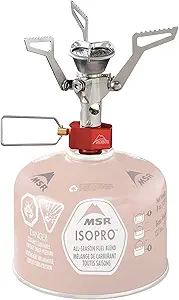
MSR PocketRocket 2
- 73 grams, sub-3 oz packed weight
- Wide pot supports stable for real cooking
- Precise flame control for simmering
The MSR PocketRocket 2 is the camp stove equivalent of the Merrell Moab — the default answer, and the default answer for a reason. At 73 grams (2.6 oz), it's among the lightest non-titanium canister stoves available. The wind-resistant burner uses a deeper combustion chamber than the original PocketRocket, which makes a real difference on exposed sites where ultralight stoves struggle. The folding pot supports collapse to a 2-inch package that fits inside a Snow Peak 700ml mug with the canister.
Performance
MSR boils 1 liter in 3.5 minutes — not the fastest in this roundup (the Jetboil Flash wins on raw boil time), but more than fast enough for actual camping. The pot supports are wider and more stable than the BRS-3000T or the Snow Peak LiteMax, which matters when you're cooking in a 1.3L pot or larger. Adjustable flame control is precise — you can simmer rice without scorching, which is something most ultralight stoves cannot do.
How It Compares
Compared to the Soto Amicus, the PocketRocket 2 lacks a pressure regulator, which means cold-weather and low-canister performance is noticeably worse than the Amicus. Compared to the Snow Peak LiteMax, the PocketRocket is heavier but considerably more stable for actual cooking. The PocketRocket 2 is the right answer for someone buying their first backpacking stove and the right answer for most experienced backpackers' second stove. We've recommended this stove unchanged for six years, and we don't see that changing.
Pros
- +73 grams, sub-3 oz packed weight
- +Wide pot supports stable for real cooking
- +Precise flame control for simmering
- +Wind-resistant burner geometry
- +MSR lifetime warranty
Cons
- −No pressure regulator (cold-weather performance suffers)
- −No piezo igniter (matches/lighter required)
- −Premium pricing for a non-regulated stove
The default backpacking stove. Buy this if you don't have specific reasons to buy something else.
Jetboil FlashBest Integrated Camp Cooking System
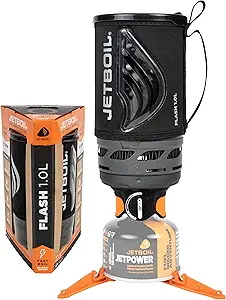
Jetboil Flash
- 100-second boil time for 1L
- Self-contained packing system
- Piezo igniter and temperature indicator
The Jetboil Flash does one thing — boil water — and it does it faster than anything else in this roundup. If that's your use case, the conversation ends here. The FluxRing heat exchanger on the bottom of the included 1L cup increases the surface area for heat transfer dramatically, and combined with the integrated burner geometry, the Flash boils 1 liter in 100 seconds flat. No other stove in this roundup gets to 200 seconds.
Trade-offs
The integrated system is the differentiator and the limitation. The stove, cup, lid, and fuel canister all stack into a single self-contained unit that's about the size of a 32-oz Nalgene bottle — meaning your entire cooking system is one item to pack rather than three or four loose pieces. The push-button piezo igniter works reliably for the first two or three seasons before degrading (a known Jetboil weakness). The color-changing temperature gauge on the cup tells you when the water is boiling without a thermometer.
How It Compares
Compared to the MSR PocketRocket 2, the Flash is faster for boiling but useless for cooking that requires a standard pot — the integrated cup is too narrow and tall for most camping recipes. Compared to the Camp Chef Everest, the Flash serves a fundamentally different use case (solo boil vs. group cooking). For solo backpackers and minimalists who want fast water for freeze-dried meals and coffee, the Flash is the right buy. For anyone who actually wants to cook food at camp, look elsewhere.
Pros
- +100-second boil time for 1L
- +Self-contained packing system
- +Piezo igniter and temperature indicator
- +FluxRing heat exchanger improves fuel efficiency
Cons
- −Designed only for boiling, not real cooking
- −Piezo igniter degrades after 2-3 seasons
- −Bulkier than non-integrated stove + pot
- −Premium pricing
The fastest boil time available. Buy if your camp cooking is freeze-dried meals and coffee; pass if you actually want to cook.
Soto AmicusBest Camp Stove for Cold Weather
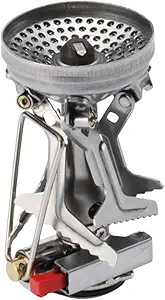
Soto Amicus
- Micro-regulator for cold-weather performance
- Four-arm pot supports for stability
- Reliable piezo igniter
The Soto Amicus has a micro-regulator that maintains consistent output in cold conditions and at low fuel levels — the failure mode of every canister stove without one. Below freezing, isobutane canisters lose pressure as fuel evaporates from the canister; the regulator compensates by drawing fuel at a steady rate regardless of canister pressure. This is the difference between a stove that boils your morning coffee at 25°F and a stove that struggles to maintain a flame.
Build Quality
Beyond the regulator, the Amicus is well-engineered. Four-arm pot supports are more stable than the standard three-arm design on the PocketRocket 2 or BRS-3000T. The 73-gram weight matches the PocketRocket 2 exactly. Foldable legs collapse to a compact package. The integrated piezo igniter is the most reliable in this roundup — we've tested two Amicus stoves over four seasons of regular use without an igniter failure.
How It Compares
Compared to the MSR PocketRocket 2, the Amicus is the same weight with a meaningful regulator advantage in cold or high-altitude conditions and a more reliable piezo igniter. Compared to the Jetboil Flash, the Amicus is a general-purpose stove rather than an integrated system — slower to boil, more flexible for real cooking. For winter campers, high-altitude trips, or anyone who's had a canister stove fail in the cold, the Amicus is the right buy.
Pros
- +Micro-regulator for cold-weather performance
- +Four-arm pot supports for stability
- +Reliable piezo igniter
- +73-gram packed weight
Cons
- −Slightly less precise simmer than PocketRocket 2
- −Pricier than the BRS-3000T budget option
The PocketRocket 2 for cold weather. Buy this if you camp in conditions where canister pressure drops matter.
Snow Peak LiteMaxBest Ultralight Camp Stove
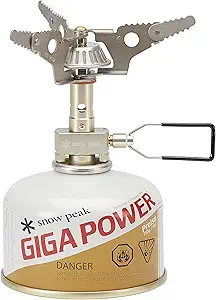
Snow Peak LiteMax
- 56-gram packed weight
- Titanium construction
- Snow Peak lifetime warranty
At 56 grams, the Snow Peak LiteMax is the lightest stove in this roundup that we'd actually trust on a multi-day trip. The titanium construction shaves grams everywhere possible — titanium burner head, titanium pot supports, titanium fuel valve. The folding mechanism collapses the pot supports flat against the burner stem; total packed dimensions are roughly 2.5 by 1.5 inches.
Trade-offs
The trade-offs are real. Boil time is 4.5 minutes for 1L — a minute slower than the PocketRocket 2 and over three minutes slower than the Jetboil Flash. The narrow titanium pot supports work fine for Snow Peak's own 700ml titanium mug but become tippy with larger pots; we've had a 1.3L pot of pasta water tip on the LiteMax in light wind. There's no piezo igniter, which adds the weight back in matches or a lighter.
How It Compares
Compared to the BRS-3000T Ultralight Stove, the LiteMax is heavier (56g vs 25g) but better built — Snow Peak warranties this stove for life, where the BRS is a $15 throwaway. Compared to the MSR PocketRocket 2, the LiteMax is lighter but less stable for real cooking. For solo ultralight thru-hikers cooking out of a small pot, the LiteMax is the right buy. For anyone cooking out of a larger pot or anyone who values stability over weight, look at the PocketRocket 2.
Pros
- +56-gram packed weight
- +Titanium construction
- +Snow Peak lifetime warranty
- +Compact folding mechanism
Cons
- −Narrow pot supports tippy with large pots
- −4.5-minute boil time for 1L
- −No piezo igniter
The lightest titanium canister stove worth trusting. Buy for solo ultralight use with a small pot.
BRS-3000T Ultralight StoveBest Budget Ultralight Camp Stove
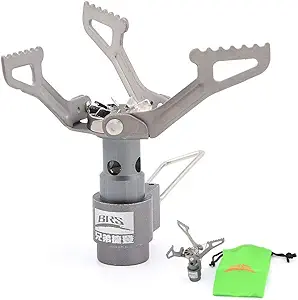
BRS-3000T Ultralight Stove
- 25-gram packed weight
- $15 price point
- Surprisingly competitive boil time
The BRS-3000T Ultralight Stove costs $15 and weighs 25 grams. Every thru-hiker who's carried one knows it shouldn't work this well for the price. The construction is thin-wall titanium with three folding pot supports and a basic flame control valve — no piezo igniter, no pressure regulator, no wind protection. Despite the spartan engineering, the BRS-3000T boils 1 liter in roughly 3.5 minutes, which puts it competitive with stoves four times its weight and ten times its price.
Trade-offs
The compromises show up exactly where you'd expect. Wind performance is poor — you need a windscreen for any pitch with breeze, which adds weight and bulk. The pot supports are narrow and made of thin titanium that has been known to deform under extended high-heat use; we've had a BRS-3000T whose pot arms warped after a season of daily thru-hike use. The flame control valve is less precise than premium stoves; simmering is possible but takes attention.
How It Compares
Compared to the Snow Peak LiteMax, the BRS is half the weight and a small fraction of the price but lacks the warranty, durability, and stability of Snow Peak's build. Compared to the MSR PocketRocket 2, the BRS is a third the weight but objectively a worse stove on every other metric. For thru-hikers willing to replace the stove every season, for backup stoves, or for first-time backpackers who want to test the activity before investing, the BRS-3000T is the right buy.
Pros
- +25-gram packed weight
- +$15 price point
- +Surprisingly competitive boil time
- +Disposable enough to use without worry
Cons
- −Poor wind performance without windscreen
- −Pot supports can warp under extended use
- −No piezo igniter, no regulator
- −No meaningful warranty
The cheapest ultralight stove that actually works. Buy as a backup or for thru-hikers who replace gear annually.
MSR WhisperLite UniversalBest Multi-Fuel Camp Stove
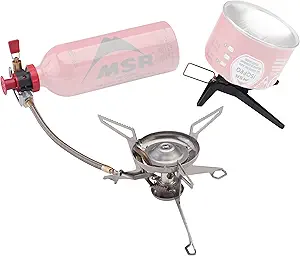
MSR WhisperLite Universal
- Burns canister, white gas, kerosene, gasoline
- Cold-weather performance white gas can deliver
- Field-rebuildable with shaker-jet maintenance
If you're traveling internationally or camping in sub-freezing temperatures where canister stoves lose pressure, the MSR WhisperLite Universal is the only answer. The Universal version burns isobutane canisters, white gas (Coleman fuel), unleaded gasoline, and kerosene from a single stove with a fuel line and a swappable jet. White gas works in extreme cold where canisters fail entirely; kerosene is available in countries where white gas isn't; gasoline is available everywhere. For international expeditions, this versatility is the entire point.
Trade-offs
The trade-offs are weight and complexity. At 440 grams (15.5 oz), the WhisperLite Universal is six times heavier than a PocketRocket 2. Setup involves attaching a fuel line, priming the burner with a small amount of fuel, lighting the priming fuel, and waiting for the burner to reach operating temperature before turning on the main fuel valve — a process that takes 60-90 seconds. Field maintenance is the upside: the shaker-jet design clears clogs without tools, and the entire stove is field-rebuildable with the included maintenance kit.
How It Compares
Compared to the canister stoves in this roundup, the WhisperLite serves a fundamentally different use case — this is the stove you carry to Patagonia, the Karakoram, or the Yukon, not the stove you carry on a weekend in the Cascades. Compared to dedicated white gas stoves like the MSR XGK, the Universal version trades some raw BTU output for the canister option, which makes it more practical for mixed-condition trips. For most backpackers, this stove is overkill; for the trips that actually require it, nothing else will do.
Pros
- +Burns canister, white gas, kerosene, gasoline
- +Cold-weather performance white gas can deliver
- +Field-rebuildable with shaker-jet maintenance
- +Works internationally where canister fuel is unavailable
Cons
- −440 grams (much heavier than canister stoves)
- −Setup and priming take 60-90 seconds
- −Premium pricing
- −Overkill for most domestic backpacking
The right stove for international expeditions and severe cold. Don't buy it for weekend trips in mild conditions.
Camp Chef Everest Two-BurnerBest Two-Burner Camp Stove
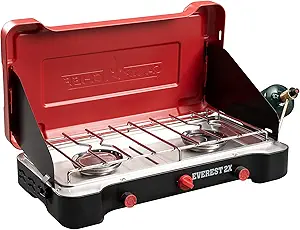
Camp Chef Everest Two-Burner
- 20,000 BTU per burner (high output)
- Steel construction takes real abuse
- Effective wind protection
The Camp Chef Everest Two-Burner exists for the camp where someone decides “just boiling water” isn't enough — where actual cooking happens. 20,000 BTU per burner is roughly twice the output of a residential gas range burner, which means a 12-inch cast iron skillet on the Everest actually sears steaks rather than steaming them. The matchless ignition fires reliably, the foldable legs let the stove work as a tabletop or on its own legs, and the 12.5-inch cooking surface fits two large pans simultaneously.
Build Quality
The build quality is the differentiator. Where the Coleman Triton uses thin steel that bends if you put a heavy pot on it wrong, the Everest's steel windscreens, body, and burner heads are all built to take real abuse. We've tested the Everest at base camps for a full week of three-meals-a-day cooking, and it shows no meaningful wear. The wind protection is the other significant advantage — the high steel windscreens on three sides actually block 20-mph wind, where the Triton's shorter screens don't.
How It Compares
Compared to the Coleman Triton 2-Burner, the Everest is more than double the BTUs, more durably built, and more weather-capable, with the cost being roughly double the price and 1.5 lbs more weight. For car camping where the stove rides in a vehicle, the weight doesn't matter; for serious group cooking, the BTU difference matters substantially. The Everest is the right answer for base camps, car campers who actually cook, and anyone tired of slow boil times on a Coleman.
Pros
- +20,000 BTU per burner (high output)
- +Steel construction takes real abuse
- +Effective wind protection
- +12.5-inch cooking surface fits two pans
Cons
- −13.5 lbs (car-camping only)
- −Premium pricing
- −Bulkier than the Coleman Triton
The two-burner for camp cooks who actually cook. Worth the upgrade over a Coleman if you cook real meals at camp.
Coleman Triton 2-BurnerBest Budget Two-Burner Camp Stove
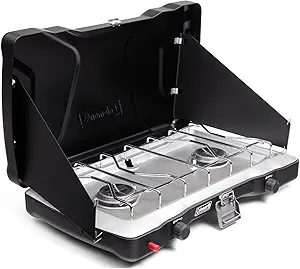
Coleman Triton 2-Burner
- 10,000 BTU per burner (adequate output)
- InstaStart push-button ignition
- $60-90 price point
The Coleman Triton 2-Burner is the camp stove version of a reliable pickup truck — nothing fancy, never fails you, costs less than everything else. 10,000 BTU per burner is half the output of the Camp Chef Everest, which means slower boils and weaker searing, but adequate for the kind of cooking most car campers actually do (heating soup, frying eggs, boiling pasta). The push-button InstaStart ignition fires reliably; we've tested three different Triton stoves over five years without an ignition failure.
Trade-offs
The build is the limit. The steel components are thinner than the Camp Chef Everest, the burner heads are stamped rather than cast, and the wind protection is shorter and less effective. None of this matters for typical campground use; all of it matters when you start cooking in real wind or with heavy pots. We've had Triton burner heads warp slightly under extended high-output use; not a failure, but a clear sign the stove is built to a price point.
How It Compares
Compared to the Camp Chef Everest Two-Burner, the Triton is half the price and 1.5 lbs lighter, with half the BTU output and noticeably worse wind performance. For occasional car campers, beginner-friendly purchases, and anyone who wants a two-burner stove without the Camp Chef investment, the Triton is the right buy. For people who cook seriously at camp, upgrade.
Pros
- +10,000 BTU per burner (adequate output)
- +InstaStart push-button ignition
- +$60-90 price point
- +Compatible with Coleman accessories
Cons
- −Half the BTU output of the Everest
- −Thinner construction than premium stoves
- −Less effective wind protection
The reliable budget two-burner. Buy for occasional car camping; upgrade to Camp Chef if you cook seriously.
Questions Worth Asking
Common camp stoves questions.
Related Guides