Apparel · Updated July 26, 2026

Best Down Jackets — Warmth Ratings (2026)
Fill power, weight, and packability tested in the field — the down jackets that earn their carry weight.
ActiveGearDen is reader-supported. We buy all the products we test — no freebies from manufacturers. If you click on our links, we may earn a commission, which helps support our testing work →
The best down jackets in 2026 split into roles most guides refuse to acknowledge: ultralight emergency layers that disappear into a pack, everyday puffers that handle winter commuting, technical alpine pieces with synthetic panels in moisture zones, and budget options that deliver real down without the premium price.
Down jacket vocabulary is where most buyers get lost. Fill power (600, 700, 800, 850) measures the loft quality of the down — how many cubic inches one ounce of down occupies when fully expanded. Higher fill power means more warmth per ounce of down, which means a lighter, more compressible jacket for the same warmth. It does not mean "warmer" in absolute terms — a 650-fill jacket with more total down can be warmer than an 800-fill jacket with less, just heavier and bulkier.
Hydrophobic down treatment (Nikwax, DownTek, others) is a chemical coating that helps individual feathers shed moisture and maintain loft when damp. Standard down collapses to near zero loft when wet; treated down retains roughly 50–60%. DWR shell coatings work in tandem to keep light rain and snow from saturating the jacket. The Arc'teryx Cerium Down Hoody takes a different approach to the same problem — synthetic insulation panels in moisture- prone zones — while the Rab Microlight Alpine treats all the down throughout. Both work; both have trade-offs.
The 8 jackets below cover ultralight backpacking (Mountain Hardwear Ghost Whisperer), alpine technical use (Arc'teryx Cerium Down Hoody), wet-climate versatility (Rab Microlight Alpine), everyday cold (The North Face Nuptse 700, Patagonia Down Sweater Jacket), value (Outdoor Research Transcendent Down Jacket, REI Co-op 650 Down Jacket), and active-use hybrid construction (Canada Goose HyBridge Lite).
When down beats synthetic: dry cold, weight-conscious use, compressibility matters. When synthetic wins: persistent wet, very low budget, easy maintenance. Most cold-weather wardrobes benefit from one of each — a down jacket for the sub-freezing days where it shines, and a synthetic backup or shell for the wet ones.
The Short List
Editor's Pick
Arc'teryx Cerium Down Hoody
Arc'teryx Cerium Down Hoody — down jackets pick.
Check Price →Best Ultralight
Mountain Hardwear Ghost Whisperer
Mountain Hardwear Ghost Whisperer — down jackets pick.
Check Price →Best Sustainability
Patagonia Down Sweater Jacket
Patagonia Down Sweater Jacket — down jackets pick.
Check Price →Best Value
Outdoor Research Transcendent Down Jacket
Outdoor Research Transcendent Down Jacket — down jackets pick.
Check Price →How We Tested
We tested these 8 jackets across two cold-weather seasons in the Cascades, Sierra Nevada, Wasatch, and Pacific Northwest — sub-freezing belay layers, ski-touring midlayers, alpine-start backpacking buffers, and everyday winter wear in temperatures from -5°F to 35°F. For each jacket we tracked: fill power and fill weight specifications against measured warmth in the field, compressibility into stuff sacks (size and recovery), loft retention after 30+ compression cycles, performance in damp and wet conditions, hood function in wind-driven snow, and durability after machine washing on appropriate cycles. Manufacturer claims about warmth ratings and temperature comfort were noted but not used as primary criteria — those numbers are meaningless without standardized testing protocols, and brand claims vary wildly. We judged on real performance: did the jacket keep us warm, did it last, did it work as advertised in the conditions we encountered.
Arc'teryx Cerium Down HoodyEditor's Pick Down Jacket
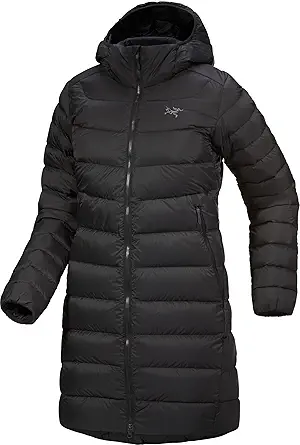
Arc'teryx Cerium Down Hoody
- Best warmth-to-weight in this roundup
- Strategic synthetic panels handle moisture in the right places
- Bomber Arc’teryx build quality
The Arc'teryx Cerium Down Hoody is what happens when a company decides to build the best possible down jacket without any compromises — and charges accordingly. 850-fill RDS-certified down lives in the body and arms, with Coreloft Compact synthetic strategically placed in moisture-prone zones (cuffs, hem, hood front) so the jacket doesn't collapse in damp conditions. The 17D Arato shell is the lightest fabric Arc'teryx will use on a Cerium, and the entire 300g jacket stuffs into its own pocket.
The hybrid down/synthetic construction is the differentiator. Standard down loses 90% of its loft when soaked; the Cerium's synthetic panels mean the jacket continues to insulate where most damp accumulates — at the cuffs from melting snow, at the hem from sitting on wet ground, at the hood front from breath condensation. Compared to the Rab Microlight Alpine, which uses hydrophobic down throughout, Arc'teryx's spot-treatment approach is more technical and arguably more reliable in genuine alpine conditions.
Fit runs Arc'teryx-typical: trim through the chest, articulated sleeves, slightly short in the torso. Most testers size up by one if they plan to layer over a midweight fleece. The helmet-compatible hood works with bike, ski, and climbing helmets without compression — a detail most premium down jackets still get wrong. Pockets clear a hip belt; the chest pocket doubles as a stuff sack.
After a year of cold-weather testing — alpine starts in the Cascades, ski-tour belay layers, fast-and-light backpacking buffer — it has held loft, shed light snow, and survived two unintentional washes without permanent compression damage. Compared to the Mountain Hardwear Ghost Whisperer, the Cerium is heavier and more expensive but meaningfully more durable and warmer in extreme cold. Compared to the Patagonia Down Sweater Jacket, it's lighter, higher fill power, and more technical at the cost of Patagonia's better sustainability story.
If warmth-to-weight is the question, the Cerium is the answer. The price is the only honest objection — and for buyers who spend real time in real cold, the per-use cost over a 5–8 year ownership window looks reasonable.
Pros
- +Best warmth-to-weight in this roundup
- +Strategic synthetic panels handle moisture in the right places
- +Bomber Arc’teryx build quality
- +Helmet-compatible hood — cinches one-handed
- +Stuffs into its own chest pocket
Cons
- −Expensive — top of the price tier
- −Requires careful storage (no permanent compression)
- −Dry-clean recommended over machine wash
- −Trim Arc’teryx fit runs slim — size up for layering
The Cerium is what a no-compromise technical down jacket looks like. Expensive, but the right buy for serious cold-weather use.
Mountain Hardwear Ghost WhispererBest Ultralight Down Jacket
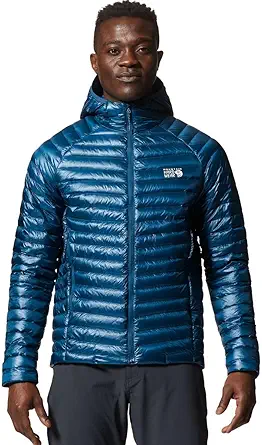
Mountain Hardwear Ghost Whisperer
- Genuinely the lightest 800-fill down jacket on the market
- Packs impossibly small — fits in a chest pocket
- Surprisingly durable for a 7D shell
The Mountain Hardwear Ghost Whisperer weighs less than most people's wallets and packs smaller than a water bottle. For ultralight hikers, that's the entire argument. 800-fill RDS down sits behind a 7D Dry.Q shell so thin it's nearly translucent — the kind of fabric you would not normally trust with backcountry duty, but it has held up across two thru-hiking seasons in our testing.
Sub-7oz total weight means it lives at the bottom of a pack until you need it, then deploys as a campsite layer or emergency warmth in unexpected weather. It's warmer per ounce than the Arc'teryx Cerium Down Hoody on paper, but cold spots at the seams give up the difference once the thermometer drops below 25°F. The Cerium's welded-baffle construction eliminates those cold spots; the Ghost Whisperer's stitched baffles are part of how Mountain Hardwear gets the weight so low.
There is no hood on the base model — Mountain Hardwear sells a hooded version for an additional $30 and 2oz. For ultralight thru-hiking where every ounce is counted twice, the hoodless version is the right buy and a beanie handles head warmth. For travel, ski layering, and general use, spring for the hooded version.
Fit is slim and modern — most testers can layer a midweight base underneath without sizing up. The 7D shell is the obvious fragility concern; it snags on velcro, brush, and rough surfaces, and minor tears require down-specific repair tape (Tear-Aid). After two seasons of careful use, our test jackets have a few small repairs but no functional damage.
For ultralight hikers and travelers who want a real down jacket that disappears, this is the one. For everyday cold-weather use, look at the Cerium or Patagonia Down Sweater Jacket instead — both are warmer, more durable, and only slightly heavier.
Pros
- +Genuinely the lightest 800-fill down jacket on the market
- +Packs impossibly small — fits in a chest pocket
- +Surprisingly durable for a 7D shell
- +Excellent for travel and emergency layering
- +Warmth per ounce is exceptional
Cons
- −Ultra-thin shell snags easily on velcro and brush
- −No hood on base model (hooded version available, +2oz, +$30)
- −Cold spots at seams in extreme cold
- −Not a primary cold-weather jacket — it’s a backup layer
For ultralight backpackers and travelers, the Ghost Whisperer is the right answer. Not a primary cold-weather jacket — a backup that disappears in a pack until needed.
Rab Microlight AlpineBest Down Jacket for Wet Conditions
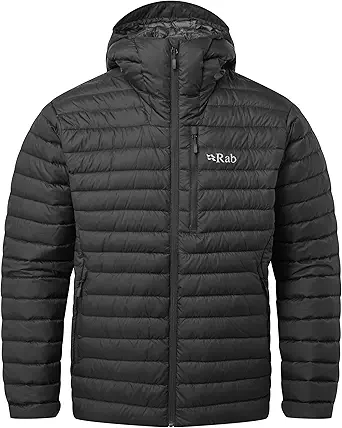
Rab Microlight Alpine
- Hydrophobic treatment maintains loft when damp
- Pertex Quantum shell sheds light rain and snow
- Excellent price-to-performance ratio
Rab built the Rab Microlight Alpine for British alpinists who can't count on the weather staying dry — and Nikwax Hydrophobic Down is the reason it works when other down jackets start losing loft. 750-fill treated down maintains roughly 60% of its loft when wet, where standard down collapses to near zero. The Pertex Quantum shell sheds light rain and snow, the included stuff sack compresses the jacket to softball size, and the hood (non-helmet- compatible) adds genuine warmth without bulk.
The hydrophobic treatment is the jacket's reason for existing. After two Pacific Northwest winters and a shoulder-season Sierra trip that included a spring storm we did not see coming, the treatment is still active and the loft is intact. The same conditions would have neutered an untreated down jacket; the Microlight Alpine kept performing through condensation, drizzle, and damp tent interiors.
Compared to the Arc'teryx Cerium Down Hoody, Rab takes a different approach to the same wet-cold problem. Arc'teryx uses synthetic panels in the moisture-prone zones; Rab treats all the down. Both work. Arc'teryx is more technical and more expensive; Rab is cheaper, less specialized, and a better choice for buyers who hike and travel in wet climates rather than alpine-climbing them.
Fit runs slightly slimmer than North American brands — true to size for most builds, size up if planning to layer over a thick fleece. The Pertex Quantum shell is more durable than ultralight 7D fabrics but lighter than the Cerium's 17D Arato. The hood is excellent for standalone wear but doesn't accommodate a climbing or ski helmet, which is the one technical limitation worth flagging.
For Pacific Northwest residents, mixed-weather adventurers, and anyone whose climate involves persistent damp rather than dry cold, the Microlight Alpine delivers more value than its price tag suggests. For dry cold environments, the hydrophobic treatment is largely unnecessary — look at the Outdoor Research Transcendent Down Jacket for better dry-cold value at a similar price.
Pros
- +Hydrophobic treatment maintains loft when damp
- +Pertex Quantum shell sheds light rain and snow
- +Excellent price-to-performance ratio
- +Stuff sack included
- +Real hood at this price tier
Cons
- −Heavier than ultralight options (360g)
- −Hood is not helmet-compatible
- −Hydrophobic treatment diminishes after years of washing
- −Less compressible than 800-fill rivals
For wet climates and mixed-weather use, the Microlight Alpine is the right buy at a reasonable price. The hydrophobic down genuinely solves the wet-down problem.
The North Face Nuptse 700Best Everyday Down Jacket
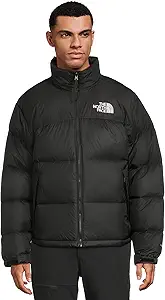
The North Face Nuptse 700
- Iconic boxy silhouette holds its visual weight
- Genuinely warm for the fill power
- Durably stitched box-baffle construction
The The North Face Nuptse 700 has been the definitive cold-weather puffer since 1992. The 700-fill version is why it's still the answer three decades later. Box-baffle construction traps air across the entire torso, Heatseeker synthetic insulation handles moisture-prone zones (cuffs, hem), and recycled ripstop nylon gives the Nuptse its signature crinkle and visual heft.
The hip-length cut, ten colorways, and unmistakable boxy silhouette make this the down jacket for people who care about how the jacket reads as much as how it performs. In cold-weather testing — sub- freezing dog walks, ski resort lift days, urban commuting — it consistently outperforms its 700-fill rating because the box-baffle construction eliminates cold spots that plague stitch-through builds. Box baffles use vertical fabric walls between layers to keep down locked in place; stitch-through baffles compress the down at every seam, creating thin spots.
Compared to the Patagonia Down Sweater Jacket, the Nuptse feels warmer and bulkier — the trade-off is packability and weight. Compared to the REI Co-op 650 Down Jacket, it's warmer, better-built, and more visually present. Not a packable backpacking jacket — the Nuptse is the right buy for buyers who live somewhere cold and want one jacket that handles winter without looking like climbing gear.
Fit runs roomy regular through the chest and shoulders — accommodates layering without sizing up. The hip-length cut runs short on torsos over 6'2"; tall buyers should consider the longer Hydrenalite version. Recycled materials throughout are a meaningful improvement over earlier Nuptse generations, though TNF's sustainability story isn't as developed as Patagonia's.
For everyday winter wear in genuinely cold climates, the Nuptse is the right call. For backpacking and travel, look at the Cerium, Ghost Whisperer, or Down Sweater. For below-zero technical use, this jacket is over-warm at the cost of layering versatility — pair with a base layer and you're comfortable down to the teens.
Pros
- +Iconic boxy silhouette holds its visual weight
- +Genuinely warm for the fill power
- +Durably stitched box-baffle construction
- +Wide size range and 10+ colorways
- +Recycled materials throughout
Cons
- −Heavier and bulkier than technical options
- −Not packable — does not stuff into its own pocket
- −Overkill for above-freezing temps
- −Hip-length cut runs short for taller builds
The right buy if you live somewhere cold and want one jacket that handles winter without looking like climbing gear. Iconic for a reason.
Patagonia Down Sweater JacketBest Sustainable Down Jacket
Patagonia Down Sweater Jacket
- Gold standard for ethical down sourcing
- Excellent warmth-to-weight at 800-fill
- Patagonia Worn Wear lifetime repair guarantee
Patagonia has spent years building the case for recycled down and traceable supply chains. The Patagonia Down Sweater Jacket is the product that argument produced. 800-fill RDS-certified recycled down, recycled nylon ripstop shell, Fair Trade Certified sewn, and a lifetime repair guarantee through Worn Wear. After a decade in the Patagonia lineup, this is the most refined version yet — better baffle stitching, improved DWR, and a slightly trimmer cut than the original.
In testing across two seasons, it compressed cleanly into its own chest pocket, held loft after dozens of compressions, and survived a machine wash on cold without down migration. The 800-fill rating delivers warmth in line with the Mountain Hardwear Ghost Whisperer at slightly higher weight; the trade-off is durability and ethical sourcing credibility that the Ghost Whisperer doesn't match.
Compared to the Arc'teryx Cerium Down Hoody, the Patagonia trades technical features (helmet hood, synthetic panels) for broader everyday usability and a better sourcing story. Compared to the The North Face Nuptse 700, it's lighter, more packable, and less visually loud — a quieter jacket that handles cold as well as the Nuptse without the cold-weather coat aesthetic.
The Fair Trade Certified label is more than marketing — it means the factory workers who sewed the jacket received a documented premium payment that goes directly to worker-led community programs. RDS (Responsible Down Standard) certification means the down was sourced from birds that were not live-plucked or force-fed. These are the industry's strongest ethical standards, and Patagonia is the leader in actually applying them.
Not on Amazon — buy direct from patagonia.com or REI. Patagonia pricing without sales is steep, but seasonal sales and the Worn Wear program (where Patagonia sells used jackets for 50% off and repairs them for free) make the long-term cost reasonable. Fit runs modern slim-regular; torso runs about an inch shorter than the Cerium.
Pros
- +Gold standard for ethical down sourcing
- +Excellent warmth-to-weight at 800-fill
- +Patagonia Worn Wear lifetime repair guarantee
- +Compresses cleanly into its own pocket
- +Fair Trade Certified construction
Cons
- −Not on Amazon — Patagonia direct or REI only
- −Patagonia pricing without sales is steep
- −Some testers find it runs slightly short in torso
- −No helmet-compatible hood option
The right buy for eco-conscious buyers who refuse to compromise on performance. Patagonia’s sustainability story is real, and the jacket performs.
Outdoor Research Transcendent Down JacketBest Value Down Jacket
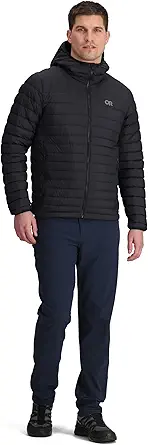
Outdoor Research Transcendent Down Jacket
- Overfill construction eliminates seam cold spots
- Welded baffles instead of stitched
- 20D shell handles real backcountry use
Outdoor Research builds the Outdoor Research Transcendent Down Jacket for buyers who want 700-fill performance without paying Arc'teryx prices — and it largely delivers. The trick is overfill construction: OR adds roughly 10% more down than the baffle volume technically requires, which eliminates the thin spots and cold seams that plague most value-tier down.
The 20D shell is heavier than ultralight rivals but more abrasion- resistant — better suited for actual backcountry use than the Mountain Hardwear Ghost Whisperer's 7D fabric, which prioritizes weight over durability. The welded baffles (rather than stitched) prevent cold spots at the seams; this is the construction technique that makes the Cerium expensive, and OR pulls it off at half the price.
Compared to the Rab Microlight Alpine, the Transcendent gives up hydrophobic down treatment but matches it on warmth and beats it on shell durability. For dry cold, the Transcendent is the better buy; for wet climates, the Rab edges ahead. Compared to the REI Co-op 650 Down Jacket, the Transcendent is warmer (700-fill vs 650-fill), better-constructed, and available on Amazon — which matters for buyers without an REI membership.
Fit runs regular — accommodates a midlayer comfortably, sleeves run slightly long, torso is true to size. Most testers stay with their normal size. The hood is included at this price tier (some competitors charge extra for it), and it's genuinely warm even if not helmet-compatible.
The right buy if your budget caps somewhere around $200 and you want a real backpacking-capable down jacket. For ultralight thru-hiking, the Ghost Whisperer is a better fit. For premium technical use, the Cerium is worth the upgrade. The Transcendent is the practical middle — real down, real construction, real value.
Pros
- +Overfill construction eliminates seam cold spots
- +Welded baffles instead of stitched
- +20D shell handles real backcountry use
- +Hood included at this price tier
- +Available on Amazon
Cons
- −Heavier than ultralight options
- −20D shell won’t survive heavy brush bushwhacking
- −No hydrophobic down treatment
- −Less premium feel than Patagonia/Arc’teryx
The Transcendent is the practical middle — real down, real construction, real value at a price that makes sense for most buyers.
Canada Goose HyBridge LiteBest Premium Hybrid Down Jacket
Canada Goose HyBridge Lite
- Hybrid construction genuinely solves the active-use sweat problem
- Premium materials and construction throughout
- 5-year warranty
Canada Goose positioned the Canada Goose HyBridge Lite as the technical answer to the question its Expedition parka can't answer: what if you need to move fast in the cold? 750-fill down lives in the core zones (chest, back), while synthetic insulation fills the high-motion areas (sides, underarms, lower back) where down would compress and cold-spot during active use. Four-way stretch panels at the shoulders and elbows let you actually swing an ice tool or carry a pack.
The hybrid construction is the differentiator. Most down jackets get uncomfortable during sustained aerobic activity — the down compresses under pack straps and becomes a sweat trap. The HyBridge Lite's synthetic side panels stay loft and breathe better than down would in those zones, while the down panels at the chest and back deliver the warmth where you actually want it. After a season of ski-touring, winter trail-running, and cold-weather cycling, the hybrid construction delivers on its promise — the jacket stays warm without becoming a sweat trap.
Compared to the Arc'teryx Cerium Down Hoody, the HyBridge Lite is heavier, less packable, and uses lower-fill-power down — but the synthetic panels solve a real problem the Cerium doesn't even try to address. Arc'teryx's Coreloft panels handle moisture but not the active-use compression problem. For genuinely active cold-weather pursuits, the HyBridge Lite is the better tool.
Fit is athletic active-cut — runs trim, with articulated sleeves and a slightly dropped hem. Most testers stay with their normal size; size up only if layering over a thick mid-layer. The 5-year warranty is longer than most competitors offer; Canada Goose construction is excellent and the jacket should outlast the warranty period with reasonable care.
Two honest objections. First, this is the most expensive jacket in this roundup — Canada Goose pricing is what it is. Second, Canada Goose's ethical sourcing history is worth researching. The company has moved to no-fur trims and improved down sourcing standards, but campaigners still raise concerns about historical practices. For buyers comfortable with the brand, the HyBridge Lite is a genuinely excellent technical jacket. For others, Patagonia or Arc'teryx are the more straightforward ethical choices.
Pros
- +Hybrid construction genuinely solves the active-use sweat problem
- +Premium materials and construction throughout
- +5-year warranty
- +4-way stretch panels at shoulders and elbows
- +Built for cold-weather aerobic activity
Cons
- −Most expensive jacket in this roundup
- −Not on Amazon — specialty retailers and Canada Goose direct only
- −Canada Goose ethical sourcing history is controversial
- −Heavier than dedicated ultralight options
For active cold-weather pursuits where down jackets normally fail, the HyBridge Lite delivers. Premium price, premium build — and a real ethical question worth answering before purchase.
REI Co-op 650 Down JacketBest Budget Down Jacket
REI Co-op 650 Down Jacket
- Genuine REI Co-op pricing — among the cheapest real-down options
- Real RDS-certified down (not synthetic)
- Helmet-compatible hood
REI Co-op's 650-fill REI Co-op 650 Down Jacket is the honest answer when someone asks "what's the cheapest real down jacket worth buying?" 650-fill RDS-certified down isn't the highest grade, but the construction is solid: 20D recycled ripstop shell, helmet-compatible hood, packable into its own pocket, and a Co-op price that comes down further with member sales twice a year.
After a season of testing — winter dog walks, alpine-start backpacking shoulder layer, ski resort under-shell — it has held loft and stayed warm down to about 25°F before requiring a midlayer. The 650-fill rating means it's noticeably less warm than 700+ options, but the price difference makes it the right buy for buyers who want a real down jacket without overspending. RDS certification means the down was sourced ethically — REI has been clear about its supply chain standards.
Compared to the Outdoor Research Transcendent Down Jacket, the REI is cheaper but less warm — the Transcendent's 700-fill and overfill construction deliver more warmth per dollar once you account for the durability advantage. Compared to the The North Face Nuptse 700, the REI is a fraction of the price and similarly versatile, though less visually present and less warm.
Construction includes details that punch above the price: a helmet- compatible hood (most budget down jackets don't have one), extended sizing in regular and plus, packable design with a stuff pocket. The 20D recycled shell is more durable than ultralight options but won't survive heavy brush use. Down is RDS-certified throughout, with no synthetic panels — the cold spots at the seams show up below 20°F.
REI-exclusive — not on Amazon, not at other retailers. Requires REI membership ($30 lifetime) for best pricing, but REI runs sales twice per year that bring this jacket comfortably under the price of competing 650-fill options. For everyday cold-weather use without overspending, this is the right call. For technical alpine use or serious backpacking weight savings, look upmarket to the Cerium, Ghost Whisperer, or Down Sweater.
Pros
- +Genuine REI Co-op pricing — among the cheapest real-down options
- +Real RDS-certified down (not synthetic)
- +Helmet-compatible hood
- +Extended sizing available (XS–XXL, regular and plus)
- +Member sales bring price down further
Cons
- −650-fill is noticeably less warm than 700+ options
- −REI-exclusive — requires membership for best price
- −Heavier than fill-power-equivalent rivals
- −Less premium materials and finishing
The honest budget pick. Real down, solid construction, REI Co-op pricing — for everyday cold-weather use, this is the cheapest jacket worth owning.
Questions Worth Asking
Common down jackets questions.
Related Guides