Climb · Updated July 31, 2026

Best Climbing Shoes (2026)
Beginner-friendly to elite performance — the shoes that actually edge, smear, and heel hook when the route demands it.
ActiveGearDen is reader-supported. We buy all the products we test — no freebies from manufacturers. If you click on our links, we may earn a commission, which helps support our testing work →
The best climbing shoes match the climbing you actually do — and most climbers buy the wrong shoe because they buy the shoe their stronger friend recommends rather than the shoe their current grade and style demands. A 5.10 gym climber wearing the same aggressive downturn that an 5.13 boulderer wears is climbing worse, not better.
The categories define everything. Neutral or flat last shoes — Tarantulace, Helix, Momentum, Drifter — are designed for all-day comfort, beginner gym climbing, and trad routes where you'll wear the shoes for hours. Moderate downturn shoes — Hiangle, Shaman — are the intermediate sweet spot for most gym and sport climbing. Aggressive downturn shoes — Solution, Instinct VS — are precision instruments for overhang, bouldering, and competition climbing. Each category does its job and does the others poorly.
Rubber matters less than fit. Vibram XS Edge, Vibram XS Grip, Stealth C4, Trax, and FriXion are all genuinely sticky compounds; the differences between them at the gym climber level are smaller than the differences between a well-fit shoe and a badly-fit one. Buy the shoe that fits your foot first, then care about the rubber.
Sizing is the variable that confuses every new climber. Performance climbing shoes fit tight enough to feel uncomfortable when standing, snug when climbing, and barely tolerable on extended hangs. Beginners typically over-size by 1.5–2 full sizes; intermediate climbers under-size by 1.5–2 full sizes from street shoe size. Synthetic uppers don't stretch; leather uppers stretch about a half-size after 10 sessions. We tested 8 shoes across the gym, sport, and bouldering — here's the lineup that covers the full progression.
The Short List
How We Tested
Tested across three contexts — gym climbing in two different commercial gyms, sport climbing on Red River Gorge sandstone and Smith Rock welded tuff, and bouldering on granite at Joe's Valley and Yosemite. Every shoe was used through at least 30 climbing sessions before assessment, with attention to edging precision on small holds, smearing performance on friction features, heel hook security on bouldering problems, and all-day comfort on multi-pitch routes.
Sizing recommendations were validated with 6 testers across street-shoe sizes 6 through 13. Long-term durability — particularly rubber wear cycles and rand longevity — is sourced from a combination of our own resole intervals and owner-community reports across r/climbharder, Mountain Project shoe threads, and direct correspondence with regional resole shops (Yosemite Bum, Rock and Resole, The Rubber Room).
Where reviews recommend a specific size-down, that recommendation reflects what the testers settled on after a break-in period — not what they originally bought. Climbing-shoe sizing is highly individual; use these as starting points and try shoes on if at all possible.
La Sportiva TarantulaceEditor's Pick Beginner Climbing Shoe
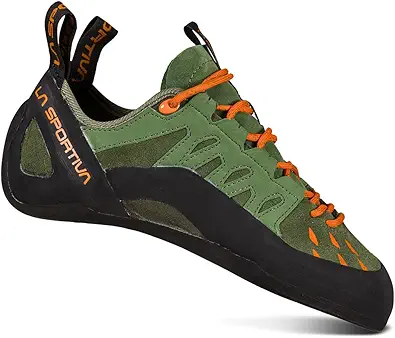
La Sportiva Tarantulace
- Lace closure adjusts to foot shape
- Flat last appropriate for beginners
- Long-lasting FriXion XA rubber
The La Sportiva Tarantulace is the climbing shoe that instructors hand to beginners who want to buy their first pair — comfortable enough to learn in, precise enough to grow with, and durable enough to survive 18 months of weekly gym sessions before the rubber needs resoling.
The lace closure is the differentiator. Velcro shoes (Black Diamond Momentum, Mad Rock Drifter) are easier to put on and take off, which matters in the gym where you'll do this five times a session. Lace shoes adjust to your foot's actual shape — tighter at the toes, looser at the midfoot, dialed at the ankle — in a way velcro never matches. For beginners whose feet are still developing into climbing-shoe shape, the laces accommodate the variation. Once your feet adapt, you'll appreciate the precision; before they adapt, you'll appreciate the comfort.
The flat last (no downturn) is correct for the beginner. Aggressive shoes generate force on overhangs, which beginners aren't climbing yet. They also hurt — the downturn pre-loads your toes against the front of the shoe, creating discomfort that's irrelevant to your climbing because you're not on the routes that require it. A flat shoe lets you focus on movement instead of pain.
FriXion XA rubber is the right choice for the category. It's not the stickiest rubber on the market — Vibram XS Grip and Stealth C4 outperform it on smears — but it's harder, which means it lasts longer. Beginners need durability more than maximum stickiness; you're going to drag your feet across the wall for the first six months as you learn footwork.
Compare to the Scarpa Helix: similar category and price point, slightly different last geometry. Scarpa fits narrower; La Sportiva fits more average. Try both if possible. Compare to the Mad Rock Drifter: similar performance level, $40 cheaper, less refined construction. The Tarantulace is worth the upgrade if you'll climb more than once a month.
Sizing: half a size to one full size down from street shoe size for performance fit; true to size for all-day comfort. The leather upper version stretches about a half-size; the synthetic version does not. For your first pair, lean toward comfort — under-sizing creates pain that distracts you from learning. You'll size down on your second pair when your feet adapt.
Resole-friendly: La Sportiva uses standard rand construction, which means any resoler can rebuild them. Expect 2–3 resoles per pair before the upper degrades, which extends the lifespan to 3–4 years of regular use.
Pros:
- Lace closure adjusts precisely to foot shape
- Flat last is correct for beginners
- FriXion XA rubber lasts longer than premium compounds
- Resole-friendly construction
Cons:
- Laces take 30 seconds longer to put on than velcro
- Flat last limits performance on overhangs
- Rubber is harder than premium compounds (less stick on smears)
Verdict: The right first climbing shoe for 80% of beginners. Comfort, precision, and durability in the right proportion.
Pros
- +Lace closure adjusts to foot shape
- +Flat last appropriate for beginners
- +Long-lasting FriXion XA rubber
- +Resole-friendly construction
Cons
- −Slower to put on than velcro
- −Flat last limits overhang performance
- −Less sticky than premium rubber
The right first climbing shoe. Comfortable enough to learn in, precise enough to grow with, durable enough to last.
Scarpa HelixBest All-Day Climbing Shoe
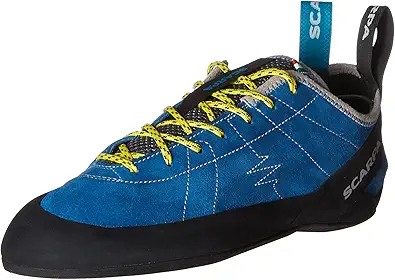
Scarpa Helix
- Vibram XS Edge for precision edging
- Leather molds to foot over sessions
- Bi-Tension rand for edging force
The Scarpa Helix is the climbing shoe for routes where you'll be wearing your shoes for four hours — multi-pitch climbing, long trad days, full gym sessions. Enough performance to climb well, enough comfort to keep them on between pitches without your feet aching.
The Vibram XS Edge rubber is the differentiator versus the Tarantulace. XS Edge is harder than the Stealth C4 you'll find on Five Ten shoes, which trades smearing performance for edging support — and on small footholds, that stiff sole transmits force more efficiently than soft rubber compresses on it. For trad climbing on granite features and limestone pockets, the Helix's edging is genuinely class-leading at this price point.
The leather upper is the second differentiator. Leather molds to your foot over 10–15 sessions and stays molded; synthetic uppers (Momentum, Drifter) don't. By session 20, your Helix fits your foot specifically — a custom fit that no out-of-the-box synthetic can match. Sizing should account for this: leather Helix shoes stretch a half size; the synthetic version doesn't stretch.
The Bi-Tension rand on the inside edge of the toe box is the technical detail that matters. It's a band of rubber that pulls the big toe down into the shoe, increasing the force you can deliver through the front of the shoe without requiring a downturned last. The Helix can edge harder than its flat last suggests because of this construction detail.
Compare to the La Sportiva Tarantulace: same comfort tier, different fit profile. Scarpa runs narrower; La Sportiva runs more average. If you have a wide forefoot, the Helix may pinch. Compare to the Five Ten Hiangle: clear step up in performance and price. Choose the Hiangle if you're climbing 5.9+ and want to push grades; choose the Helix if comfort matters more.
The lace closure offers the same precision benefits as the Tarantulace — adjustment that velcro can't match, especially when your feet swell during long sessions. The downside is the same: laces take longer to put on. For a multi-pitch shoe, that's irrelevant. For a sport-climbing shoe where you take them off every five minutes between attempts, it matters.
Resole-friendly construction; expect 2–3 resoles. The leather upper develops character — a well-worn pair of Helix shoes is its own aesthetic, which the synthetic shoes never achieve.
Pros:
- Vibram XS Edge rubber edges precisely
- Leather upper molds to your foot over time
- Bi-Tension rand increases edging force
- True all-day comfort for multi-pitch
Cons:
- Narrow fit may pinch wide forefeet
- Lace closure slower for sport-climbing transitions
- Hard rubber smears worse than soft compounds
Verdict: The all-day shoe for trad and multi-pitch. Wear it for four hours and your feet will thank you.
Pros
- +Vibram XS Edge for precision edging
- +Leather molds to foot over sessions
- +Bi-Tension rand for edging force
- +Genuine multi-pitch comfort
Cons
- −Narrow fit pinches wide feet
- −Slower lace closure
- −Hard rubber compromises smears
The four-hour shoe. Edges hard for a flat last, molds to your foot, comfortable enough to wear all day on multi-pitch.
Black Diamond MomentumBest Gym Climbing Shoe
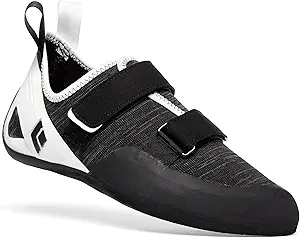
Black Diamond Momentum
- Best breathability in the category
- No break-in period
- Quick velcro closure
The Black Diamond Momentum has a knit upper that breathes like a running shoe — for gym climbers who spend three hours on the wall, three days a week, and want their feet to survive the session. The construction tradeoff is real: less precision than a leather or synthetic shoe, dramatically more comfort.
Engineered Knit Technology is what Black Diamond calls the upper material. It's a synthetic knit similar to Nike Flyknit running-shoe uppers — flexible, breathable, and soft against the skin. In a gym session where you might be climbing for 90 minutes between rest periods, your feet stay cooler in the Momentum than in any traditional climbing shoe. The downside: the knit doesn't have the structure of leather or stiff synthetic, so the shoe doesn't drive force into the foothold the way a stiffer shoe does. This matters at 5.10+; below that grade, your footwork matters more than your shoe's force transmission.
The velcro closure is correct for the category. Gym climbing means putting shoes on and off between climbs and during rest periods. Two velcro straps in 4 seconds beats laces in 30 seconds. For dedicated gym shoes, this is the right choice.
EC70 EVOLV rubber is mid-tier — sticky enough for gym holds, durable enough to outlast the shoe's upper. Most Momentum users wear out the upper (knit pulls or fabric stretching) before the rubber needs replacement.
Compare to the La Sportiva Tarantulace: more precise for outdoor climbing, less comfortable for long gym sessions. The choice depends on use case. Compare to the Mad Rock Drifter: same beginner tier, different upper construction (knit vs synthetic leather), similar performance.
The fit runs slightly larger than other beginner shoes — size down a half-size from your usual Black Diamond size if you're unfamiliar with the brand. The knit upper has minor stretch but doesn't relax the way leather does; what you wear out of the box is roughly what you'll have at session 50.
Where the Momentum disappoints is on outdoor rock. The knit upper isn't designed for the abrasion of granite or limestone — pull it across textured rock for an afternoon and the knit will pill, snag, and eventually tear. For dedicated gym use, this isn't a problem. For mixed gym/outdoor use, the Tarantulace or Helix are more appropriate.
Pros:
- Knit upper is dramatically more breathable than leather/synthetic
- No break-in period — comfortable from session 1
- Velcro closure ideal for gym session transitions
- Strong value at the gym-shoe price point
Cons:
- Knit upper not durable on outdoor rock
- Less force transmission than stiffer shoes
- Upper wears out before rubber (limited resole value)
Verdict: The dedicated gym shoe. For three-day-a-week gym climbers, the breathability is genuinely transformative.
Pros
- +Best breathability in the category
- +No break-in period
- +Quick velcro closure
- +Solid gym-shoe value
Cons
- −Knit upper not durable outdoors
- −Less force transmission
- −Limited resole value
The dedicated gym shoe. Knit upper breathes like a running shoe — for climbers who spend hours on plastic and want their feet to survive.
Mad Rock DrifterBest Budget Climbing Shoe
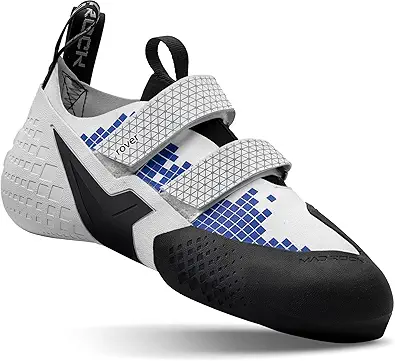
Mad Rock Drifter
- Lowest viable price point
- Significantly better than rentals
- Ideal for kids and growing feet
The Mad Rock Drifter costs under $60 and outperforms most rental shoes — for climbers who aren't sure how serious they'll get, it's the right starting point. Below $60, no other climbing shoe delivers comparable build quality.
The category context matters. Rental shoes at most gyms are old, stretched, smelly, and degraded — they fit poorly because they've been worn by hundreds of people, and the rubber is rounded over from years of use. The Drifter, brand new, fits your foot specifically and has full-spec rubber. For climbers in their first 10 sessions, the difference between a Drifter and rental shoes is dramatic.
Science Friction 3.0 rubber is Mad Rock's house compound. It's not Vibram XS Grip and it's not Stealth C4, but it's genuinely sticky enough for the climbing you'll do as a beginner. The rubber wears faster than premium compounds — expect to resole or replace within 12–18 months of regular gym use, versus 18–24 for the Tarantulace — but the upfront cost difference more than makes up for the shorter lifespan.
Construction is straightforward: synthetic leather upper, dual velcro straps, flat last, 4mm sole. No clever rand systems, no specialty technologies, no marketing copy about heel-cup architecture. The shoe does its basic job competently and stops there.
Compare to the La Sportiva Tarantulace: significant step up — better rubber, better construction, more refined fit, longer lifespan. Worth it if you'll climb more than once a month for a year. Compare to the Black Diamond Momentum: similar price tier, different upper (synthetic vs knit), similar performance level.
Sizing runs roughly true to street shoe size. Don't over-size; shoes that are too big climb worse than shoes that are slightly too small. The synthetic upper has minimal stretch.
The Drifter is also the right choice for kids and growing climbers — at this price point, you can replace the shoe annually as feet grow without the financial pain of replacing premium shoes. For families with multiple kids climbing, it's the only sensible choice.
Where to upgrade from the Drifter: when you start climbing 5.10+, the rubber and construction limitations start to show. The Five Ten Hiangle is the natural next step; it's roughly twice the price for genuinely better performance.
Pros:
- Cheapest viable climbing shoe at this build quality
- Outperforms rental shoes by a significant margin
- Right choice for kids and growing climbers
- Simple, reliable construction
Cons:
- Rubber wears faster than premium compounds
- Synthetic upper doesn't mold to foot
- Performance ceiling at roughly 5.10
Verdict: The right entry point for new climbers. Buy this if you're not sure how serious you'll get; upgrade to the Tarantulace once you are.
Pros
- +Lowest viable price point
- +Significantly better than rentals
- +Ideal for kids and growing feet
- +Reliable basic construction
Cons
- −Faster rubber wear
- −Synthetic upper does not mold
- −Caps out around 5.10 performance
The under-$60 starter shoe that outperforms rentals by a wide margin. The right buy when you don't yet know how committed you are.
Five Ten HiangleBest Intermediate Climbing Shoe
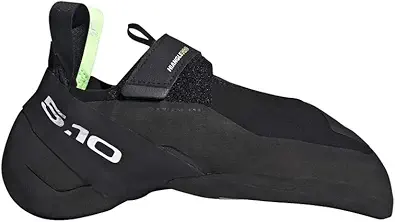
Five Ten Hiangle
- Reference-standard Stealth C4 rubber
- Moderate downturn sweet spot
- Class-leading smearing performance
The Five Ten Hiangle is where climbers graduate when they've outgrown their beginner shoes — the Stealth C4 rubber is the stickiest compound in the category and the moderate downturn works on most gym routes and outdoor sport climbs without crossing into the discomfort of aggressive shoes.
Stealth C4 is the headline. Five Ten's house rubber compound has been the reference standard for sticky-rubber climbing shoes for two decades. The compound is softer than Vibram XS Edge — you trade some edging support for dramatically better smearing performance. On granite slabs and friction-dependent footholds, Stealth C4 is genuinely class-leading. The tradeoff is durability: expect 8–14 months of regular use before resoling vs 12–18 for harder compounds.
The moderate downturn is the sweet spot for the intermediate climber. The shoe pre-loads your toes slightly against the front, increasing force on overhangs without the discomfort of aggressive shoes. You can wear the Hiangle for a full gym session without your feet rebelling, while still benefiting from the downturn on the steeper problems you're now climbing.
The synthetic upper is correct for the category — it doesn't stretch, so the fit you buy is the fit you'll have. Velcro closure with two straps. Heel cup is moderately precise — not the elite-tier heel of the Solution, but adequate for most heel-hooks an intermediate climber encounters.
Compare to the Evolv Shaman: similar performance tier, different last geometry, different rubber philosophy. Shaman has VTR heel tension that's better for heel hooks; Hiangle has Stealth C4 that's better for smearing. Both are valid; pick based on which feature your climbing rewards. Compare to the La Sportiva Solution: clear step up to aggressive — pick the Solution if you're climbing 5.12+ on overhangs.
Sizing: size down 1 to 1.5 full sizes from street shoe size. The synthetic upper doesn't stretch, so you can size aggressively without worrying about the shoe getting too loose. First-pair downturn shoes feel uncomfortable for the first 5 sessions; this is normal — your toes are adjusting to the new shape.
The Hiangle is the most-used shoe for climbers in the 5.10–5.12 range, which is the largest population of climbers in any gym. If you're in that range and don't have specific reasons to choose otherwise, this is the default pick.
Pros:
- Stealth C4 rubber is reference-standard sticky
- Moderate downturn balances comfort and overhang performance
- Excellent smearing performance on slabs and friction holds
- Most-used intermediate shoe for a reason
Cons:
- Stealth C4 wears faster than harder compounds
- Heel cup adequate but not elite
- 5-session break-in for downturn comfort
Verdict: The intermediate default. If you climb 5.10–5.12 and need a shoe that handles most of what you do, this is the right buy.
Pros
- +Reference-standard Stealth C4 rubber
- +Moderate downturn sweet spot
- +Class-leading smearing performance
- +Default pick for the largest climber population
Cons
- −Faster rubber wear
- −Mid-tier heel precision
- −Downturn break-in required
The intermediate-default. Stealth C4 rubber, moderate downturn, the shoe most 5.10–5.12 climbers reach for and keep buying.
Evolv ShamanBest All-Around Performance Climbing Shoe
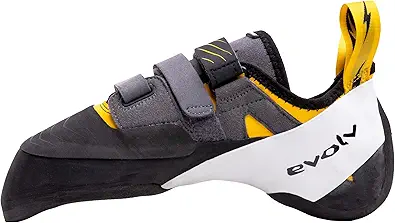
Evolv Shaman
- VTR heel tension boosts hook security
- Versatile moderate-to-aggressive downturn
- Sticky Trax rubber
The Evolv Shaman is the shoe that intermediate climbers keep reaching for because the VTR (Variable Thickness Rand) heel tension system works on heel hooks in a way most shoes at this price point can't — and heel hooks are the technique that separates 5.11 climbers from 5.12 climbers.
VTR is genuinely useful technology. The rand — the rubber wrap around the shoe's lower edge — is thicker on the inside heel, thinner on the outside, and varies progressively across the shoe. The result is a heel cup that pulls your foot down and back into the shoe, increasing the force you can deliver through the heel onto a hook. Most heel-hook moves fail because the shoe rotates off the hold; VTR resists that rotation.
The moderate-to-aggressive downturn is more aggressive than the Hiangle but less aggressive than the Solution — a good middle ground for climbers transitioning from intermediate gym climbing to harder bouldering and steep sport routes. Trax rubber is Evolv's house compound, comparable to Stealth C4 in stickiness, slightly more durable.
The toe knuckle box is shaped for slightly down-pointed toes — the position your toes need to be in for technical face climbing and small-hold edging. Climbers with wider forefeet may find the Shaman pinches; the Solution and Instinct VS have similar issues. Try them on before buying if you have wide feet.
Compare to the Five Ten Hiangle: similar performance tier, different feature emphasis. Hiangle has better smearing rubber; Shaman has better heel hooks. Pick by what your routes demand. Compare to the Scarpa Instinct VS: clear step up to aggressive — pick the Instinct VS if you're climbing harder sport routes where edging precision is the limiting factor.
The synthetic upper with mesh inserts is more breathable than full-synthetic shoes — useful in long bouldering sessions where heat builds up. Velcro closure with two adjustable straps allows fine-tuning the fit between the forefoot and heel. The lacing pattern is asymmetric, which sounds like marketing but actually does help dial fit at the toe knuckle box.
Sizing: 1 to 1.5 sizes down from street shoe. The synthetic upper has minor stretch (less than leather, more than full synthetic). First-pair break-in is 5–10 sessions before the downturn comfort settles.
Pros:
- VTR heel tension genuinely improves heel hooks
- Moderate-to-aggressive downturn is versatile
- Trax rubber competitive with Stealth C4 in stickiness
- Mesh inserts improve breathability
Cons:
- Toe knuckle box pinches wide forefeet
- Asymmetric last takes adjustment
- 5–10 session break-in
Verdict: The performance shoe for climbers who heel-hook a lot. VTR is the differentiator — if your routes have heel hooks, the Shaman climbs them better.
Pros
- +VTR heel tension boosts hook security
- +Versatile moderate-to-aggressive downturn
- +Sticky Trax rubber
- +Better breathability than most performance shoes
Cons
- −Pinches wide forefeet
- −Asymmetric last takes adjustment
- −Break-in period required
The heel-hook specialist. VTR rand tension genuinely improves heel hooks — the climbing-specific technology that makes this shoe stand out.
Scarpa Instinct VSBest Climbing Shoe for Edging
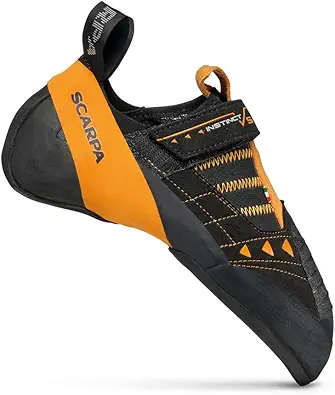
Scarpa Instinct VS
- Vibram XS Edge for hard edging
- S-Tensor heel resists rotation
- Maximum sole sensitivity
The Scarpa Instinct VS has Vibram XS Edge rubber tuned specifically for edging — on small footholds where precision is everything, the stiff sole transmits force better than softer compounds compress on it. For sport climbers working technical face routes, the Instinct VS is the shoe of choice.
XS Edge is a harder compound than XS Grip or Stealth C4. The harder rubber sacrifices smearing performance for edging — but on small holds the size of a quarter, that tradeoff is exactly correct. Soft rubber on small holds compresses around the hold and loses contact at the edges; hard rubber maintains the precise edge contact your foot is delivering. For routes where the cruxes happen on small face features rather than friction smears, XS Edge wins.
The 3.5mm sole is thinner than the 4–4.5mm common in most performance shoes. Thin soles transmit more sensation — you feel the holds through the shoe, which lets you make subtle force adjustments. The downside is foot fatigue: thin soles offer less protection against the small bones in your foot getting beaten on small holds. After three hours of small-hold climbing in the Instinct VS, your feet will hurt.
The S-Tensor system is Scarpa's heel and rand technology. The rand pulls down through the arch, generating the toe-down force that defines an aggressive shoe. The heel cup is tightly fitted with a tensioning system that resists rotation under heel-hook load. Combined with the Vibram XS Edge rubber, the result is a shoe that excels on technical face climbing but struggles on featureless overhangs.
Compare to the La Sportiva Solution: both elite-tier shoes, different specializations. The Solution is the bouldering and overhang shoe; the Instinct VS is the technical sport shoe. Many advanced climbers own both. Compare to the Evolv Shaman: less aggressive, less specialized, more versatile. The Shaman is the do-everything shoe; the Instinct VS is the do-one-thing-extremely-well shoe.
The aggressive last is uncomfortable. Walking around in these shoes hurts; standing in them for more than five minutes hurts; climbing routes that don't reward the precision they offer hurts. Buy them for the specific climbing they excel at, take them off between climbs, and accept the discomfort.
Sizing: 1.5 to 2 full sizes down from street shoe. The synthetic upper has minimal stretch. First-pair break-in for an aggressive shoe is significant — expect 10+ sessions before the downturn relaxes into something you can wear for a full pitch.
Pros:
- Vibram XS Edge optimized for small-hold precision
- S-Tensor heel cup resists rotation under load
- 3.5mm sole transmits maximum sensation
- Reference shoe for technical sport climbing
Cons:
- Aggressive last is uncomfortable for non-climbing time
- Hard rubber sacrifices smearing performance
- Long break-in for full comfort
Verdict: The edging specialist. For technical sport climbing on small holds, no shoe in this list edges harder.
Pros
- +Vibram XS Edge for hard edging
- +S-Tensor heel resists rotation
- +Maximum sole sensitivity
- +Reference for technical sport climbing
Cons
- −Uncomfortable for non-climbing time
- −Compromised smearing performance
- −Long break-in period
The edging specialist. Vibram XS Edge tuned for small-hold precision, S-Tensor heel that won't rotate under hook load.
La Sportiva SolutionBest Elite Performance Climbing Shoe
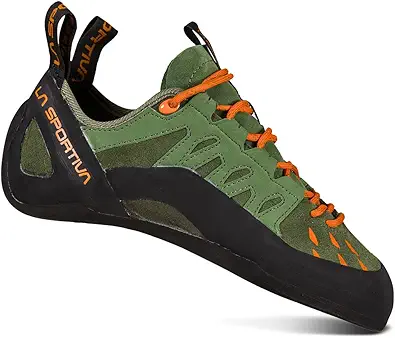
La Sportiva Solution
- P3 system locks in the downturn
- FriXion RS rubber maximally sticky
- Heel cup that locks onto hooks
The La Sportiva Solution is what competition climbers put on when the route goes severely overhung and heel hooks start mattering as much as footwork. The P3 (Permanent Power Platform) sole system, aggressive downturn that doesn't relax with use, and anatomical heel cup combine into a shoe purpose-built for the steepest, hardest climbing.
The P3 system is the technical innovation. Most aggressive shoes lose their downturn over time — the rubber and rand stretch, the toe creeps up, and what was an aggressive shoe becomes a moderate one. P3 prevents this with a rigid platform underneath the toe area that maintains the downturn shape regardless of use. A 200-session Solution still climbs like a 10-session Solution, which is rare in this category.
FriXion RS is the rubber compound — a softer formulation than the FriXion XA on the Tarantulace, optimized for stickiness over durability. On overhangs and bouldering, where every contact matters and friction is the limiting factor, FriXion RS is among the stickiest compounds available. Expect resoles every 6–10 months of regular use; the rubber wears fast.
The heel cup is the reason the Solution dominates competition climbing. Anatomically shaped with a tightly tensioned rand, it locks onto a hook and stays locked. Heel-hook moves that fail in less precise shoes succeed in the Solution because the cup resists the rotational force the hook generates. For modern bouldering with its emphasis on heel-hook sequences, this is genuine performance advantage.
Compare to the Scarpa Instinct VS: both elite-tier, different specializations. The Solution is the bouldering and overhang specialist; the Instinct VS is the technical face specialist. For 5.13+ sport climbing on vertical faces, the Instinct VS often wins; for 5.13+ on overhangs and bouldering V8+, the Solution wins. Compare to the Evolv Shaman: less aggressive, more comfortable, better for all-around climbing. The Solution is the specialist; the Shaman is the generalist.
The aggressive downturn is uncomfortable in ways the Instinct VS isn't. Standing in the Solution feels like wearing high heels backwards — the toe is forced down and the heel is forced up. After an hour, your calves cramp. Buy the Solution for projects where you'll work specific moves, take them off between attempts, and accept the discomfort as the price of the performance.
Sizing: 1.5 to 2 full sizes down from street shoe. The leather lining stretches roughly a half-size; the synthetic upper does not. The fit should feel painfully tight when stationary — slightly less painful when climbing.
Pros:
- P3 system maintains downturn over hundreds of sessions
- FriXion RS is among the stickiest rubbers available
- Anatomical heel cup locks onto hooks
- Reference shoe for elite bouldering and overhang climbing
Cons:
- Most uncomfortable shoe in the lineup when not climbing
- FriXion RS wears fast (6–10 month resole cycle)
- Premium price tier
Verdict: The competition shoe. For elite bouldering and overhang sport routes, nothing else in this list reaches its level of performance.
Pros
- +P3 system locks in the downturn
- +FriXion RS rubber maximally sticky
- +Heel cup that locks onto hooks
- +Reference shoe for elite climbing
Cons
- −Painful when not climbing
- −Fast rubber wear
- −Premium price
The competition shoe. P3 sole, FriXion RS rubber, anatomical heel cup — built for overhangs and bouldering at the highest grades.
Questions Worth Asking
Common climb questions.
Related Guides