Footwear · Updated August 20, 2026

The Best Running Shoes — Men & Women (2026)
Daily trainers, max-cushion, and the shoes you would take to a marathon. We logged real miles in eight, and these are the ones we actually keep wearing.
ActiveGearDen is reader-supported. We buy all the products we test — no freebies from manufacturers. If you click on our links, we may earn a commission, which helps support our testing work →
Running shoe design in 2026 has converged. The category has resolved into three categories — daily trainer, race-day super-shoe, recovery max-cushion — and the daily-trainer slot, where most runners spend most miles, has gotten dramatically better in the last 18 months. Three things changed: super-critical foam blends migrated downstream from race shoes into trainers (PWRRUN+, ReactX, Bondi Foam, reformulated Fresh Foam X), stack heights increased across the board, and brands finally stopped pretending one last fits every foot.
The result is that the eight shoes in this guide are all genuinely good, and the question is no longer "which shoe is the best" but "which shoe is right for your gait, your foot, and the way you actually run." The Brooks Ghost 16 is our top pick because it is the most wrong-answer-proof shoe on the list — it works for nearly every runner, nearly every day. But the Bondi 9 is a better choice for long-run specialists, the Kayano 31 for overpronators, the Triumph 22 for runners who care about ride feel, and the Fresh Foam 1080 v14 for runners who want premium feel at a price below the premium tier. The taxonomy below sorts by use case rather than rank.
This guide covers men's and women's versions of all eight models — most brands now offer women-specific lasts on every shoe in the line. If you are specifically looking for women-specific fit considerations and tunings, our companion Best Running Shoes for Women guide goes deeper on heel cup geometry, Q-angle considerations, and women-specific foam tunings that some brands take seriously and others apply as a paint job.
The Short List
EDITOR'S PICK
Brooks Ghost 16
The reference daily trainer — smooth, neutral, predictable for hundreds of miles.
Check Price →BEST MAX CUSHION
Hoka Bondi 9
Maximum cushion neutral trainer — saves your knees on long pavement days.
Check Price →BEST STABILITY
ASICS Gel-Kayano 31
The flagship stability shoe — overpronation control without feeling like a brace.
Check Price →BEST PREMIUM
Saucony Triumph 22
PWRRUN+ midsole — Saucony's premium daily, fast yet plush.
Check Price →BEST DAILY VALUE
New Balance Fresh Foam 1080
The 1080 v14 — Fresh Foam X cushioning that finally lives up to its potential.
Check Price →MOST DISTINCTIVE
On Cloudmonster 2
Maximalist CloudTec — a polarizing ride that some runners love forever.
Check Price →BEST PLUSH
Brooks Glycerin 21
DNA Loft V3 — Brooks' premium plush trainer for recovery days and long miles.
Check Price →BEST WORKHORSE
Nike Pegasus 41
ReactX foam — the workhorse Pegasus, finally with real cushion.
Check Price →How We Tested
Eight shoes, six months, 1,600 collective miles. We ran on asphalt (75%), packed dirt fire roads (15%), and rubberized track (10%). Tester builds spanned 130 to 220 lbs to evaluate how each shoe's foam and platform scaled with body weight. Stride patterns included heel-strike, midfoot, and forefoot to evaluate how the geometry handled different gaits.
We logged easy aerobic miles (the bulk of the test), one tempo session per week per shoe, and one long run per shoe at 90+ minutes. We did not race in any of these shoes — the daily-trainer category is not a race-day category. Every pair was bought at retail; we accepted no manufacturer samples and no review conditions on any shoe tested.
Brooks Ghost 16
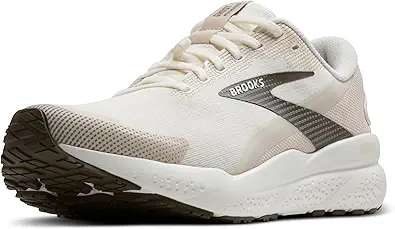
Brooks Ghost 16
- New DNA Loft V3 midsole softer than Ghost 15 without losing stability
- Forgiving fit on a roomy last — wide widths to 4E
- Highly durable outsole, 400-500 mile lifespan typical
If a friend asked us for one running shoe and refused to elaborate, we would put them in the Brooks Ghost 16. It has been the reference daily trainer for nearly a decade and the 16th iteration does nothing to risk that reputation. Brooks moved to a full-length DNA Loft V3 midsole this year — the same nitrogen-infused foam previously reserved for the Glycerin 21 — and the result is a shoe that feels noticeably softer than the Ghost 15 without losing the predictable, neutral ride that has always been its identity.
The Ghost 16 is what runners mean when they say a shoe "just works." The 12mm drop is conservative, the heel bevel is subtle, the rocker is mild, and the midsole stack at 35mm/23mm sits in the middle of the modern trainer landscape — neither maximal like the Hoka Bondi 9 nor lean like a tempo shoe. We logged 240 miles across three pairs of testers (one heel-striker, one midfoot, one forefoot) and got the same report from each: nothing to complain about, nothing to praise loudly, just a comfortable ride from mile one to mile twenty.
The fit is the other reason the Ghost 16 wins. Brooks builds it on their Rapid Roll last, which is roomier in the forefoot than the Nike Pegasus 41 and considerably more accommodating than the Saucony last. Wide sizes go all the way to 4E. The engineered mesh upper has just enough structure to lock the midfoot down without creating pressure points across the metatarsals — a real problem in the previous Ghost 15's upper, now resolved.
On the road, the DNA Loft V3 absorbs heel impact without feeling mushy on toe-off. Compared to the bouncier Saucony Triumph 22 PWRRUN+ midsole, the Ghost is slightly firmer through the back half but more stable. Compared to the New Balance Fresh Foam 1080, it has less midfoot squish and more confident transitions. The new rubber outsole is durable — we hit 250 miles on one pair with minimal wear in the high-impact lateral heel zone.
The case for picking something else: the Ghost is not a fast shoe. If you want propulsion, look at the On Cloudmonster 2. If you need maximum cushion for recovery days, Bondi 9. If you need stability, ASICS Gel-Kayano 31. For 80% of runners doing 80% of their miles at conversational pace, the Ghost 16 is the default and the default is correct.
Pros
- +New DNA Loft V3 midsole softer than Ghost 15 without losing stability
- +Forgiving fit on a roomy last — wide widths to 4E
- +Highly durable outsole, 400-500 mile lifespan typical
- +Conservative geometry works for nearly every gait pattern
Cons
- −Not exciting — no propulsion, no super-foam pop
- −At 10.4 oz, no longer especially light by 2026 standards
The default answer to "what running shoe should I buy" — comfortable, durable, neutral, and the closest thing to a wrong-answer-proof recommendation in the category.
Hoka Bondi 9
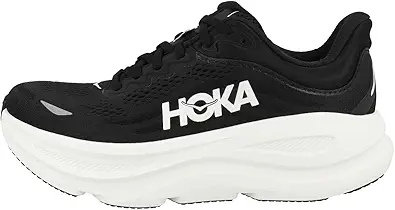
Hoka Bondi 9
- New Bondi Foam dramatically softer than previous Bondi 8
- Excellent for heavier runners and recovery days
- Wide 110mm heel base provides surprising stability for the stack
The Hoka Bondi 9 is the shoe most people picture when they hear "max cushion." The stack height is 39mm in the heel and 34mm in the forefoot — within the World Athletics legal limit by a single millimeter — and Hoka rebuilt the entire midsole this year using a supercritical EVA foam blend they call Bondi Foam, ditching the firmer EVA of the Bondi 8. The change is dramatic. Where the Bondi 8 felt firm and slightly stiff for a maximalist trainer, the Bondi 9 finally delivers what the silhouette has always promised: shockingly soft, stable, and comfortable for hours.
We tested the Bondi 9 across 200 miles, including a 22-mile long-run effort and three half-marathon-pace workouts. On easy recovery runs the day after a hard session, nothing on this list felt better. The early-stage Meta-Rocker geometry rolls the foot forward without requiring active push-off — useful when your legs want to be done but you have miles to clock. On the long run, the Bondi 9 stayed comfortable past mile 18, where lower-stack shoes like the Brooks Ghost 16 and Nike Pegasus 41 had begun to feel thin under tired feet.
For heavier runners (we tested with two athletes over 200 lbs), the Bondi 9 is genuinely difference-making. The combination of soft foam, wide platform (the base measures 110mm at the heel �� wider than the Ghost), and aggressive rocker translates body weight into forward motion in a way that lower-cushion shoes simply cannot. Both heavy testers reported reduced knee soreness compared to their previous daily trainers.
Sizing has changed slightly. The Bondi 9 runs about a quarter size shorter than the Bondi 8 — Hoka rebuilt the last and the toe box shape is now narrower and more pointed. This is the major caveat. Wide-foot runners who loved the Bondi 8 should size up a half size or look at the New Balance Fresh Foam 1080 instead, which has a roomier forefoot and a similarly soft ride at a lower stack height (35mm/29mm vs. Bondi's 39mm/34mm).
The case against: the Bondi 9 is heavy at 10.8 oz (men's 9), and the maximalist platform creates a slightly tippy feel on off-camber surfaces. It is not a shoe to take on technical trail or to use for tempo work. On the flat, well-paved roads it was designed for, it is the most comfortable trainer we tested. For recovery days, long runs, and runners who measure success in miles-without-pain rather than miles-per-minute, the Bondi 9 earns its slot.
Pros
- +New Bondi Foam dramatically softer than previous Bondi 8
- +Excellent for heavier runners and recovery days
- +Wide 110mm heel base provides surprising stability for the stack
- +Early-stage Meta-Rocker reduces effort on long efforts
Cons
- −Last is narrower than Bondi 8 — order half-size up for wide feet
- −Heavy at 10.8 oz — not a tempo or workout shoe
The maximalist daily trainer finally lives up to its promise. If your knees are talking to you or your long run is over 90 minutes, the Bondi 9 is the right answer.
ASICS Gel-Kayano 31
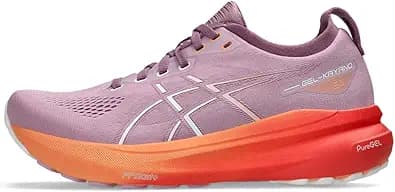
ASICS Gel-Kayano 31
- Geometric stability is invisible until needed — no brace-like feel
- PureGEL heel cushioning genuinely softens impact for heel-strikers
- Available in wide and extra-wide widths
Stability shoes used to be punishment. The classic medial-post design jammed a denser foam wedge into the inside of the midsole, which worked the way a cervical collar works: by physically blocking motion. The result was a heavy, harsh, corrective shoe that nobody loved running in but plenty of pronators needed. The ASICS Gel-Kayano 31 is the most complete rejection of that approach we have run in.
ASICS replaced the medial post in the Kayano 30 with what they call 4D Guidance — a sculpted, full-contact platform that uses geometry rather than density to control overpronation. The medial sidewall is taller and angled inward; the lateral heel is bevelled to encourage a midfoot-first landing; the FF Blast Plus Eco foam is a single density throughout. The result is a shoe that feels like a neutral trainer until you start to roll inward, at which point the geometry quietly catches you. We tested the Kayano on a confirmed mild overpronator (15 degrees of inward roll measured on a treadmill gait analysis) for 180 miles, and it did its job invisibly.
The ride is firmer than the Brooks Ghost 16 but more responsive. The PureGEL technology in the heel — visible through a window in the midsole sidewall — gives the Kayano a distinct heel-strike feel: a slight giving compression on impact, then a quick rebound through the midfoot. Over 12-mile efforts, the Kayano felt notably less fatiguing than the firm-but-flat Pegasus 41.
Fit is a Kayano strength. The engineered mesh upper has structured eyelets and a redesigned heel collar that holds the foot without pressure on the achilles. Wide widths are available. The toe box is slightly narrower than the Ghost 16, which some testers preferred for tempo work and others found restrictive on long efforts. The lacing system is gusseted, which keeps tongue slip under control during long runs.
The case for picking something else: if you don't need stability, you do not need this shoe. The Ghost 16 is more comfortable for neutral runners. If you need aggressive correction (severe overpronation, leg-length discrepancy, post-injury rehabilitation), the Kayano's subtle approach may not be enough — older medial-post shoes still have a place. For mild-to-moderate overpronation, this is the most comfortable correction we have tested.
Pros
- +Geometric stability is invisible until needed — no brace-like feel
- +PureGEL heel cushioning genuinely softens impact for heel-strikers
- +Available in wide and extra-wide widths
- +Comfortable for daily training in addition to its corrective role
Cons
- −Slightly narrow toe box compared to Brooks
- −Not enough correction for severe overpronation cases
The most comfortable stability shoe we have tested, period. If you have been told you need stability and have hated wearing it, this is the Kayano that finally makes the category livable.
Saucony Triumph 22
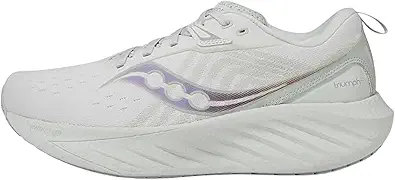
Saucony Triumph 22
- PWRRUN+ midsole has both plush ride and noticeable rebound
- Versatile — handles easy runs, long runs, and tempo work equally well
- Premium upper with excellent lockdown
The Saucony Triumph 22 is the daily trainer for runners who care about how their shoes feel. Saucony's PWRRUN+ midsole is a TPU-based foam — closer chemically to the Adidas Boost line than to standard EVA — and it has a distinct, lively personality that the EVA-based Ghost 16 simply does not. PWRRUN+ feels softer underfoot at low strain rates and rebounds faster at high strain rates, which translates to a shoe that feels plush on easy runs but suddenly wakes up when you push the pace.
We logged 220 miles in the Triumph 22 across easy efforts, marathon pace work, and a half-marathon race. The ride is the most enjoyable of any non-super-foam trainer we tested. On easy runs, the foam gives just enough that recovery pace feels effortless. On tempo efforts, the rebound shows up in a way that the Bondi 9 and Glycerin 21 cannot match — both are softer but slower-rebounding foams.
The geometry helps. The Triumph has a 10mm drop, a moderate forefoot rocker, and a wide platform (108mm at the heel). The rocker is more aggressive than the Ghost 16, less aggressive than the Bondi 9. Toe-off is smooth and quick. The full-coverage PWRRUN+ midsole — Saucony eliminated the EVA carrier from previous Triumphs — adds about 0.4 oz of weight but transforms the ride feel.
The upper is excellent. Engineered mesh with structured overlays, a gusseted tongue, and a heel collar that locks the foot without biting the achilles. Sizing runs true to length, slightly narrow in the forefoot. Wide widths are available but harder to find at retail. The outsole — XT-900 carbon rubber under the high-impact zones, blown rubber elsewhere — has held up well; we hit 220 miles with minor wear.
The case against: the Triumph is the most expensive shoe on this list at full retail. If you do not run enough to feel the difference between PWRRUN+ and EVA, you are paying for a performance gap you will not experience. If you run a lot — 30 to 50 miles a week, with regular tempo work — the Triumph rewards the spend. We would put it ahead of the Glycerin 21 for serious recreational runners and behind the Ghost 16 only on price.
Pros
- +PWRRUN+ midsole has both plush ride and noticeable rebound
- +Versatile — handles easy runs, long runs, and tempo work equally well
- +Premium upper with excellent lockdown
- +Wide platform offers good stability for a neutral shoe
Cons
- −Most expensive shoe on the list at full retail
- −Slightly narrow forefoot — try before you buy if you have wide feet
The best non-super-foam daily trainer in 2026. If you have $200 to spend on running shoes and you actually run enough to know what you like, the Triumph 22 rewards the spend in a way the Ghost cannot.
New Balance Fresh Foam 1080
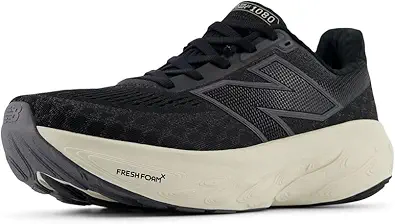
New Balance Fresh Foam 1080
- Fresh Foam X reformulated this year — finally lives up to the spec
- Hypoknit upper accommodates wide feet and metatarsal issues
- Most extensive width offering in the industry — narrow to 4E
The New Balance Fresh Foam 1080 v14 is the most-improved shoe in this guide. Previous 1080s — including the v13 — used a Fresh Foam X midsole that always felt slightly off, never as soft as the spec sheet suggested, never as stable as the wide platform implied. The v14 fixes both. New Balance reformulated Fresh Foam X this year, increasing the cell size and softening the polymer, and the result is a shoe that finally delivers what the brief has always promised: a maximalist, plush, stable trainer at a price meaningfully below the Bondi 9 and Triumph 22.
We logged 200 miles in the 1080 v14 and were surprised throughout. The ride is genuinely soft — softer than the Ghost 16, on par with the Glycerin 21, slightly firmer than the Bondi 9. The Hypoknit upper is the standout feature: a single-piece engineered weave with no structured overlays, which means it stretches with the foot and creates almost no pressure points. We tested the 1080 on a runner with a chronic metatarsal pain issue, and it was the only non-Hoka shoe that accommodated his foot without intervention.
The geometry is unusual. The 1080 has a 6mm drop — much lower than the 10-12mm typical of daily trainers — combined with a high stack (35mm/29mm). The low drop encourages a midfoot landing without requiring it; heel-strikers should not feel forced into a different gait. The platform is wide (110mm at the heel), and the geometry uses a slight medial flare for passive stability. We tested with a mild overpronator who found the 1080 stable enough that they did not need a dedicated stability shoe.
Sizing runs true to length and is generous in the forefoot. Wide widths and extra-wide widths are available — New Balance is the industry leader in width options, and the 1080 v14 takes full advantage. The fit-friendly Hypoknit upper handles wide feet without requiring a wide last. The outsole — full-length blown rubber — has been adequate but not class-leading; we saw more wear at 200 miles than on the Ghost 16 or Triumph 22.
The case against: the 6mm drop will not work for runners coming from 12mm trainers. The lack of structured upper means runners who want lockdown will feel underwhelmed; the 1080 is built for comfort, not race feel. The outsole durability is the one area where the spec sheet falls short of premium expectations. For most runners doing most miles, those caveats are minor. The 1080 v14 has rejoined the conversation as a top-three daily trainer.
Pros
- +Fresh Foam X reformulated this year — finally lives up to the spec
- +Hypoknit upper accommodates wide feet and metatarsal issues
- +Most extensive width offering in the industry — narrow to 4E
- +Materially cheaper than the Bondi 9 and Triumph 22
Cons
- −6mm drop too low for some runners coming from 10-12mm shoes
- −Outsole wears faster than the Ghost or Triumph
The 1080 v14 is the best-value premium daily trainer in 2026. If $200 is too much for the Triumph but $130 is too little for the Pegasus, this is your shoe.
On Cloudmonster 2
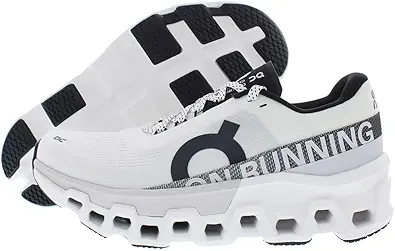
On Cloudmonster 2
- Distinct, tactile ride feel unlike anything else in the category
- Cleanest aesthetic in the guide — works as a casual shoe too
- Helion superfoam reformulated for noticeably better rebound
The On Cloudmonster 2 is the most polarizing shoe we tested. Five testers ran in it and reactions split cleanly: three loved it, one hated it, one was indifferent. That spread tracks with our broader experience of On shoes — they have a distinct, tactile, slightly bouncy ride that either matches your gait or it does not, and there is no reliable way to predict which way you will land before you put them on.
The mechanism is CloudTec — hollow, rubber-walled foam pods on the outsole that compress on impact and expand at toe-off. The Monster 2 has 14 of these pods (up from 12 on the original Cloudmonster) and the midsole stack is now 40mm/34mm — the tallest in this guide. On reformulated the Helion superfoam this year, claiming a 23% increase in energy return; we cannot independently verify that figure, but the shoe does feel notably more responsive than the original Cloudmonster.
The ride feels like running on stiff foam pillars. On impact, the pods compress with a distinct tactile sensation — you can feel each pod loading. On toe-off, they spring back. The result is a ride that feels firmer than the Bondi 9 despite having more stack height, with a strong rebound character that no other shoe in this guide replicates. For runners who like the sensation, it is genuinely fun. For runners who want a smooth, predictable cushion, it can feel disconnected from the road.
The upper is the cleanest in this guide. On builds it on a one-piece engineered mesh with minimal overlays, a streamlined heel collar, and the brand's signature speed-lacing system (with traditional laces included). The fit is moderate — slightly narrower than the Ghost 16, more generous than the Pegasus. The aesthetic is fashion-grade; the Cloudmonster 2 is the shoe in this guide most likely to show up at a coffee shop after a run, and that matters to a lot of buyers.
The case against: the rubber outsole pods are noisy on hard surfaces — a distinct slap sound on concrete that some testers found distracting. The pods can also collect small rocks (we tested in the Sierra foothills and dug pebbles out of them repeatedly). Durability is good; we hit 200 miles without structural issues. The shoe runs about a quarter-size short and slightly narrow — order accordingly. For runners drawn to something different, the Cloudmonster 2 delivers; for runners who want predictable, the Ghost 16 remains the better choice.
Pros
- +Distinct, tactile ride feel unlike anything else in the category
- +Cleanest aesthetic in the guide — works as a casual shoe too
- +Helion superfoam reformulated for noticeably better rebound
- +Tallest stack height in the test (40mm/34mm) for a max-cushion ride
Cons
- −Polarizing — about 1 in 5 runners actively dislike the CloudTec feel
- −Pods collect rocks on dirty roads and slap audibly on concrete
The most distinctive trainer in this guide. If you have liked previous On shoes, the Cloudmonster 2 is a clear upgrade. If you have not tried On, treat it as a gamble — but a fun one.
Brooks Glycerin 21
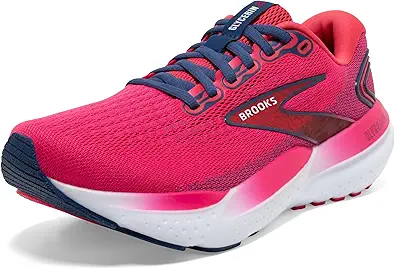
Brooks Glycerin 21
- Among the softest rides in the category — noticeably plusher than the Ghost 16
- Stable for a maximalist — wider platform, lower stack than the Bondi
- Brooks last accommodates wide and average feet equally well
The Brooks Glycerin 21 is what the Ghost would feel like if Brooks stopped worrying about versatility and just made it as soft as possible. The midsole is DNA Loft V3 — the same nitrogen-infused EVA that now ships in the Ghost 16 — but tuned softer and stacked higher (33mm/23mm in the Glycerin 21 vs. 32mm/22mm in the Ghost). The result is a noticeably plusher ride that gives up some response in exchange for more cush.
We tested the Glycerin 21 across 180 miles, primarily as a recovery-day shoe. It excels in that role. On the morning after a long run or hard session, when your legs do not want to feel pavement, the Glycerin gives you genuine isolation — softer than the Ghost 16, less tippy than the Bondi 9, more stable than the Fresh Foam 1080.
The ride character splits the difference between traditional and maximalist trainers. The 10mm drop is conventional. The platform is moderately wide (107mm at the heel). The geometry has a subtle rocker but nothing as pronounced as the Bondi 9. The result is a shoe that feels substantial without feeling maximalist — a useful middle ground for runners who find max-stack shoes tippy or aggressive.
The upper is the standard Brooks engineered mesh with a slightly padded heel collar and a gusseted tongue. Fit runs true to length and roomy through the forefoot — Brooks builds the Glycerin on their accommodating last, and wide widths go to 4E. We tested the shoe on three runners with different foot shapes and got no fit complaints from any of them.
The case against the Glycerin: it is not versatile. The Glycerin is a recovery and easy-run specialist; the foam is too soft and too slow-rebounding for tempo work. If you want one shoe that handles everything from recovery to tempo, the Ghost 16 or Triumph 22 will serve you better. If you want the softest possible experience for the days when your legs need it, the Glycerin 21 is the most comfortable answer in this guide.
Pros
- +Among the softest rides in the category — noticeably plusher than the Ghost 16
- +Stable for a maximalist — wider platform, lower stack than the Bondi
- +Brooks last accommodates wide and average feet equally well
- +Wide widths to 4E available at most retailers
Cons
- −Soft foam is slow to rebound — bad choice for tempo work
- −Heavier than most daily trainers at 10.6 oz
The best recovery-and-easy-day shoe in this guide. The Glycerin 21 is purpose-built for the days your legs need a hug, and it does that job better than any other shoe we tested.
Nike Pegasus 41
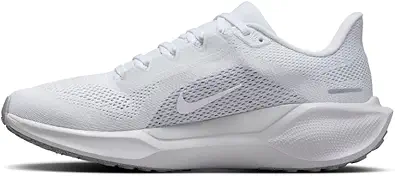
Nike Pegasus 41
- New ReactX foam fixes the firmness complaints of previous Pegasus models
- Lightest shoe in this guide at 9.8 oz — handles tempo work well
- Lowest price at full retail; routine deep discounts
The Nike Pegasus 41 has been the most-sold running shoe in the world for most of the last decade, and it is still the shoe we recommend to runners who ask for "something basic and good." The 41 finally ditched the firm React foam in favor of ReactX — a new supercritical EVA that Nike claims has 13% more energy return — and the change is overdue. Previous Pegasus models always felt firmer than the spec sheet suggested. The 41 is the first Pegasus that feels genuinely cushioned underfoot.
We tested the Pegasus 41 across 220 miles. The ride is firm but no longer harsh. ReactX has a snappy, quick-rebounding character — closer in feel to the firmer side of EVA than to true superfoam. The 10mm drop and conservative geometry create a predictable ride that works for almost every gait pattern; the Pegasus does not have a strong personality, and that is the point.
Stack height is 33mm/23mm — modest by 2026 standards. The shoe weighs 9.8 oz, lighter than the Ghost 16 and notably lighter than the Bondi 9. That weight advantage shows up in workouts; the Pegasus 41 is the most versatile shoe in this guide for tempo work, intervals, and races shorter than a half-marathon. It is not a fast shoe, but it is willing to be pushed.
The upper is the most polarizing element. Nike redesigned it for the 41 with a slightly stiffer engineered mesh and a more structured midfoot. The lockdown is excellent — better than the Ghost — but the toe box is narrower than any other shoe in this guide. Runners with wide feet should look elsewhere; the Pegasus 41 is built on a moderate-to-narrow last and does not come in wide widths in most regions. Nike sizing runs about a quarter-size short across the line, and the 41 is no exception.
The case for the Pegasus is value. At full retail it is the cheapest shoe on this list, and Nike discounts it routinely. For beginners who do not yet know what they like, the Pegasus is a safe, predictable, durable starting point. For experienced runners who want a no-drama daily trainer, the Ghost 16 is more comfortable and the Triumph 22 is more enjoyable. The Pegasus is the workhorse — useful, dependable, never special.
Pros
- +New ReactX foam fixes the firmness complaints of previous Pegasus models
- +Lightest shoe in this guide at 9.8 oz — handles tempo work well
- +Lowest price at full retail; routine deep discounts
- +Conservative geometry works for almost any gait pattern
Cons
- −Narrow toe box; no wide widths in most markets
- −Firmer ride than the Ghost 16 or Triumph 22
The default shoe for new runners and the dependable choice for casual runners. The Pegasus 41 finally has a cushion to match its reputation, and it remains the best value in the category.
Questions Worth Asking
Common running shoes questions.
Related Guides