ski jackets · Updated August 6, 2026

Best Ski Jackets — Men & Women (2026)
Resort to backcountry — insulated shells and technical 3-layer builds tested in real snow conditions.
ActiveGearDen is reader-supported. We buy all the products we test — no freebies from manufacturers. If you click on our links, we may earn a commission, which helps support our testing work →
The best ski jackets in 2026 split cleanly into three categories — full shells, insulated all-in-ones, and hybrids — and choosing right starts with knowing how you actually ski. Resort skiers who ride cold lifts and want one jacket that works from morning chair to closing run buy insulated. Backcountry and sidecountry skiers who climb skin tracks and shed layers buy shells. Most everyone else buys hybrids — light insulation plus decent waterproofing — and pays a small performance penalty in both directions for the convenience.
Waterproofing ratings matter, but not the way the marketing copy suggests. 10K/10K (the Sympathique on the Spyder Chambers, the DryVent on the TNF Descendit) handles 95% of resort conditions in dry-cold climates. 15K (the Infidry on the 686 Hydra) starts mattering on warmer wet-snow coast days. 20K and above (the Intuition 3L on the Flylow Quantum, the GORE-TEX Pro on the Arc'teryx Sabre AR) is required only for sustained backcountry use, spring slush days, and conditions where you're standing in falling snow for hours.
The features that actually matter on a ski jacket: a helmet-compatible hood with a reinforced brim, a powder skirt (preferably removable), pit zips for ventilation, a pass pocket on the sleeve, and an internal goggle stash. The features that don't matter as much as the marketing suggests: RECCO reflectors (good but not a substitute for a real beacon), brand-name insulations (Lifaloft, Thermagraph, HeatSeeker — they're all engineered insulations with similar warmth-to-weight), and pocket counts above five.
Below: 8 ski jackets tested across resort and backcountry conditions — from the technical Arc'teryx Sabre AR benchmark to the budget-friendly Rossignol All Speed — chosen to cover every reasonable use case and budget.
The Short List
Best Insulated
Helly Hansen Alpha Lifaloft
Helly Hansen Alpha Lifaloft — ski jackets pick.
Check Price →Best Brand Recognition
The North Face Descendit Jacket
The North Face Descendit Jacket — ski jackets pick.
Check Price →Best Heritage Value
Rossignol All Speed Jacket
Rossignol All Speed Jacket — ski jackets pick.
Check Price →Best Sustainable
Patagonia Powder Town Jacket
Patagonia Powder Town Jacket — ski jackets pick.
Check Price →How We Tested
Arc'teryx Sabre AR JacketEditor's Pick Ski Jacket
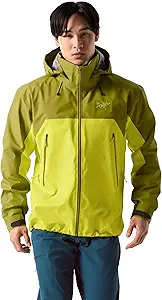
Arc'teryx Sabre AR Jacket
- GORE-TEX Pro 3L — highest durability and breathability tier
- Helmet-compatible StormHood with reinforced brim
- Clean articulation through shoulders and elbows
The Arc'teryx Sabre AR Jacket is what backcountry skiers buy when they've decided to stop compromising on their outerwear. The Sabre AR uses GORE-TEX Pro 3-layer construction — the most weatherproof, most breathable, most durable membrane the industry makes — and pairs it with a pattern that actually accommodates ski mechanics. Reach overhead for a high pole plant; the hem stays put. Hike a skin track for an hour; the underarm zips and pit zips dump heat fast enough that you don't need to stop and remove a layer.
The StormHood is helmet-compatible without flopping when worn over a beanie, the powder skirt clips out for cleaner inbounds days, and the articulation around shoulders and elbows is the cleanest on this list. At ~700g this is heavier than a minimalist shell but lighter than most insulated jackets — exactly the right weight for layering with a midweight fleece or down sweater.
The price is real: $750+ retail puts the Sabre AR firmly in the enthusiast category. But for skiers who put 40+ days a season into this jacket across resort, sidecountry, and full backcountry days, the per-use cost over its 8-10 year lifespan is reasonable. If your skiing stays inbounds and you don't need GORE-TEX Pro's hydrostatic head, the Flylow Quantum Jacket delivers 80% of the performance for half the price. If you ski cold lift-served days and hate layering, the insulated Patagonia Powder Town Jacket is a better fit.
Pros
- +GORE-TEX Pro 3L — highest durability and breathability tier
- +Helmet-compatible StormHood with reinforced brim
- +Clean articulation through shoulders and elbows
- +Pit zips + underarm zips dump heat fast on skin tracks
- +Removable powder skirt for inbounds versatility
Cons
- −Premium price ($750+)
- −Trim athletic fit not for everyone
- −Shell only — requires layering for cold lift days
- −GORE-TEX Pro requires DWR maintenance
The technical benchmark for ski outerwear. If you ski hard, in real conditions, and for many seasons, the Sabre AR earns its premium.
Flylow Quantum JacketBest Technical Ski Shell
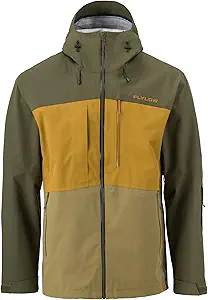
Flylow Quantum Jacket
- 20K/20K Intuition 3L — handles backcountry conditions
- Roomy fit allows real layering
- Aggressive pit zips run nearly to hem
Flylow makes ski gear for people who actually ski — not people who want to look like they ski. The Flylow Quantum Jacket is that philosophy applied to a 3-layer shell. The Intuition 3L fabric delivers 20K/20K waterproofing and breathability in a 600g package, with a construction that prioritizes durability over weight savings — exactly the right tradeoff for skiers who tree-ski, scrape rocks, and treat their outerwear as working equipment rather than catalog wear.
The fit is roomier than the Sabre AR, which matters if you layer heavily on cold days. The hood swallows a helmet without trapping the brim against your goggles, the powder skirt is removable, and the pit zips run nearly to the hem — the most aggressive ventilation of anything on this list. Hand pockets sit high enough to clear a hipbelt on touring days.
At roughly $400, the Quantum is the price-to-performance leader for serious technical use. It will not match the Sabre AR's longevity (Intuition 3L is a proprietary membrane with shorter expected lifespan than GORE-TEX Pro) but for skiers who replace shells every 4-5 seasons rather than 8-10, that's the right tradeoff. Compare to 686 GLCR Hydra Jacket for similar 15K performance with more style focus, or to Arc'teryx Sabre AR Jacket if longevity matters more than upfront cost.
Pros
- +20K/20K Intuition 3L — handles backcountry conditions
- +Roomy fit allows real layering
- +Aggressive pit zips run nearly to hem
- +Helmet hood with reinforced brim
- +Best price-to-performance ratio in this roundup
Cons
- −Proprietary membrane has shorter expected lifespan than GORE-TEX
- −Heavier than Arc'teryx (600g vs 700g but bulkier)
- −Limited color options
The right shell for skiers who want technical performance without paying for the Arc'teryx logo. Genuine 80% of the Sabre AR for 50% of the price.
Helly Hansen Alpha LifaloftBest Insulated Ski Jacket
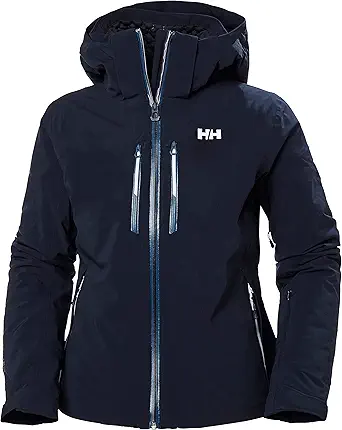
Helly Hansen Alpha Lifaloft
- Lifaloft maintains loft when wet (real cold-weather advantage)
- No-DWR LIFA INFINITY shell — durable and eco-friendly
- Eight pockets including beacon-sized chest pocket
The Helly Hansen Alpha Lifaloft solves the warmth-vs-packability equation that insulated ski jackets usually fail. Lifaloft synthetic insulation maintains 95% of its loft when wet — versus down, which collapses, or standard polyester insulation, which loses 40-50%. For resort skiing, where lift wind chill and occasional tree-shake snowfall are constant, that wet performance is the whole point.
The LIFA INFINITY shell uses no DWR chemicals — Helly Hansen's proprietary mechanical waterproofing instead of fluorocarbon coatings. This matters for two reasons: it doesn't require periodic re-treatment, and it's genuinely better for the watershed under your favorite ski resort. The body uses 100g Lifaloft HB; sleeves use 60g (less heat retention needed where you're moving). The helmet-compatible hood has a reinforced brim that doesn't collapse when wet, and there are eight pockets — including a chest pocket sized for a beacon.
At ~500g the Alpha Lifaloft is heavier than a shell but lighter than most insulated competitors. The fit splits the difference between athletic and roomy — works over a base layer + light fleece without binding. For pure shell performance step up to the Flylow Quantum Jacket and add an insulator underneath; for cheaper insulated warmth, the Spyder Chambers Jacket hits 80% of this jacket's warmth at 60% of the price.
Pros
- +Lifaloft maintains loft when wet (real cold-weather advantage)
- +No-DWR LIFA INFINITY shell — durable and eco-friendly
- +Eight pockets including beacon-sized chest pocket
- +Mapped insulation (heavier in torso, lighter in arms)
- +Reinforced hood brim stays structured wet or dry
Cons
- −Single-piece insulated design less versatile than shell + insulator
- −Mid-tier waterproof rating — not a backcountry jacket
- −Helly Hansen sizing runs slightly small
The best insulated ski jacket on the market for cold lift-served days. Lifaloft genuinely solves the wet-insulation problem.
Spyder Chambers JacketBest All-Mountain Ski Jacket
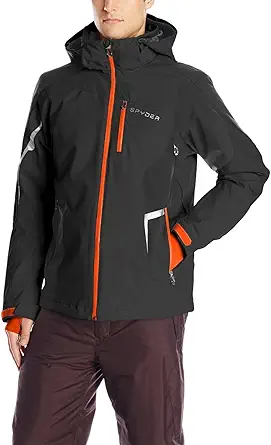
Spyder Chambers Jacket
- Complete feature set at mid-range price
- Trim race-derived fit articulates cleanly through ski mechanics
- 40g Thinsulate hits warmth sweet spot for active resort use
The Spyder Chambers Jacket is the ski jacket for people who want everything to work without thinking about it. Waterproof, warm, lift-ready, and priced for real people. The Sympathique 10K/10K shell handles dry-snow days and most wet conditions; the 40g Thinsulate insulation hits the warmth sweet spot for skiers who run warm or who layer underneath; and the feature set covers every resort scenario — zip-off powder skirt, helmet hood, internal goggle pocket, pass pocket on the sleeve.
Spyder's heritage in racing means the cut tracks the body without binding through ski mechanics. The Chambers fits trim through the shoulders, articulates cleanly at the elbows, and runs slightly long at the hem to keep snow out when you sit. The hood is sized for ski helmets (not climbing helmets — note the difference) and has a small internal channel for a goggle strap.
At ~$300 retail (often $200-220 on sale) the Chambers is the all-around resort jacket that delivers 90% of what most skiers actually need. The 10K membrane is the only real limitation — heavy all-day rain or wet sloppy snow will eventually wet through. For dry cold climates and resort skiing, that's not a meaningful constraint. Compare to The North Face Descendit Jacket for similar performance with TNF brand recognition, or step up to Helly Hansen Alpha Lifaloft for better wet performance.
Pros
- +Complete feature set at mid-range price
- +Trim race-derived fit articulates cleanly through ski mechanics
- +40g Thinsulate hits warmth sweet spot for active resort use
- +Zip-off powder skirt + helmet hood + sleeve pass pocket
- +Five pockets total — including internal goggle pocket
Cons
- −10K/10K membrane is mid-range — not for sustained wet conditions
- −Sympathique fabric less durable than 3L shells
- −Spyder branding may feel dated to younger skiers
The right jacket for most resort skiers. Hits every requirement at a price that lets you spend the savings on lift tickets.
The North Face Descendit JacketBest Resort Ski Jacket
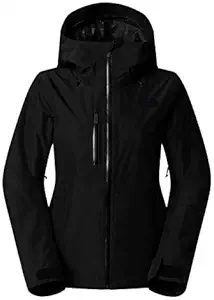
The North Face Descendit Jacket
- DryVent 2L is proven, well-supported technology
- 80g HeatSeeker hits resort warmth target
- Excellent retail availability and warranty support
The The North Face Descendit Jacket delivers exactly what TNF promises: a jacket that works on the mountain without asking you to think about it. The DryVent 2L shell is The North Face's most established waterproof technology — not flashy, not industry-leading on any single metric, but proven across two decades of refinement. 80g HeatSeeker insulation through the body keeps you warm enough for cold lift rides without overheating on aggressive runs.
The feature set is resort-complete: removable powder skirt, helmet-compatible hood with reinforced brim, three exterior pockets (two hand, one chest), and an internal goggle stash. The fit runs slightly relaxed compared to Spyder or Arc'teryx — closer to a standard winter jacket than a technical race silhouette. For most recreational skiers that's the right choice.
The Descendit's price-to-performance is solid but not outstanding: $300-350 retail puts it in line with the Spyder Chambers Jacket, which has a more aggressive feature set. What you're buying with TNF is brand recognition, retail availability (every REI carries it), and a warranty backed by one of the most reliable customer service operations in outdoor. For skiers who replace gear infrequently and want a known quantity, the Descendit is the safe choice.
Pros
- +DryVent 2L is proven, well-supported technology
- +80g HeatSeeker hits resort warmth target
- +Excellent retail availability and warranty support
- +Slightly relaxed fit works for most body types
- +Powder skirt and helmet hood as standard
Cons
- −2L construction less breathable than 3L alternatives
- −Price slightly elevated for the spec
- −Pocket layout less generous than Helly Hansen Alpha
The reliable, available, warranty-backed choice. Not the best on any single metric, but solid across all of them.
686 GLCR Hydra JacketBest Ski Jacket for Park and Mountain
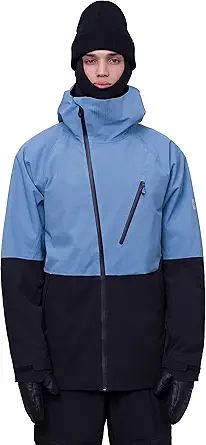
686 GLCR Hydra Jacket
- 15K/15K Infidry handles all-mountain conditions
- Riding fit favored by park skiers and snowboarders
- Matte fabric finish hides scuffs
686 builds for skiers who care about how they look on the mountain and how their gear performs on it. The 686 GLCR Hydra Jacket does both. Infidry-15 waterproofing (15K/15K) handles all-mountain conditions, 60g insulation provides resort-day warmth without bulk, and the cut is longer and looser than traditional ski silhouettes — the riding fit that park skiers and snowboarders prefer.
The feature set leans modern: removable powder skirt, internal media pocket with audio routing, snap-secure pass pocket on the sleeve, waterproof zippers throughout, and a hood that's helmet-compatible but reads cleaner without one. The Infidry-15 fabric has a subtle matte finish that hides scuffs better than glossy alternatives — a real consideration for park skiers who scrape rails and ride trees.
At $300-350 retail the GLCR Hydra delivers genuine 15K performance at a price that competes with mid-range 10K jackets. The longer fit isn't for everyone — if you ski race-cut silhouettes you'll find the Hydra slouchy — but for the audience this jacket targets (park skiers, snowboarders, style-conscious riders), the cut is the point. Compare to Flylow Quantum Jacket for more aggressive technical specs in a less style-forward package.
Pros
- +15K/15K Infidry handles all-mountain conditions
- +Riding fit favored by park skiers and snowboarders
- +Matte fabric finish hides scuffs
- +Internal media pocket with audio routing
- +Strong colorway selection seasonally
Cons
- −Loose fit not ideal for race-cut preferences
- −Infidry membrane has shorter lifespan than GORE-TEX
- −Insulation weight light for cold-only resort use
The right jacket for skiers who treat outerwear as both equipment and personal style. Performance keeps up with the look.
Rossignol All Speed JacketBest Mid-Range Ski Jacket
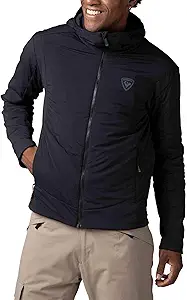
Rossignol All Speed Jacket
- 100g insulation hits cold-climate warmth target
- European tailored fit suits tall lean skiers
- RECCO reflector standard
Rossignol has been making ski gear since 1907 — the Rossignol All Speed Jacket is what that century of mountain experience looks like at an accessible price. The 10K/10K membrane is mid-range on paper but Rossignol's implementation — fully taped seams, articulated patterning, generous storm flap — gets more performance out of the spec than most competitors.
The 100g insulation is heavier than the Spyder Chambers or 686 Hydra, which makes the All Speed the warmer of the mid-range options here. For skiers who run cold or who ride lifts in true winter cold (Vermont, Quebec, the upper Midwest), that extra insulation matters. The tradeoff is breathability — under sustained effort the All Speed will run warmer than the others on this list.
Feature-complete: powder skirt, helmet hood, internal goggle pocket, pass pocket, RECCO reflector. The fit is European-influenced (slightly trim through the chest, longer in the body) which works well for tall lean skiers and less well for broader builds. At $200-280 retail this is a serious value play. Compare to Spyder Chambers Jacket for similar pricing with a roomier American cut, or to Helly Hansen Alpha Lifaloft if wet performance matters more.
Pros
- +100g insulation hits cold-climate warmth target
- +European tailored fit suits tall lean skiers
- +RECCO reflector standard
- +Strong heritage brand support
- +Often discounted heavily late season
Cons
- −European fit less generous through chest
- −10K membrane mid-range only
- −Heavier than competitors in same insulation tier
A heritage-brand value play. The right choice for cold-climate resort skiers who want reliable mid-range performance.
Patagonia Powder Town JacketBest Sustainable Ski Jacket
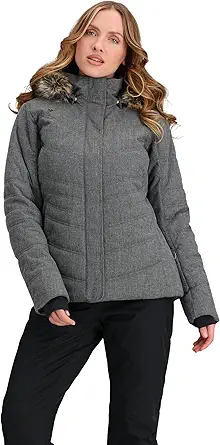
Patagonia Powder Town Jacket
- 100% recycled materials throughout
- Fair Trade Certified sewing
- PFC-free DWR treatment
The Patagonia Powder Town Jacket is what happens when a company that genuinely cares about environmental impact builds a resort ski jacket. H2No 2.5L Performance Standard waterproofing handles all but the wettest days, 60g PrimaLoft Gold insulation hits the right warmth target for resort use, and every component — the recycled polyester face fabric, the 100% recycled insulation, the Fair Trade Certified sewing — reflects Patagonia's climate commitments without compromising performance.
The feature set is purposefully restrained: powder skirt, helmet hood, three pockets (two hand, one internal), and clean lines without brand-shouting graphics. Patagonia's fit philosophy favors slightly relaxed coverage that works over real layers — this isn't a European race cut, it's a jacket designed for actual skiing in actual conditions with actual layering. The face fabric uses recycled fishing nets among other recovered materials; the DWR is PFC-free.
Patagonia is direct-to-consumer (no Amazon listing), which is part of their environmental position — fewer middlemen, more control over how product is sold and supported. Buy from patagonia.com or your local independent ski shop. For pure performance the Arc'teryx Sabre AR Jacket is more technical; for warmer insulation the Helly Hansen Alpha Lifaloft is better; for environmental conscience and lifetime warranty backing, nothing else on this list comes close.
Pros
- +100% recycled materials throughout
- +Fair Trade Certified sewing
- +PFC-free DWR treatment
- +Patagonia Worn Wear repair and resale program
- +Lifetime ironclad guarantee
Cons
- −Not on Amazon — direct purchase only
- −H2No 2.5L is mid-range waterproofing
- −Feature set restrained vs Helly Hansen or 686
- −Price reflects Patagonia's ethical premium
The right jacket for skiers who weigh environmental impact alongside performance. Patagonia delivers both — at a Patagonia price.
Questions Worth Asking
Common snow questions.
Related Guides