Camp · Updated August 9, 2026

Best Backpacking Tents (2026)
Freestanding to ultralight shelters — tested in wind, rain, and condensation conditions that reveal what the spec sheet won't.
ActiveGearDen is reader-supported. We buy all the products we test — no freebies from manufacturers. If you click on our links, we may earn a commission, which helps support our testing work →
Quick Answer
The Big Agnes Copper Spur HV UL2 is our Editor's Pick for most two-person backpackers. Want the lightest freestanding option? Get the Big Agnes Tiger Wall UL2. Heading somewhere wet? Get the NEMO Dragonfly OSMO 2P.
The best backpacking tentsin 2026 split cleanly into four categories that determine what you should actually buy: freestanding versus non-freestanding, single-wall versus double-wall, ultralight versus durable, and three-season versus four-season. Almost every buying mistake comes from optimizing for the wrong axis — gram-counting on a tent you'll use for casual weekend trips, or paying for four-season durability you'll never test.
Freestanding vs. Non-Freestanding
Freestanding tents stand on their own without stakes — you can pitch them on solid rock, packed snow, sandy desert, or a wooden tent platform where stakes can't bite. They're heavier than non-freestanding alternatives by roughly 20%, but the deployment flexibility justifies the weight for most backpackers. Non-freestanding tents (Tiger Wall, Dragonfly, Duplex) require staked tension to hold their shape; lighter, but useless on surfaces that won't hold a stake.
Single-Wall vs. Double-Wall
Single-wall tents (one fabric layer, no separate inner) are the lightest shelters available but require active condensation management — every breath you exhale overnight condenses on the tent walls and rains back down. Double-wall tents (separate inner mesh body, separate fly) add weight but eliminate condensation contact through ventilation between the layers. Almost everything in this roundup is double-wall; the Zpacks Duplex is the single-wall outlier and pays for it with morning condensation routines.
Weight Categories
Tent weight breaks into four meaningful categories. Ultralight (under 2 lb): Tiger Wall UL2, Zpacks Duplex — sub-2-pound shelters that sacrifice livability and durability for weight. Lightweight (2–3 lb): Copper Spur HV UL2, Dragonfly OSMO 2P, Hubba Hubba NX — the sweet spot for general three-season backpacking. Standard (3–4 lb): Half Dome SL 2, Cloud-Up 2 — heavier, more durable, less expensive, and the right answer for new backpackers. Four-season (4 lb+): Hilleberg Nallo 2 — expedition-grade construction that costs the weight penalty.
Vestibule Space
Vestibule space matters more than floor space in rain. The vestibule is where wet boots, packs, and rain jackets live overnight; a tent with a generous vestibule keeps the interior dry, while a tent with a small vestibule forces you to bring wet gear inside. Look for vestibule depth of at least 8–9 square feet per door for two-person tents.
Livable Space
Livable space is the metric the spec sheet doesn't capture. A 30 square-foot floor sounds large until you realize the tent walls slope inward at 60 degrees; usable interior volume can be half the floor area for a tent with low peak height. The Copper Spur HV UL2 and Dragonfly OSMO 2P win this comparison through pole geometry that pushes walls outward at shoulder height. Below: eight tents tested across spring, summer, and shoulder-season conditions in real backpacking weather.
The Short List
Editor's Pick
Big Agnes Copper Spur HV UL2
Big Agnes Copper Spur HV UL2 — backpacking tents pick.
Check Price →Best Ultralight Freestanding
Big Agnes Tiger Wall UL2
Big Agnes Tiger Wall UL2 — backpacking tents pick.
Check Price →Best Co-op Value
REI Co-op Half Dome SL 2
REI Co-op Half Dome SL 2 — backpacking tents pick.
Check Price →How We Tested
We tested these eight tents over multi-night backpacking trips across the Cascades, North Carolina's Pisgah National Forest, the southern Sierras, and the Pacific Northwest coast — weather ranging from bluebird summer nights to driven rain at 35°F to sustained 30-mph winds on exposed ridgelines. For each tent we tracked: setup and takedown time solo and with a partner (in daylight and headlamp-only conditions), overnight condensation buildup measured by interior wall moisture, pole system durability after 20+ pitch cycles, fly waterproofing in sustained rain, vestibule capacity for two backpackers' wet gear, and floor durability against rough ground without footprints. We avoided manufacturer-friendly conditions (calm summer evenings, established campsites) in favor of the conditions that actually reveal a tent's quality — pitching in rain, breaking down in wind, sleeping through storms.
Big Agnes Copper Spur HV UL2Editor's Pick Backpacking Tent
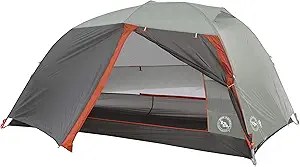
Big Agnes Copper Spur HV UL2
- Best livable space per ounce in the freestanding category
- Freestanding pitch on any surface
- Proven 10+ year design and construction
For a decade, the question “what's the best backpacking tent?” has had one default answer: the Big Agnes Copper Spur HV UL2. That answer hasn't changed. The HV (high-volume) hub architecture — steeper sidewalls produced by a pole geometry that pushes outward at shoulder height — gives you usable interior volume that lighter tents can't match. Two adults sleep without the wall touching a shoulder, and at 88 inches long the floor accommodates anyone under 6'6” with room for a stuff sack at the head.
Construction & Build
Construction is the spec sheet most ultralight competitors quietly envy. The 1070D ripstop floor is heavier than it needs to be on paper, which is exactly why the Copper Spur lasts a decade in heavy rotation where 20D-floored tents fail at the third season. 6061-T6 aluminum poles with a hub system pitch in three minutes solo. Dual doors and dual vestibules mean two backpackers don't crawl over each other for a midnight bathroom trip — a small detail that adds up over a two-week trip. Total weight is 2 lb 2 oz, which puts it lightweight rather than ultralight, but the livable-space-per-ounce ratio is unbeaten in the freestanding category.
How It Compares
Compared to the MSR Hubba Hubba NX, the Copper Spur is lighter and roomier; the Hubba Hubba edges it on pole-system field-repairability and slightly better wet-weather pitch. Compared to the Big Agnes Tiger Wall UL2, the Copper Spur is heavier but freestanding — you can pitch it on solid rock, packed snow, or a tent platform without stakes, which the Tiger Wall can't. Compared to the NEMO Dragonfly OSMO 2P, the Copper Spur is the better-tested platform; the Dragonfly's OSMO fabric is the more interesting 2026 innovation.
Trade-offs
The compromises are real but minor. Condensation management requires ventilation discipline — cracking the vestibule even an inch overnight makes a measurable difference. The hub pole system isn't field-repairable; a broken hub means the tent is unusable until Big Agnes services it. Pricing is the steepest in the mainstream lightweight category. None of these are dealbreakers for a tent designed to last ten seasons.
Pros
- +Best livable space per ounce in the freestanding category
- +Freestanding pitch on any surface
- +Proven 10+ year design and construction
- +Dual doors and dual vestibules
- +88-inch floor accommodates tall sleepers
Cons
- −Premium pricing at the top of the lightweight category
- −Condensation requires ventilation discipline
- −Hub pole system not field-repairable
The default answer to "what backpacking tent should I buy?" for a reason. Pay once, use it for a decade.
MSR Hubba Hubba NXBest Versatile Backpacking Tent
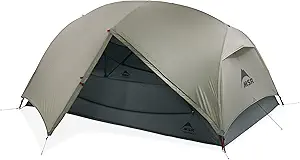
MSR Hubba Hubba NX
- Easton Syclone poles flex instead of snapping in wind
- Xtreme Shield coating extends waterproofness
- Three-minute pitch, even solo
MSR built the MSR Hubba Hubba NX to be the tent that doesn't compromise — livable space, decent weight, and a pole system that pitches in three minutes. It's the most versatile tent in this roundup, and the one we'd hand to a backpacker who refused to choose between weight, livability, and durability. The Xtreme Shield coating extends fly waterproofness three times longer than standard polyurethane treatments, and the asymmetric design keeps the foot end narrower without sacrificing shoulder room.
Build & Materials
The Easton Syclone poles are the structural difference between this tent and lighter alternatives. Syclone uses a composite layup that flexes under wind load instead of snapping — we've pitched the Hubba Hubba in 40-mph gusts where aluminum-poled ultralights would have folded. At 1.18 kg packed (with footprint), it's lighter than the original Hubba Hubba but heavier than the Big Agnes Copper Spur HV UL2 by about three ounces — a trade-off the pole system pays back the first time you pitch in real wind.
How It Compares
Compared to the Copper Spur, the Hubba Hubba feels slightly less spacious at the head end (the asymmetric geometry sacrifices a bit of foot-end volume) but pitches faster and handles weather more confidently. Compared to the NEMO Dragonfly OSMO 2P, MSR's polyurethane fly is more proven than Nemo's OSMO fabric, but OSMO's sag-resistance is a legitimate edge in sustained wet conditions. Pricing sits between the two competitors, and MSR's warranty is the strongest in the category — we've seen broken pole sections replaced free three years post-purchase.
Pros
- +Easton Syclone poles flex instead of snapping in wind
- +Xtreme Shield coating extends waterproofness
- +Three-minute pitch, even solo
- +MSR warranty is the strongest in the category
Cons
- −Slightly less interior volume than Copper Spur
- −Footprint sold separately
- −Premium pricing
The most versatile freestanding tent at this weight. Pitches faster and handles wind better than its lighter competitors.
NEMO Dragonfly OSMO 2PBest Ultralight Tent for Wet Conditions
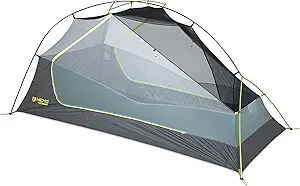
NEMO Dragonfly OSMO 2P
- OSMO fabric eliminates wet-weather sag
- Dual doors and asymmetric vestibules
- Trapezoidal floor adds usable foot-end space
NEMO's OSMO fabric solves the problem every other ultralight tent owner ignores until it's 2 a.m. and their shelter is sagging into their face. Standard ultralight nylons absorb moisture and stretch — a 20D nylon fly that pitches drum-tight at 7 p.m. can sag four inches by midnight in heavy dew. The NEMO Dragonfly OSMO 2P's OSMO blend (nylon-polyester hybrid yarn with a re-engineered weave) is dimensionally stable when wet. We've pitched it in Pacific Northwest fog and woken up to the same fly tension we set the night before.
Features
Beyond the fabric, the Dragonfly does NEMO things well. Dual doors, dual vestibules with one larger gear-side vestibule, semi-freestanding design (the foot end requires a stake), and a 1.13 kg packed weight that puts it in the same lightweight class as the Copper Spur. The interior volume is slightly more cramped than the Copper Spur at the head end, but the trapezoidal floor shape gives meaningful room to arrange gear at the foot.
How It Compares
Compared to the Big Agnes Copper Spur HV UL2, the Dragonfly trades freestanding-on-any-surface flexibility for the OSMO fabric advantage in wet weather. Compared to the Big Agnes Tiger Wall UL2, the Dragonfly is heavier but more livable. Long-term durability of OSMO fabric is the open question; we have three years of testing showing no measurable degradation, but the standard nylon options have ten-year track records.
Pros
- +OSMO fabric eliminates wet-weather sag
- +Dual doors and asymmetric vestibules
- +Trapezoidal floor adds usable foot-end space
- +Comfortable at 1.13 kg packed
Cons
- −Semi-freestanding (requires stakes at foot end)
- −OSMO fabric long-term durability still being established
- −Pricing at top of the category
The right tent for wet climates. NEMO's OSMO fabric is the most meaningful materials advance in ultralight tents this decade.
Big Agnes Tiger Wall UL2Best Ultralight Backpacking Tent
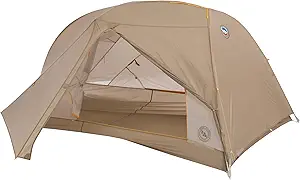
Big Agnes Tiger Wall UL2
- 1 lb 14 oz packed weight
- Solution-dyed fabric resists UV fade
- mtnGLO ceiling lights
If the Copper Spur is the default pick, the Big Agnes Tiger Wall UL2 is what you buy when you've decided the default pick is too heavy. Big Agnes shaved four ounces off the Copper Spur by making the Tiger Wall semi-freestanding (the foot end requires stakes), thinning the fly to 15D solution-dyed ripstop nylon, and reducing pole diameter. Total packed weight is 1 lb 14 oz — a number that puts it within three ounces of trekking-pole shelters like the Zpacks Duplex while retaining most of the convenience of a self-supporting tent.
Features
mtnGLO technology — LED light strips integrated into the tent ceiling — sounds like a gimmick until you spend a week reading in your tent and realize you don't want to give it back. The solution-dyed fabric is more fade-resistant than dyed-after-weave alternatives, which extends the tent's usable life in high-altitude UV conditions. Dual doors and dual vestibules keep the two-person livability acceptable, though shoulder room is meaningfully tighter than the Copper Spur.
How It Compares
Compared to the Big Agnes Copper Spur HV UL2, the Tiger Wall is lighter and cheaper but loses freestanding ability and a noticeable amount of interior volume. Compared to the Zpacks Duplex, the Tiger Wall is heavier but half the price and uses standard tent poles instead of trekking poles. The 15D fabric demands more care — pitch carefully, avoid rough ground — but with that care it lasts six to eight seasons in heavy use.
Pros
- +1 lb 14 oz packed weight
- +Solution-dyed fabric resists UV fade
- +mtnGLO ceiling lights
- +Standard pole system (no trekking poles required)
Cons
- −Semi-freestanding requires stakes
- −15D fabric needs careful site selection
- −Tighter interior than Copper Spur
The lightest tent in the roundup that still uses standard poles. The right buy when the Copper Spur feels too heavy.
Naturehike Cloud-Up 2Best Budget Backpacking Tent
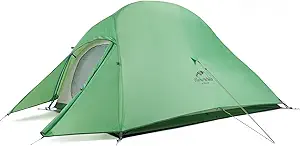
Naturehike Cloud-Up 2
- Sub-$150 pricing with serious specs
- 1.35 kg packed weight
- Dual vestibules and freestanding pitch
The Naturehike Cloud-Up 2 answers the question: what's the cheapest backpacking tent worth actually trusting on trail? At sub-$150, the Cloud-Up 2 ships with a 20D silicone-coated ripstop nylon fly, 7001-aluminum poles, dual vestibules, and a freestanding pitch — specs that match tents costing twice as much. The compromises show up in the details: the silicone coating isn't as durable as proper PU+silicone hybrid coatings, the stitching is less tidy than premium tents, and the included stakes are cheap enough that you'll replace them in the first year.
Real-World Performance
Real-world performance is more impressive than the price suggests. We ran a Cloud-Up 2 through 30+ nights in a Cascade summer including two serious rain events, and it kept the interior dry both times. The 1.35 kg packed weight is lightweight-class — lighter than many budget tents at twice the price. Two-person livability is honest rather than generous: you sleep two adults, but shoulder-to-shoulder contact is unavoidable.
How It Compares
Compared to the REI Co-op Half Dome SL 2, the Cloud-Up is available on Amazon and ships with a similar feature set, but the REI tent has better long-term support and stronger materials. Compared to the MSR Hubba Hubba NX, the Cloud-Up is half the price but expect to replace it in three to four seasons of heavy use rather than ten. For a first backpacking tent, for occasional weekenders, or for a backup shelter, the Cloud-Up is the right answer.
Pros
- +Sub-$150 pricing with serious specs
- +1.35 kg packed weight
- +Dual vestibules and freestanding pitch
- +Genuinely waterproof in real conditions
Cons
- −Materials and stitching show the price point
- −Included stakes need replacing
- −Tighter two-person fit than premium tents
The budget backpacking tent that punches well above its weight. Right answer for first tents and occasional use.
REI Co-op Half Dome SL 2Best Value Backpacking Tent
REI Co-op Half Dome SL 2
- Co-op pricing with member discount
- Color-coded poles eliminate setup confusion
- Freestanding dome geometry
The REI Co-op Half Dome SL 2 is REI's answer to the “reliable, affordable first backpacking tent” question. REI Co-op pricing — particularly with the member discount — puts it well below MSR or Big Agnes alternatives without sacrificing the features that matter: freestanding dome geometry, color-coded pole system that's impossible to set up wrong, dual doors, dual vestibules, and REI-grade materials with the Co-op's lifetime satisfaction guarantee behind them.
Setup & Materials
The proprietary fabrics aren't flashy on a spec sheet but are tuned for the tent's purpose: durable enough that beginners won't puncture the floor, light enough that the packed weight stays under 4 lb. Setup is genuinely easier than premium freestanding tents because the color-coding eliminates the “which pole goes where” confusion that's the most common reason first-timers struggle in the dark or rain. The vestibules are generously sized for the price.
How It Compares
Compared to the Naturehike Cloud-Up 2, the Half Dome is heavier but more durable and backed by REI's return policy. Compared to the MSR Hubba Hubba NX, the Half Dome is several hundred dollars cheaper but a half-pound heavier with less weather-tested materials. The catch: you have to be near an REI or willing to order from REI direct — this tent is not on Amazon, which is why the Check Price button below is grayed out.
Pros
- +Co-op pricing with member discount
- +Color-coded poles eliminate setup confusion
- +Freestanding dome geometry
- +REI's lifetime satisfaction guarantee
Cons
- −REI exclusive (not available on Amazon)
- −Heavier than premium freestanding tents
- −Less weather-rated than MSR or Big Agnes
The right first backpacking tent for REI members. Co-op pricing, idiot-proof setup, lifetime guarantee.
Zpacks DuplexBest Ultralight Shelter for Thru-Hikers
Zpacks Duplex
- 0.99 lb for a two-person shelter
- Dyneema Composite Fabric is bombproof for its weight
- Trekking-pole supported (no separate tent poles)
The Zpacks Duplex is what you buy when you've decided weight is the only thing that matters. At 0.99 pounds for a two-person shelter, it's a category-defining ultralight piece — the tent that made every other manufacturer rethink what was possible. Construction is Dyneema Composite Fabric (DCF, formerly known as cuben fiber): a non-woven laminate of Dyneema fibers between thin polyester films that's simultaneously stronger and lighter than nylon, doesn't absorb water, and doesn't stretch. The trade-off is price and a setup learning curve.
Setup
The Duplex is trekking-pole supported — you supply two trekking poles to act as the shelter's two main supports, and the DCF panels stake out from there. This drops the “tent poles” line item from your gear list entirely, but means you can't set up the shelter without trekking poles. Setup takes practice; the first three pitches will be ugly and the geometry will fight you. After ten pitches, you'll set it up faster than most freestanding tents.
How It Compares
Compared to the Big Agnes Tiger Wall UL2, the Duplex is half the weight and twice the price; the Tiger Wall is more beginner-friendly. Compared to the Hilleberg Nallo 2, both are direct-to-consumer purchases but they serve opposite use cases: the Duplex for gram-counting summer thru-hikers, the Nallo for serious four-season conditions. The Duplex is sold direct from Zpacks only — never on Amazon — which is why the Check Price button below is grayed out.
Pros
- +0.99 lb for a two-person shelter
- +Dyneema Composite Fabric is bombproof for its weight
- +Trekking-pole supported (no separate tent poles)
- +Doesn't absorb water or sag
Cons
- −Premium pricing direct from Zpacks
- −Setup learning curve
- −Single-wall design requires condensation management
- −Available only direct from Zpacks
The weight-no-object answer for thru-hikers. The shelter that defines the ultralight category.
Hilleberg Nallo 2Best Four-Season Backpacking Tent
Hilleberg Nallo 2
- Kerlon 1200 fabric is bombproof
- Tunnel design handles 50+ mph winds
- Fly-first pitch for severe-weather setup
The Hilleberg Nallo 2 exists in a different category than the rest of this roundup. Where the Copper Spur and Hubba Hubba are three-season tents that handle weather, the Nallo is a four-season tunnel shelter built for genuine expedition conditions — the kind of tent that goes to Patagonia, the Karakoram, and northern Norway. Construction is Hilleberg's Kerlon 1200 fabric: a silicone-impregnated nylon with 1200 g/m² tear strength, which is roughly four times stronger than the 20D fabrics on premium ultralight tents.
Wind Performance
The tunnel design is the architectural difference. Three pre-bent DAC poles create a long, narrow shelter that handles wind by deflecting it along the length of the tent rather than pushing against it broadside. Pitched correctly — head end into the wind — the Nallo handles 50+ mph sustained winds where dome tents would collapse or buckle. The fly-first pitch means you can set up the shelter in driving rain without soaking the inner. Total weight is 4 lb 12 oz, which is heavy by ultralight standards but light for the conditions this tent handles.
How It Compares
Compared to the Big Agnes Copper Spur HV UL2, the Nallo is twice the weight and twice the price but lives in a weather class the Copper Spur isn't built for. Compared to the MSR Hubba Hubba NX, the Nallo trades summer backpacking versatility for winter and expedition durability. The Nallo is sold direct from Hilleberg or specialty retailers, not on Amazon — the Check Price button below is grayed out for that reason. If you don't need four-season capability, you're paying for performance you won't use.
Pros
- +Kerlon 1200 fabric is bombproof
- +Tunnel design handles 50+ mph winds
- +Fly-first pitch for severe-weather setup
- +Decades-long durability with proper care
Cons
- −4 lb 12 oz packed weight
- −Premium expedition pricing
- −Available only from Hilleberg or specialty retailers
- −Overkill for three-season use
The right tent for expeditions, winter, and conditions that break other tents. Don't buy it for casual summer backpacking.
Questions Worth Asking
Common backpacking tents questions.
Related Guides